Financial habits that prevent a KRA crisis every June
By Dan Kauna, June 12, 2026Every year, around the third week of June, the same thing happens. Receipts get hunted through WhatsApp chats. Payslips are forwarded from email threads buried under hundreds of messages.
Someone texts their accountant something they should have known months ago. And the June 30 KRA deadline, perfectly visible on the calendar since January, somehow arrives as a surprise.
The problem is almost never the tax. It is the missing paperwork.
The good news is that fixing this is less about financial discipline and more about about setting up a few small, recurring habits that do the filing for you across twelve months, so that when June arrives, you are simply confirming what you have already documented.
What you should be capturing every month
The foundation is income documentation. If you are on a formal payroll, your employer files PAYE on your behalf through iTax but that does not mean you should be passive about it.
Download your payslip every month and keep it in one folder, digital or physical. Cross-check the PAYE figure shown on the payslip against your iTax account at least once a quarter. Discrepancies are not rare, and they are far easier to resolve in March than in June.
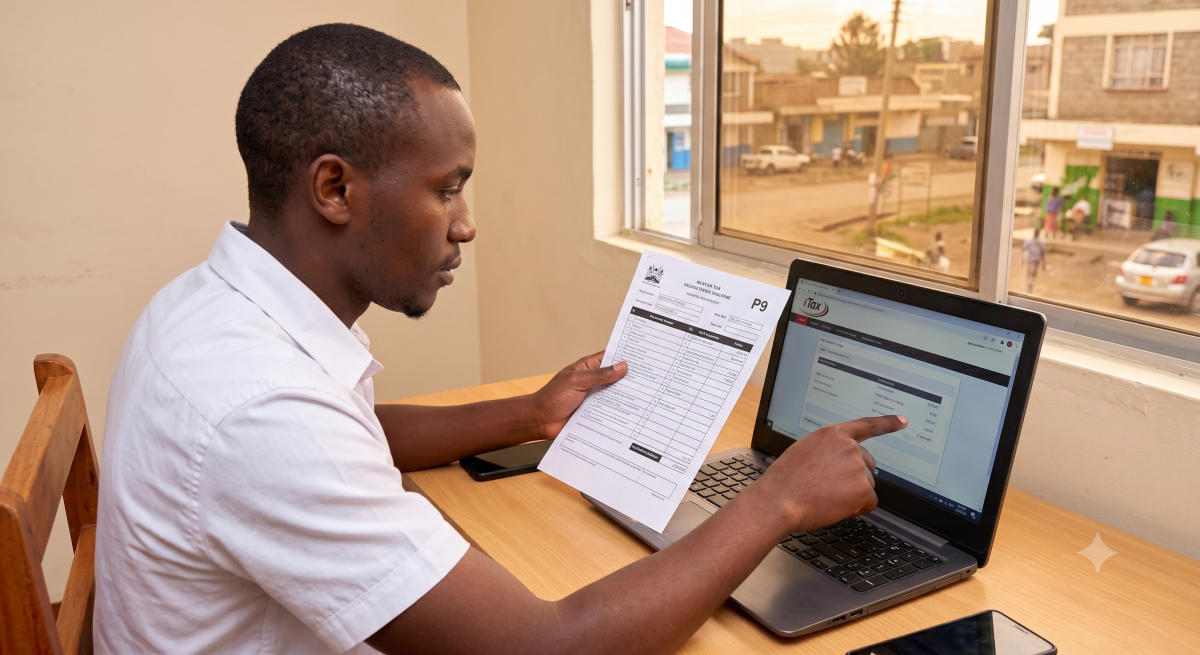
If you have any income outside your main employment (freelance work, rental income, side business revenue) document it as it comes in. A simple spreadsheet with date, source, and amount is sufficient. The key is consistency: record it the week you receive it, not the month you need to declare it.
Receipts for claimable expenses are where most people fall apart. Business expenses, professional subscriptions, and insurance premiums that qualify for relief need proof at the point of filing. Take a photo of every relevant receipt and save it to a dedicated folder – one folder per year, clearly labelled.
Personal relief and insurance relief are often left on the table simply because people cannot locate the evidence. Your NHIF contribution statements and any life insurance premium certificates should be saved as they are issued, not retrieved retroactively.
A 2025 peer-reviewed study published in the Journal of Finance and Accounting, focusing on youth-owned enterprises in Nairobi’s CBD, found that “managers and policy enforcers should prioritise initiatives that promote routine and accurate digital bookkeeping among youth-led enterprises” – an observation that applies just as well to salaried individuals managing their own compliance.
Turning chaos into a ten-minute task
The shift from June panic to June calm comes down to one decision: treat your tax record as a living document, not an annual project.

Set a monthly reminder – the last Sunday of every month works well – to spend fifteen minutes on your tax folder. File the month’s payslip, log any additional income, photograph any claimable receipts, and confirm your NHIF statement is accessible.
By the time June arrives, your return is essentially already filed in draft. You are not searching; you are confirming. The actual iTax submission becomes what it was always meant to be: a formality.