Advertisement
Why some men stay in their marriages after a negative paternity DNA test
01st June, 2026 08:28 PM

A negative paternity DNA test result can completely change the direction of a marriage.
It is one of the most emotionally charged moments a couple can experience, often raising questions about trust, identity, and the future of the relationship.
While many assume that such a result automatically leads to separation, some men choose a different path and decide to stay in the marriage while processing the situation more carefully.
From a psychological and behavioural science perspective, this reaction is not unusual
It reflects how the human brain handles shock, emotional stress, and complex decision-making under pressure.
What a negative DNA test means in a marriage
A paternity DNA test is designed to establish biological parentage with high accuracy.
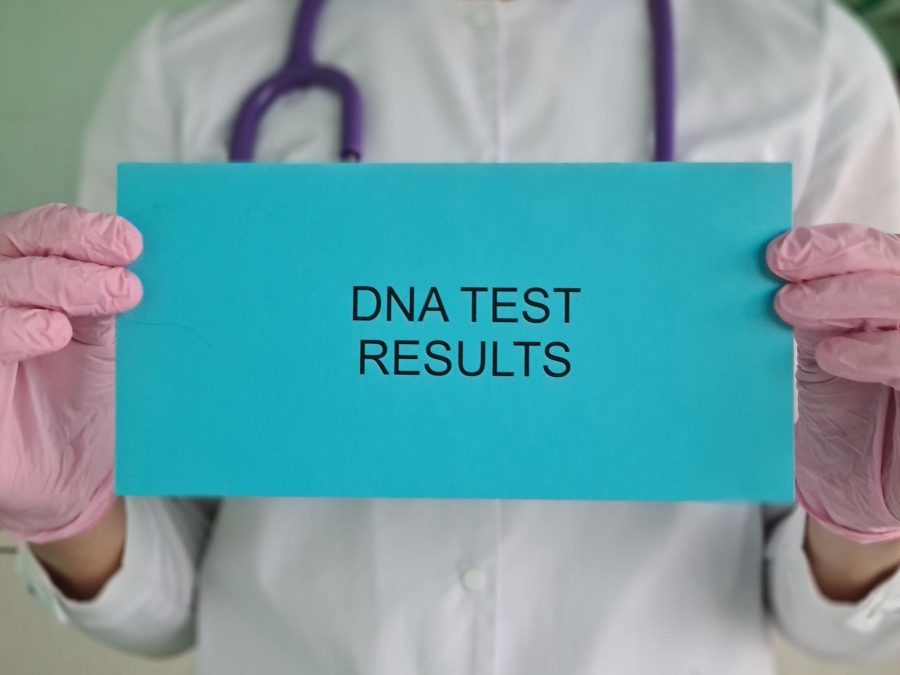
When results come back negative, meaning the tested man is not the biological father, the emotional impact can be immediate and intense.
However, the meaning of the result is not always the same as the immediate emotional interpretation.
In many cases, the result triggers a deeper crisis involving trust, communication, and relationship history.
It forces couples to confront questions that go beyond biology and into the structure of the marriage itself.
The psychological impact of paternity shock
According to behavioural psychology, the brain does not process shocking information in a purely rational way.
The amygdala, which is responsible for emotional reactions, becomes highly active during moments of stress.
At the same time, the prefrontal cortex, which is responsible for reasoning and decision-making, temporarily becomes less effective.
This explains why the first reaction to a negative DNA test is often anger, disbelief, or a desire to end the relationship immediately.
Psychologists describe this as an acute stress response, where emotional systems override logical thinking.
In this state, decisions are often reactive rather than reflective.
Why some men delay immediate separation
Some men choose not to end the marriage immediately, not because they ignore the result, but because they understand the risks of making permanent decisions during emotional shock.
From a behavioural science perspective, this is linked to delayed executive decision-making.
It is the ability to pause before acting when emotions are high, allowing the brain time to return to a balanced state.
During this pause, several things happen:
Cortisol levels, the body’s primary stress hormone, begin to reduce
Cognitive clarity gradually returns
The individual becomes more capable of separating emotion from fact
This does not mean acceptance of the situation. It simply allows time for clearer thinking.

The role of attachment and shared history
Marriage is not defined by a single event. It is built over time through shared experiences, emotional bonding, and mutual responsibilities.
Psychological research in attachment theory shows that strong emotional bonds do not disappear instantly after a crisis.
This creates an internal conflict for many men:
One part of the mind responds to biological reality and logic
Another part responds to emotional attachment and shared life history
When these systems conflict, decision-making becomes complex. Staying in the marriage, at least temporarily, can become a way of managing this internal tension while seeking clarity.
The dangers of emotional decision-making
Behavioural economics shows that decisions made under intense emotion are often influenced by cognitive distortion.
In simple terms, people tend to overestimate immediate pain and underestimate long-term consequences.
In the context of a negative DNA test result, this can lead to rushed decisions such as immediate separation or public confrontation.
While these reactions may feel justified in the moment, they can sometimes lead to long-term challenges such as:
Legal and financial complications
Emotional distress for children and extended family
Regret after emotional intensity reduces
This is why timing and emotional control matter significantly in high-stakes relationship decisions.
Why staying can sometimes be a strategic choice
Choosing to remain in the marriage does not automatically mean forgiveness or denial. In many cases, it is a strategic decision to allow space for proper evaluation.
Staying temporarily can provide opportunities to:
Seek counselling or mediation
Establish clear communication between partners
Understand how the situation occurred
Make decisions based on full clarity rather than shock
From a psychological standpoint, this approach allows emotional regulation to stabilise before final conclusions are made.