How to stop roof leaks and protect your home before heavy rains begin
By Dan Kauna, August 5, 2026Every rainy season in Kenya comes with a familiar stress for home and building owners: damp ceilings and unexpected indoor drips.
Even when corrugated iron sheets or concrete slabs look solid from the ground, heavy downpours always seem to find a way inside.
How water creeps through hidden roof cracks
Roof leaks during heavy storm seasons do not always start with huge broken tiles or wide holes. Water often moves through hairline cracks in concrete slabs and tight overlaps where iron sheets meet.

This happens because of capillary action, where liquid gets sucked into narrow gaps. When rainwater collects on a roof, capillary force pulls moisture sideways and upwards against gravity, dragging it through tight joints and tiny gaps.
Once moisture stays trapped inside ceiling boards or timber beams, it quickly causes wood rot and dark mould patches.
As researchers Chi Feng and Hans Janssen noted in a study on building moisture, “moisture-related processes affect not only buildings’ energy efficiency and service life but also their indoor climate and air quality.”
In iron sheet roofs, water gets pulled in mostly at horizontal overlaps where two sheets join. On flat concrete roofs, small shrinkage cracks from hot weather pull in standing rain during heavy downpours.
Fixes to keep your home dry
Stopping water before the heavy rain season starts saves you thousands of shillings in home repairs. Fixing these small roof gaps takes two easy maintenance steps.
First, clear all gutters and water drainage channels. Blocked gutters hold stagnant water along the edges of the roof.
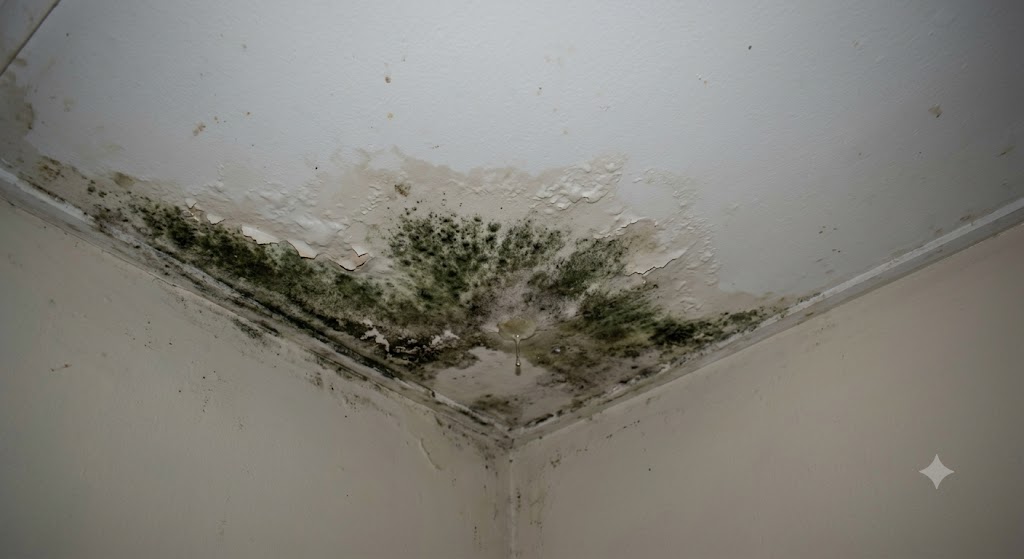
This standing water increases capillary pressure, pushing rainwater upwards under roof flashings and iron sheet laps. Keeping gutters clean allows rainwater to drain quickly.
Second, paint an elastomeric rubberised sealant over roof flashings, joint overlaps, and visible concrete cracks. Regular cement paste or hard fillers crack quickly because roof sheets expand in the sun and contract in the cold.
Rubberised sealants stay flexible after drying, moving naturally with the roof while blocking water paths.
A four-litre tin of quality rubberised sealant costs around Ksh3,500 at local hardware stores. Taking time to check roof joints and seal minor gaps now is far cheaper than replacing damaged ceilings, which can easily cost over Ksh50,000.