Advertisement
How to keep a pet without upsetting your neighbours
01st June, 2026 01:38 PM

You fell in love with a puppy at a pet shop and now you are wondering whether your one-bedroom can actually hold a dog, a landlord’s patience, and your neighbour’s sanity all at once.
It can. But it helps to know what you are doing first.
Start with the right animal for your space
Not every pet belongs in a bedsitter, and not every dog belongs in a flat without a garden. The first rule of urban pet ownership is choosing an animal whose temperament and energy level actually match your living situation.
For dogs, smaller and calmer breeds tend to cope best. A Shih Tzu, Cavalier King Charles Spaniel, or French Bulldog will settle into a two-bedroom flat far more gracefully than a Husky or German Shepherd whose energy needs cannot realistically be met within estate grounds.

Research published in the International Journal of Interdisciplinary Approaches in Psychology in April 2025 found that “larger breeds, with their higher energy levels and exercise requirements, may experience increased reactivity in urban environments due to limited space and constant stimulation, while smaller breeds may initially appear better suited to confined spaces but still require consideration for their specific temperaments and activity levels.”
The key phrase there is ‘may initially appear’ – even a small dog needs daily exercise and mental stimulation. A bored animal is a loud animal.
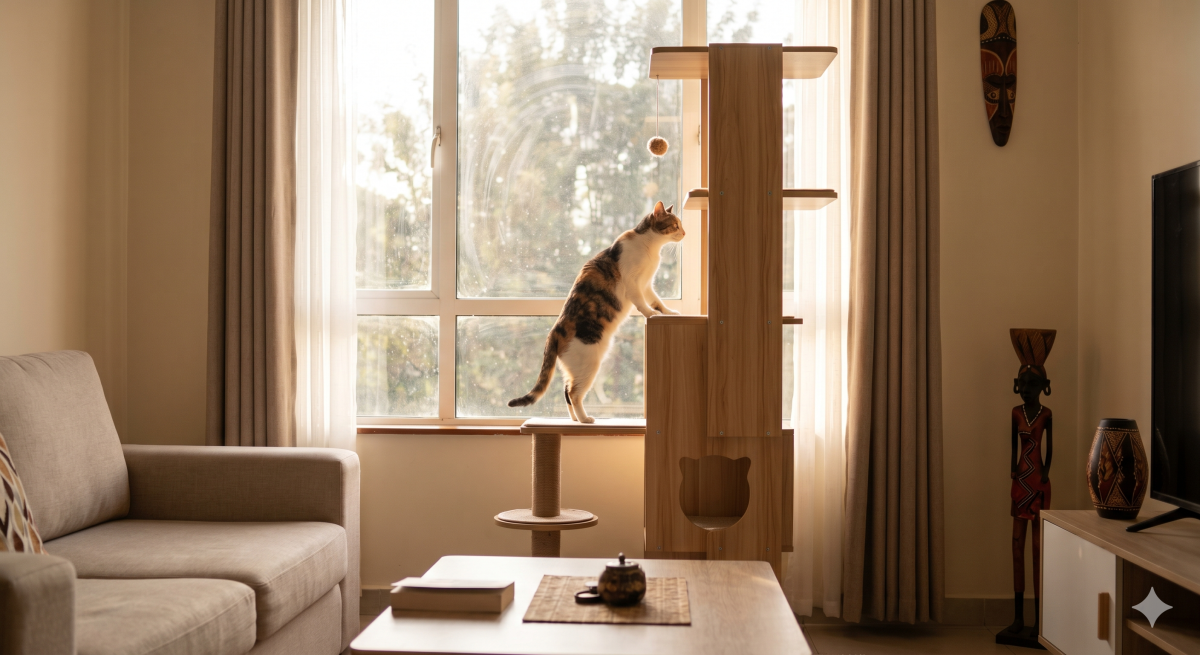
Cats are generally a stronger fit for apartment life than dogs, provided you give them vertical space – shelving, cat trees, a window perch.
Rabbits, guinea pigs, and budgerigars are quieter options that work well in smaller units and tend to cause fewer issues with neighbours and landlords.
Noise, exercise, and the neighbours you share walls with
Most neighbour complaints about pets come down to two things: noise and mess. Both are manageable.
For noise, routine is everything. Dogs bark when they are anxious, bored, or under-exercised. A consistent morning walk — even 20 to 30 minutes around the estate or a nearby park — goes a long way toward keeping an animal calm and quiet during the day.
Puzzle feeders and chew toys help with the midday hours if you are at work. If your dog has separation anxiety, crate training done correctly (never as punishment) can reduce distress barking significantly.
Hygiene basics apply: clean up after your pet immediately in shared spaces, keep litter boxes changed regularly, and make sure your animal is up to date on vaccinations and flea treatment. Smells travel in corridors.
Working within the rules
Most estates with management structures have bylaws that touch on pets, even if they are vaguely worded. Before you bring an animal home, do two things: read your tenancy agreement carefully, and speak to your landlord directly.
A short, honest conversation upfront – “I would like to keep a small dog, he is house-trained, here is what I will commit to” tends to land better than a landlord discovering the situation on their own.
Some estates operate a no-pets clause outright. Others are flexible if you demonstrate responsibility.
The relationship with your immediate neighbours matters just as much as the formal rules. Introduce your pet to the people closest to you. If there is ever a noise incident, apologise promptly and explain what you are doing to address it.
People are far more patient with pet owners who take accountability than with those who pretend the barking is not happening.