Advertisement
How furniture arrangement affects your mood and wellbeing
13th June, 2026 05:12 PM
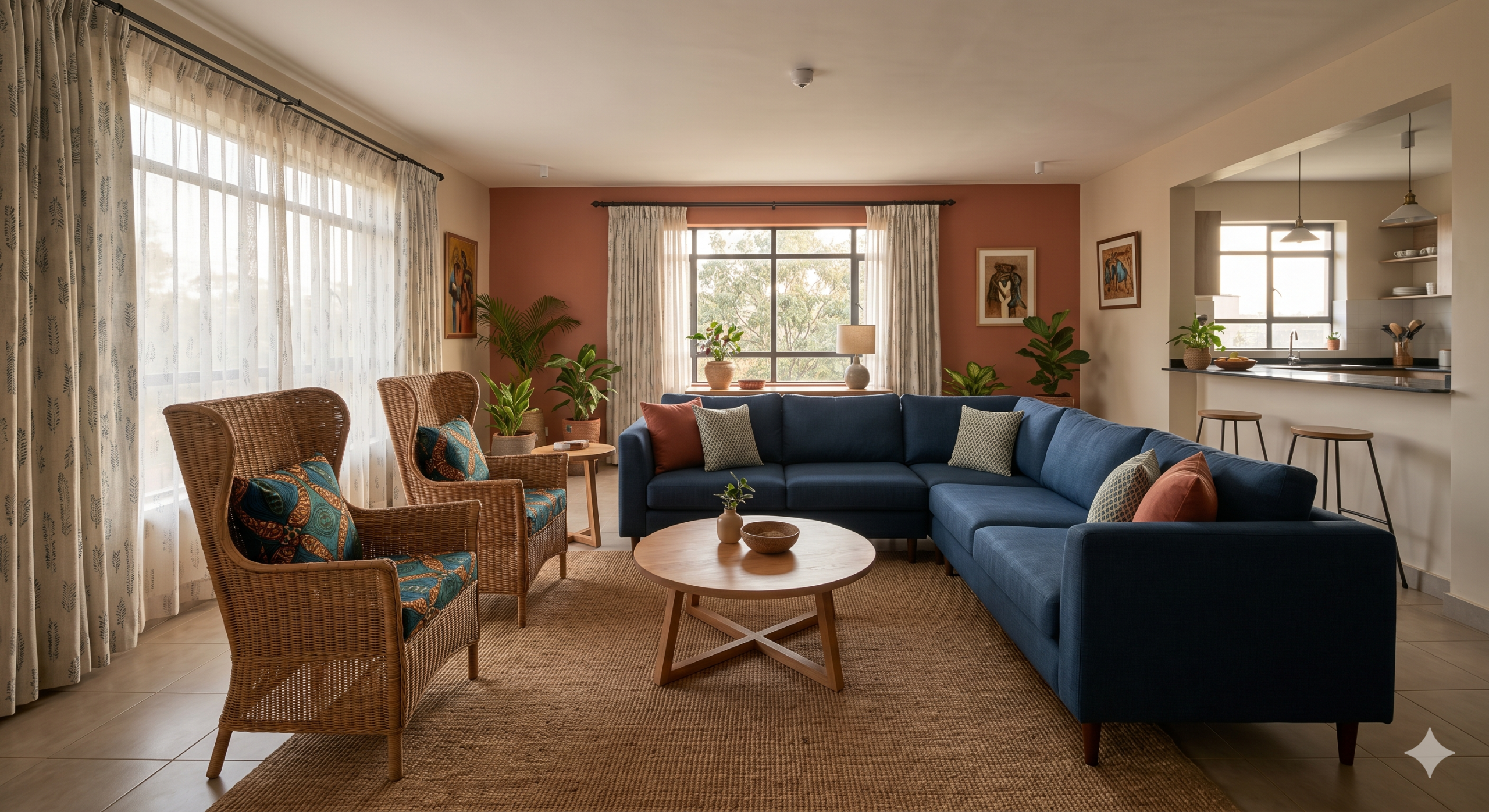
You have probably rearranged your living room and immediately felt something shift – a lightness, or a nagging sense that something is off. That feeling is not in your head.
Environmental psychology has spent decades confirming what your gut already knows: the physical arrangement of your home shapes how you feel, how you connect, and how well you sleep.
Here is what the research says, and what you can do about it today.
Your living room is either pulling people together or pushing them apart
The layout of a living room tells everyone in it how to behave.
Research in environmental psychology shows that circular or semi-circular furniture arrangements promote equality and open communication, while linear arrangements (seats lined up facing a screen) create subtle hierarchies and discourage conversation.
If your sofa and chairs all face the television, you have built a passive-consumption room. It is designed for watching, not talking.

To change that, angle at least two seats slightly toward each other. Even a small pivot of 30 to 45 degrees encourages eye contact and signals to everyone that conversation is welcome here.
The distance between seats matters too. Research suggests that seats placed between 1.2 and 2.1 metres apart sit in what is called the “social zone” – close enough for easy conversation, far enough to feel comfortable. Too close feels invasive; too far and the room starts to feel like a waiting area.
Your desk deserves the same thought. Position it facing a wall with natural light falling from the side, not directly in your eyes.

Sitting with your back to the door creates a low-level, unconscious sense of threat; your brain keeps part of its attention on what you cannot see.
Wherever possible, place your desk so the door is within your peripheral vision. It’s a small thing that allows your nervous system to properly relax.
Your bedroom arrangement could be the reason you are not sleeping well
A study published in the Personality and Social Psychology Bulletin by Darby Saxbe and Rena Repetti found that people who described their homes as cluttered showed “flatter diurnal slopes of cortisol, a profile associated with adverse health outcomes” – meaning their stress hormone never properly dropped across the day, including at night when it should fall to support sleep.
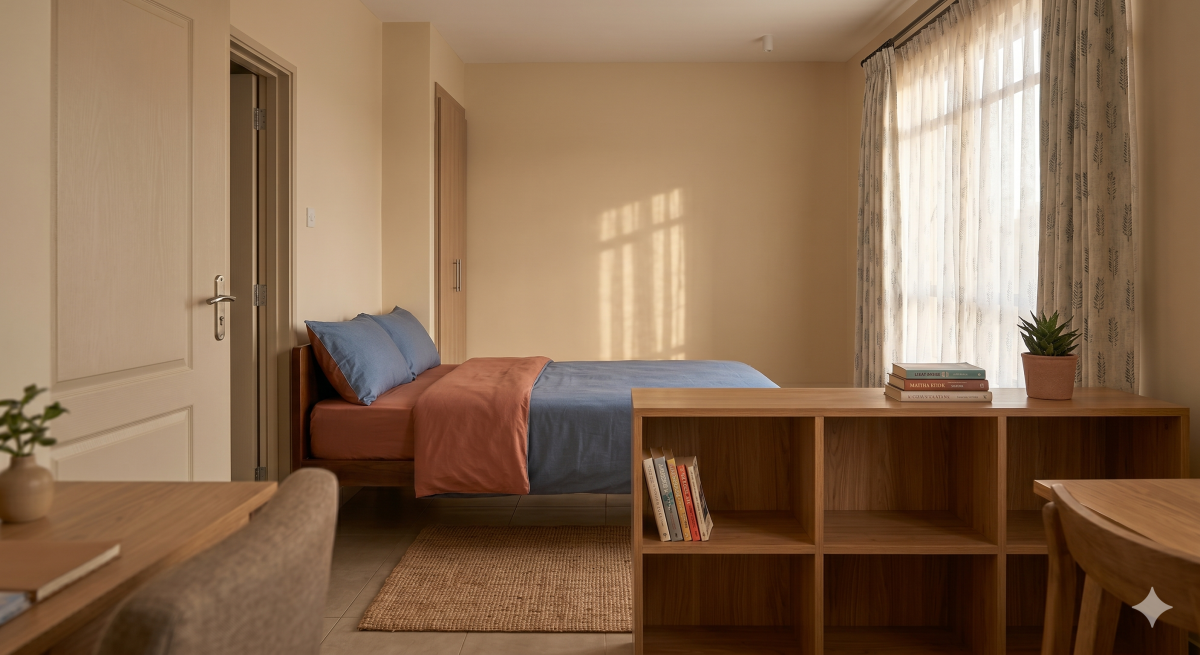
The bedroom is where this matters most. A room with blocked pathways, items piled against the bed, or a wardrobe pushed up against the sleeping area keeps the brain in a subtle state of alert.
Position your bed so you have a clear sightline to the door without being directly in its path.
Aim for at least 60 centimetres of clearance on both sides of the bed so movement feels free. Keep the floor around the bed as clear as possible. Close wardrobe doors at night.
In a bedsitter or studio flat, use your bed’s position to create a visual boundary between your sleeping zone and your living or working area. Even a low bookshelf placed at the foot of the bed can signal to your brain that it has entered a different zone, one meant for rest.