World Hepatitis Day: Passaris calls for action to eliminate Hepatitis as public health threat
By Valerian Khakayi, July 28, 2026Nairobi Woman Representative Esther Passaris has urged Kenyans to take action against hepatitis by getting tested, ending stigma and knowing their status as the world marks World Hepatitis Day.
In a message shared on Tuesday, July 28, 2026, Passaris called on the public to raise awareness about the disease and work together towards eliminating hepatitis as a public health threat.
“This World Hepatitis Day, let’s raise awareness, end stigma, and encourage everyone to know their status. Together, we can work towards eliminating hepatitis as a public health threat. Take action today and get tested today,“ she said.
Echoing the call, the Ministry of Health reminded Kenyans that hepatitis is preventable, treatable and, in many cases, curable.
“Hepatitis is preventable, treatable and, in many cases, curable. Get tested, get vaccinated against hepatitis B, and seek treatment early to protect your health and help save lives,” the ministry said in its World Hepatitis Day message.

World Hepatitis Day
World Hepatitis Day is observed every year on July 28 to raise awareness of viral hepatitis, a group of infectious diseases that affect the liver and continue to pose a major public health challenge globally.
According to the World Health Organization (WHO), viral hepatitis causes liver inflammation and can lead to serious complications such as liver cirrhosis, liver failure and liver cancer if left untreated.
The most common types are hepatitis A, B, C, D and E, with hepatitis B and C responsible for the majority of chronic infections and related deaths.
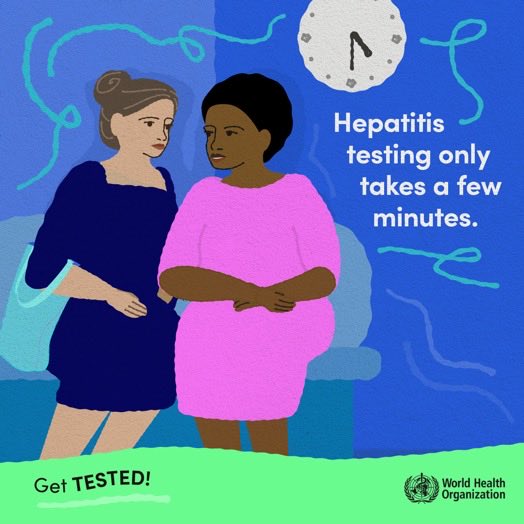
Hepatitis B is spread through contact with infected blood and other body fluids, including from mother to child during birth, while hepatitis C is primarily transmitted through infected blood. Safe vaccination can prevent hepatitis B infection, while effective antiviral medicines can cure most cases of hepatitis C.
Health experts encourage people to seek medical attention if they experience symptoms such as fatigue, fever, nausea, abdominal pain, loss of appetite, dark urine or yellowing of the skin and eyes, commonly known as jaundice. However, many people with hepatitis may not show symptoms until the disease has progressed, making routine testing essential.
This year’s World Hepatitis Day serves as a reminder that early diagnosis, vaccination, treatment and public awareness remain key to achieving the global goal of eliminating viral hepatitis as a public health threat.