Why you should do morning calf stretches before beginning your day
By Dan Kauna, August 15, 2026Every morning, millions of commuters wake up and jump straight into long walks to catch matatus or reach their offices. If you often feel a sharp tightness in your heels or arches during those first few steps, you are not alone.
This uncomfortable stiffness happens because human feet naturally rest at a downward angle during six to eight hours of sleep. Overnight, calf muscles and Achilles tendons settle into a shortened state.
Stepping directly onto hard floors or pavement forces these tight tissues to stretch too quickly, pulling on ankle joints and triggering immediate pain.
How the 30-second heel drop works
A controlled heel drop on any staircase, doorstep, or low ledge gives your lower legs the exact angle needed to relax safely.
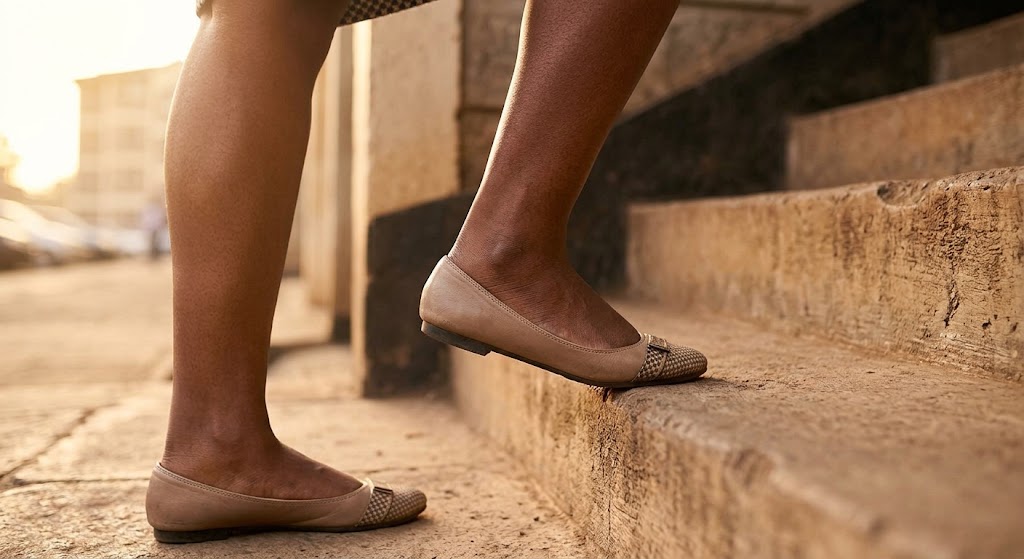
You simply stand with the front part of your foot on the edge of a step, holding onto a support, and slowly lower your heel downwards. Keeping your knee straight gently lengthens the main calf muscle, while a slight bend in the knee targets the deeper tissues underneath.
Holding this position gives your body time to reset.
According to research published in the International Journal of Sports Physical Therapy, “The greatest change in ROM with a static stretch occurs between 15 and 30 seconds.”
This half-minute hold sends signals through the nervous system that tell tight leg fibres to let go of their tension naturally.
Protecting your ankles on the daily commute
Making this short stretch a habit before leaving the house pays off immediately on the road. Restoring natural movement to your ankles protects the Achilles tendon and foot tissues from tiny tears, swelling, and long-term heel pain.

It stops morning limping, eases leg fatigue during long walking commutes, and saves you money on expensive pain rubs or ankle bandages.
For safety, always support your body weight by holding onto a wall or handrail throughout the exercise. Never bounce or force your heel down aggressively, as sudden jerking causes muscles to tighten defensively and increases the risk of injury.
A steady 30-second stretch on each leg gets your stride back to normal, making your morning travel painless and easy.