Advertisement
Avoiding exercise? Here are 5 tips from an expert to get you motivated and moving
29th April, 2026 01:07 AM

During the middle of winter in the Northern Hemisphere, the days are cold, dark and short. It is not an inspiring time to accomplish much of anything, much less those New Year’s resolutions that felt so motivating back on December 31.
Early backsliders may have already called it quits. Twenty-eight per cent of people who make resolutions have dropped at least some of them by the end of January, while 13 per cent say they have dropped them all, according to a 2024 Pew Research Centre survey.
Of course, health-related resolutions such as exercising more often top people’s lists. Getting more physical activity is a worthy goal. Science has proved many times that movement benefits overall physical health, improves mental well-being and contributes to longevity and happiness.
Still, simply knowing the benefits does not always translate into sticking to a resolution to exercise more every day.
“Why aren’t people moving their bodies if they know exercise is good for them?” psychologist Diana Hill asked CNN Chief Medical Correspondent Sanjay Gupta recently on his podcast, Chasing Life.
“We know it’s good for us physically. Mortality rates go down, cancer rates go down. But only about a quarter of us are actually doing it.”

When it comes to starting to move, Hill said many people can come up with plenty of reasons not to, whether it is the general “I don’t have enough time” excuse or the more specific “I’m on my feet all day.”
“There are a lot of inner barriers, psychological barriers to moving our bodies,” she said.
Motivation rises and falls
Hill’s recent book, coauthored with biomechanist Katy Bowman, is “I Know I Should Exercise, But…: 44 Reasons We Don’t Move and How To Get Over Them.” In it, they examine the reasons people avoid exercise, explain how the brain can create excuses and show how to overcome those traps.
“Motivation is more of a wave than it is a consistent thing,” Hill said. You may sign up for an afternoon exercise class after listening to a podcast in the morning, but by the time the class begins, your motivation may already have faded.
How can you keep up your motivation to exercise throughout February and beyond? Hill shared five tips.
Change your relationship with time
One of the top reasons people say no to exercise is because they feel they do not have enough time, Hill said.
That excuse, she pointed out, often has more to do with a person’s relationship with time.
“Movement has been sectioned off into leisure time,” she told Gupta on the podcast. “Many of us feel like we’re having to choose: ‘Do I go to the gym after work, do my bike ride or do I go get groceries?’”
Hill encouraged people to shift from this “either/or” mindset to a “both/and” mindset, which opens up more possibilities.
“We can integrate our exercise and our movement into the time that we have,” she said. “When I’m at the airport, I will carry my bags up the stairs just like a farmer’s carry.”
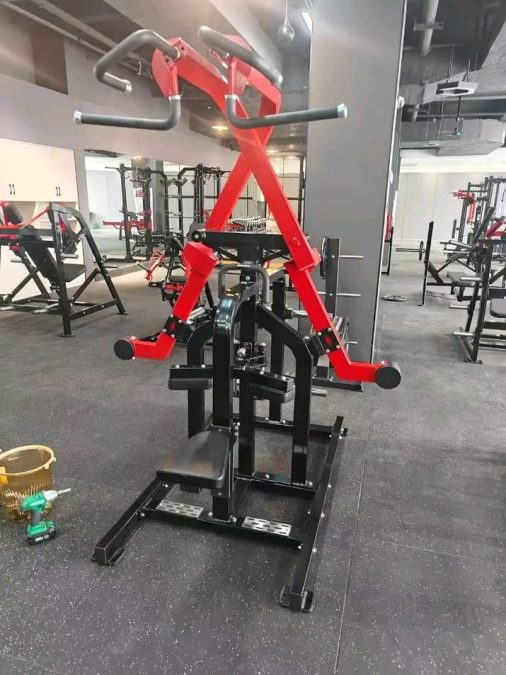
She also uses time at her son’s baseball games to walk around the field cheering him on instead of sitting on the sidelines.
“Our time affluence is malleable,” she said. “When we are doing things that are meaningful, we feel like we have more time.”
Find your real reason
Knowing exercise is good for physical and mental health may not be a strong enough motivator for some people.
“It has to be individualized and personalized to you,” Hill told Gupta.
Achieving better health is the motivating factor for her 77-year-old neighbour who had a heart attack in his late 60s. “I see the guy jogging down our street at 12 o’clock pretty much every day reliably,” she said.
For Hill, health is not always the main motivator. What drives her is spending quality time with her 13-year-old son. He asked her to join him on his upcoming middle school bike trip, an outing she dreaded because she feared being out of control and falling off her bike.
“It was this moment where, wow, I’ve written a book on movement, and I’m unwilling to move my body because it’s too scary,” she said. But she tapped into her intrinsic motivation and said yes.
Set up your space
Create a home environment that guides you toward physical activity instead of the couch, even when you come home tired after a long day.
Hill’s home has a TV room, but instead of a couch it has a basketball hoop and two rings hanging from the ceiling. She said that when her family watches games, they also play alongside the pros.
That kind of solution may not work for everyone, but something simple can help. Leave your walking shoes by the front door so you can slip them on and take a walk without a lot of inner debate.
Practice self-compassion
Having concerns about body image or athletic ability is natural, Hill said, so be kind to yourself.
Imagine speaking to yourself the way you would speak to a friend or loved one. For example, what would you tell your daughter who feels ashamed of the way she moves during a yoga class?
“When you’re self-compassionate, you’re kind, you are mindful. You turn your attention back to just what is happening right now,” she told CNN.
“Many of us feel like we’re not normal, but that’s because there is no normal,” she said. “When you treat yourself with compassion, you may also see other people through more compassionate eyes.”
Keep goals manageable
Make your commitments small enough that you can achieve them every day and build from there.
If you get home after a long day, can you put on your trainers and walk outside for two minutes instead of committing to 10 minutes?
Hill said every hour, during the 10-minute break between clients, she stretches her body or walks around the proverbial block. These short sessions can add up to a 60-minute workout when repeated throughout the day.
In the end, physical activity is not only about improving your health, but it is also about. It also helps you become who you want to be and how you want to contribute to the world.
“If you want a motivation that’s sustained over the long run, make it a big motivation that’s bigger than just you,” she said.