Advertisement
Should you stop cracking your knuckles?
08th August, 2026 07:37 PM
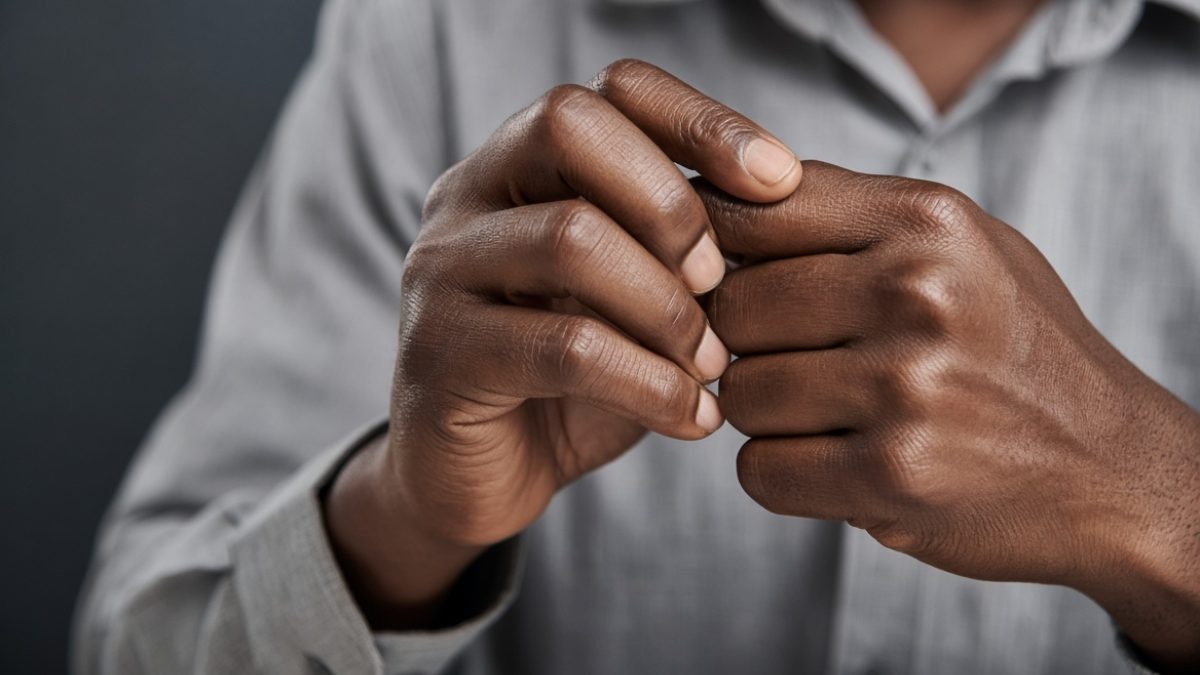
Like a firework exploding in the joint – here’s everything you need to know about cracking your knuckles.
Studies indicate that somewhere between 20 and 50% of people crack their knuckles. So, is this something that we should be worried about – could every pop, click, and crack be causing lasting damage?
A matter of bubbles
For some, a knuckle crack is just a mindless habit. Others like the way cracking their joints feels. But judging by the flurry of chiropractic adjustment videos trending on social media, there’s a good number who get a kick out of hearing that snap.
What happens when we crack our joints is actually relatively simple. A joint is where two bones meet, and the ones found in our knuckles, neck, and back are surrounded by synovial fluid – an egg white-like substance that acts as a lubricant.
When you twist, pull, and bend your joints to crack them, the space within the joint temporarily expands. This causes the pressure of the synovial fluid to fall, and as a result, gases that were once dissolved in the fluid begin to emerge as bubbles.
The sound of a joint cracking – which is actually the sound of the bubbles that have formed collapsing – can be surprisingly loud, up to 83 decibels. That’s roughly the volume of a diesel truck rumbling past at 40 miles an hour (64km per hour). When scientists at the University of California, Davis, viewed a joint that was being cracked using ultrasound, they described the moment of the “crack” as appearing like a firework exploding on the screen.
A mostly harmless habit
It may be noisy, but the sound of your joints popping is “just a normal physiological process”, says Kimme Hyrich, a rheumatologist at the University of Manchester in the UK.

But is normal necessarily harmless?
“Obviously there are some red flags like pain or swelling in the joints,” says Jay Jagannathan, a neurosurgeon with his own practice in Michigan, in the US, who has seen patients with strains and other issues after cracking their necks too forcefully – something which is not recommended (more on this later).
However, generally speaking, when you feel the urge to crack your joints, it’s considered pretty harmless, says Jagannathan.
Some people still worry that vigorous knuckle cracking might result in finger dislocations or tendon injuries, especially when you apply too much force or jerk your finger in a way that could accidentally cause it to detach from its joint. And indeed, there have been some cases of this happening. In 1999, for instance, a Philadelphia-based hand surgeon described how two patients sprained their fingers because they were overly keen to hear the satisfying pop sound.
But with less forceful cracking, such incidents are rare.
What habitual joint crackers seem most worried about, however, is whether they’ll wind up with osteoarthritis – the most common type of arthritis that’s associated with wear-and-tear of the cartilage, the protective tissue that pads your bones at joints. “It’s what a lot of people ask me in my clinic and also around the dinner table,” says Hyrich. “The basic answer is it doesn’t,” she says.
Several studies have debunked this old wives’ tale. In one, published in 1975, researchers studied 28 nursing home residents and discovered that habitual knuckle crackers had similar rates of degenerative arthritis to non-crackers.
A more recent retrospective study examined the history of knuckle cracking in 215 osteoarthritis patients and compared them to controls without the condition. It drew the same conclusion: the amount and duration of knuckle cracking over someone’s lifetime did not affect their osteoarthritis risk.
Getting a grip
Another supposed peril of knuckle popping is that it affects your grip strength – an important health marker linked to a range of health outcomes, including heart disease, cognitive decline, depression, and some types of cancer.
A 1990 study of 74 knuckle-crackers who’d been honing the art for between 18 and 60 years discovered they had weaker hand grips and more hand swelling compared with non-crackers. But these findings were refuted in 2017, when a separate study found no correlation between knuckle cracking and weakened grip.
There are other myths too, such as how frequent cracking can lead to big knuckles or loose tendons, but Hyrich says they’re all untrue. The ultrasound study above backs this up: when doctors physically examined knuckle-crackers, they found no swelling or disability of any sort.
For some people, cracking can provide a sense of relief and a temporary increase in joint mobility, because it stretches the joint, taking it through a wider range of motion. One theory even suggests that cracking stimulates nerve endings around the joint, relaxing surrounding muscles while reducing pain and releasing endorphins – but this hasn’t been proven.