How your lungs change when you start exercising regularly
By Dan Kauna, July 15, 2026Many people start a fitness programme to lose weight or build muscle. While visible changes take time, a major transformation happens inside the chest from the very first week.
For anyone moving from an inactive lifestyle to regular workouts, the lungs adapt in specific, measurable ways to make breathing easier.
Building stronger breathing muscles
When a person starts working out, the diaphragm and the muscles between the ribs must work much harder. Just like leg muscles, these respiratory muscles adapt to the extra workload by becoming stronger and more efficient.
A study on lung function notes that “during exercise, increased stress is placed upon the respiratory system to meet the metabolic demands of the activity.”

To handle this strain, the body increases its maximal ventilatory capacity, meaning the lungs can move more air in and out per minute. Within four to eight weeks of consistent training, the breathing muscles require less oxygen to function.
Stronger chest muscles stop diverting oxygen-rich blood away from the limbs, making a daily run or walk feel less exhausting.
Finding that comfortable second wind
Regular exercise also improves how the lungs match airflow with blood flow, a process known as ventilation-perfusion matching. In an inactive body, some parts of the lungs receive fresh air but lack enough blood flow to distribute oxygen efficiently, wasting breathing effort.
Exercise corrects this imbalance. Medical research confirms that “during exercise, efficient pulmonary gas exchange is characterized by uniform matching of lung ventilation with perfusion.”
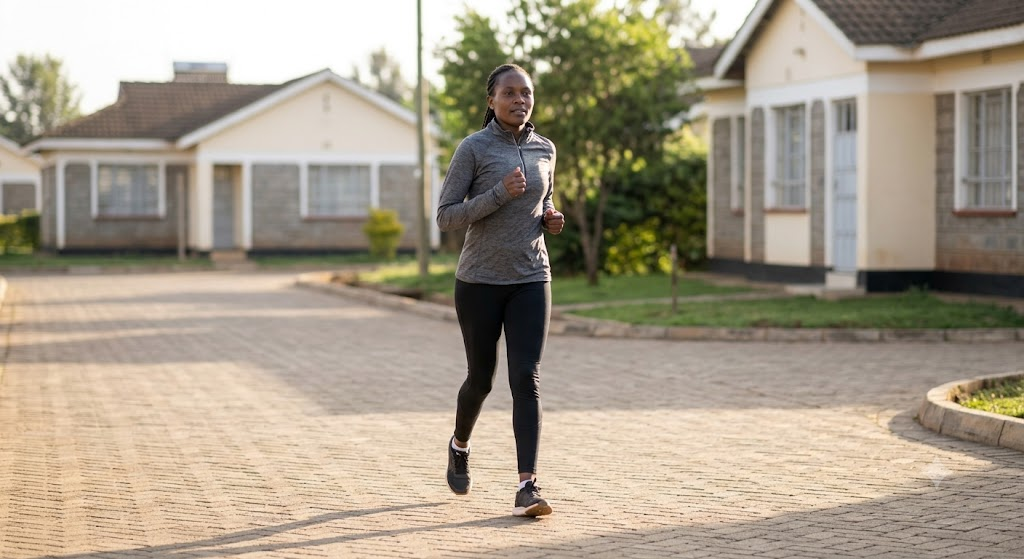
This internal shift directly changes how a workout feels. During the first week of a new routine, a person might gasp for air within ten minutes. As the lungs adapt, reaching the “second wind” – the point where breathing stabilizes and settles into a comfortable rhythm, happens much quicker.
Achieving this capacity does not require spending Ksh5,000 on an expensive gym membership. Simple, consistent activities like brisk walking, cycling, or jogging deliver the best respiratory benefits.
Over time, these physical adaptations ensure that everyday tasks like climbing stairs or running to catch a matatu no longer leave you gasping for breath.