Advertisement
Beyond infancy: Malnutrition’s hidden toll on Kenya’s children
24th September, 2026 02:39 PM
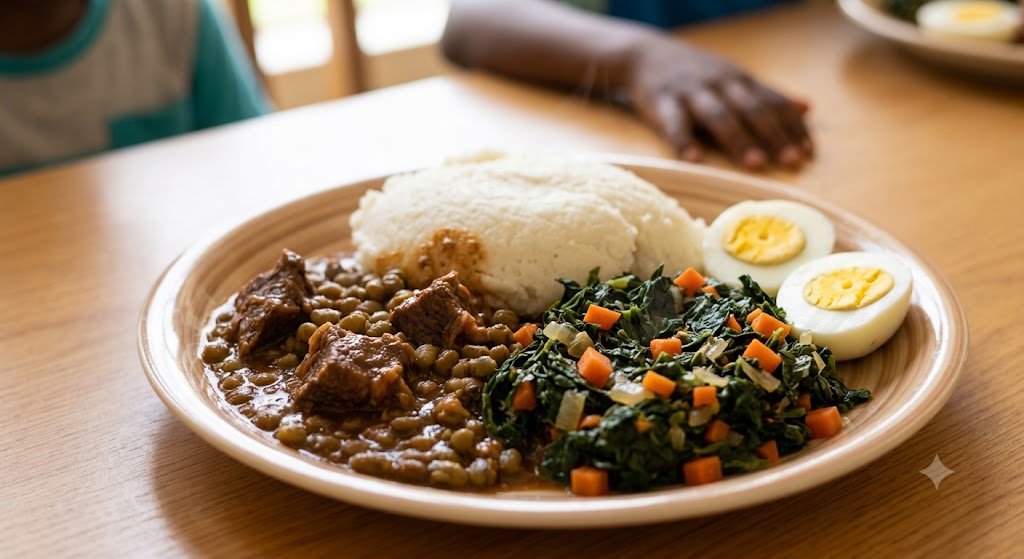
Malnutrition is quietly claiming the lives of children before they ever reach their fifth birthday, both globally and in Kenya. A new United Nations report has confirmed the scale of the problem for the first time, while data from counties like Turkana shows just how far the crisis reaches into everyday life, even where other child and maternal health indicators are improving.
The findings, discussed at the International Maternal Newborn Health Conference (IMNHC) 2026 in Nairobi, paint a picture of a preventable tragedy that is still being underestimated in official mortality records.
In Kenya, that tragedy plays out unevenly: some counties have made remarkable gains in reducing maternal and infant deaths, yet malnutrition continues to drive child deaths well above the national average in drought-prone regions.
The report, Levels and Trends in Child Mortality, published on March 17, found that malnutrition killed 100,000 children under five worldwide before they could reach their fifth birthday.
It marks the first time a global child mortality report has directly estimated deaths of children aged one to 59 months caused by Severe Acute Malnutrition (SAM), a condition defined by a critical lack of food or nutrients needed for growth and health.
The 100,000 deaths represent about five per cent of all under-five deaths recorded in 2024, and the report warns the true toll is likely higher: “The toll is far greater when indirect effects are considered, as malnutrition weakens children’s immunity and increases their risk of dying from common childhood diseases.”
In Kenya, Turkana County illustrates both the scale of the problem and the difficulty of solving it, even where health systems are improving. The county has cut maternal deaths from 1,594 to 381 per 100,000 live births in under a decade, according to the 2022 Kenya Demographic Health Survey (KDHS), and its infant mortality rate of 29 per 1,000 live births beats the national average of 32. Yet under-five mortality in Turkana stands at 55 deaths per 1,000 live births, well above the national average of 41 per cent, largely because of malnutrition.
“The high number of under-fives’ mortality compared to the national average is because Turkana is a hotspot for malnutrition. A third of Turkana children are at risk of malnutrition,” said Gabriel Lopodo, Deputy Director of Family Health Programmes in Turkana, in an earlier interview with Willow Health Media.
He said 32 per cent of children in the county are underweight, against a national average of 10 per cent, while 23 per cent are stunted, compared with 18 per cent nationally. “The disparities backtrack our gains in child survival,” he said.

Lopodo linked the crisis to Turkana’s location in an Arid and Semi-Arid Land (ASAL) zone, where drought is frequent. “Turkana bears the brunt of climate change effects. We are like a social laboratory of climate change, because we are a fragile ecosystem where more effects are felt, and adaptations are recorded,” he explained.
The county was among 21 ASAL counties where drought was declared a disaster in September 2021. “Our malnutrition levels are double the World Health Organization (WHO) recommended rate of 15 per cent. The migratory nature of locals has taught us to come up with strategies that deliver important food and sustenance to the people to counter malnutrition,” he said.
According to the National Drought and Management Authority, 60 per cent of Turkana’s population are nomadic pastoralists, 20 per cent agro-pastoralists, 12 per cent fisherfolk, and 8 per cent live in informal settlements.
The IMNHC presentation also found that child mortality data often fail to record SAM as an underlying cause of death, limiting opportunities for intervention. “The omission suggests the burden is likely substantially underestimated,” the report noted.
UNICEF Executive Director Catherine Russell called the findings a wake-up call. “No child should die from diseases that we know how to prevent. But we see worrying signs that progress in child survival is slowing. This is coming at a time that we are seeing further global budget cuts,” she said.
WHO reports that the highest malnutrition death numbers are concentrated in conflict-affected and drought-prone regions, with a global burden of 20 million children.
Conflict, climate shocks and limited funding are compounding the crisis, the UN found. In Kenya, an Integrated Food Security Phase Classification (IPC) analysis covering October 2025 to February 2026 recorded at least 810,871 malnourished children aged six to 59 months requiring treatment, with 62 per cent of cases in ASAL counties.
This marks a deterioration from the 2025 analysis, which recorded 760,488 cases. Pregnant women needing nutritional support also rose, from 112,401 to 116,796.
Researchers linked the increase to prolonged drought, poor dietary diversity, low milk availability from lack of pasture, and disease outbreaks including cholera, measles, Mpox and Kala-azar, compounded by a weakened health system amid reduced humanitarian funding.
“An urgent, large-scale, multisectoral response is required to prevent further deaths,” the IPC report recommended.
Kenya has responded with partnerships. In 2023, it joined UNICEF, the Food and Agriculture Organization (FAO), WHO, the World Food Programme and the UN Refugee Agency in a $52.6 million (about Ksh6.79 billion) collaboration running until 2026, though UN officials warn that declining development financing is hurting maternal, newborn and child health programmes more broadly.
Health Principal Secretary Mary Muthoni said such measures have already helped cut stunting among under-fives from 40 per cent in 1993 to 18 per cent in 2022.
Embu County, where malnutrition stands at 19.9 per cent, above the national average of 18 per cent, offers one local model. In April 2026, it partnered with Nutrition International (NI) to launch a food nutrition security policy. “One out of five children in Embu is malnourished, many of them due to choices families make.
Lack of knowledge about food combinations makes a mother sell milk and eggs to buy bread and soda for the children,” said NI Country Director Martha Nyagaya, explaining why malnutrition persists even in food-rich counties. The policy focuses on food distribution and training Community Health Promoters (CHPs) to build nutrition awareness.
Veronica Kirogo, Director of Nutrition and Dietetics Services at the Ministry of Health, said reversing child malnutrition costs the government Ksh374 billion annually, according to a 2019 National Treasury survey.
Partners are now urging counties to actively implement nutrition transformation programmes by adapting proven national policies to local conditions.