Why ugali is not as nutritionally empty as people think
By Dan Kauna, June 28, 2026Fitness enthusiasts and online nutritionists often bash ugali, calling it nothing but empty carbohydrates.
This narrative makes many health-conscious Kenyans feel guilty about eating a staple food that has sustained families for generations.
However, reducing Kenya’s favourite meal to empty calories ignores the actual science behind maize flour. When prepared correctly, ugali provides essential nutritional value that goes far beyond just filling the stomach.
Whole grains versus refined flour
The biggest mistake critics make is treating all maize flour the same way. Highly refined white flour loses its nutrient-rich outer layers during the milling process, which causes it to digest quickly and lead to sudden spikes in blood sugar.
Whole-grain flour behaves differently because it retains the nutrient-dense germ and bran.

This unrefined version contains resistant starch, which takes much longer to break down in the body. A peer-reviewed study published in Cogent Food & Agriculture notes that “resistant starch (RS) from maize reduces the risk of cecal cancer, atherosclerosis, and obesity-related complications.”
This slow digestion ensures a steady release of energy, providing hours of fullness and naturally helping people control food portions without constant snacking.
Boosting gut health and affordable energy
Apart from keeping hunger at bay, whole-grain maize plays a significant role in digestive health. The natural fibre acts as a prebiotic, which feeds the healthy bacteria in the human digestive system.
A 2010 study found that a whole-grain maize diet creates a “bifidogenic modulation of the gut microbiota,” which simply means it multiplies the beneficial gut microbes that protect the stomach.
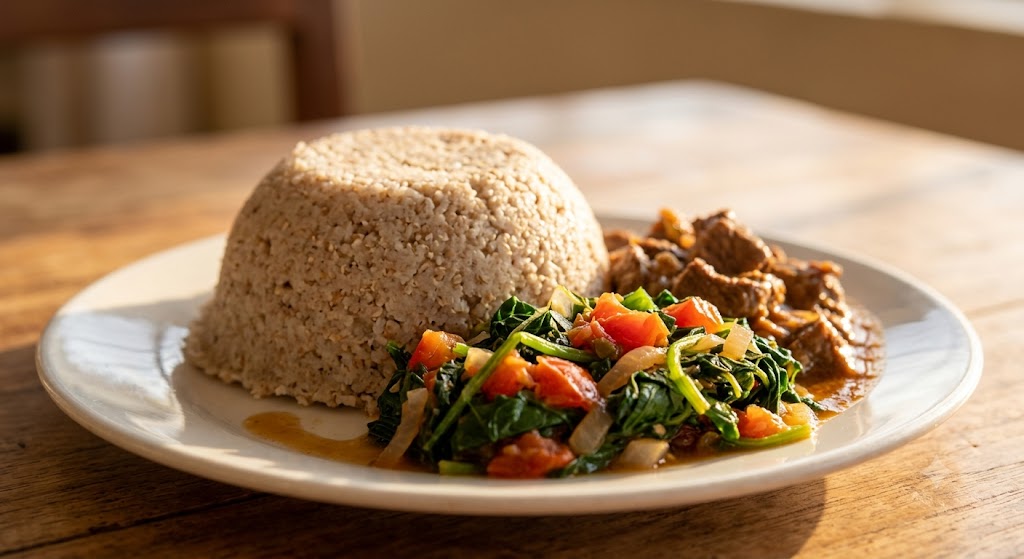
For the everyday worker, ugali is also the most reliable and affordable source of daily calories. A packet of maize flour often costs under Ksh200, making it an excellent economic choice compared to alternative complex carbohydrates.
When eaten with traditional vegetables like managu, fish, or eggs, ugali forms a solid base that helps the body absorb fat-soluble vitamins from those side dishes. Nutrition science confirms that whole-grain ugali is a healthy, budget-friendly pillar of the Kenyan diet.