Advertisement
The longest shadow: How childhood hunger shapes brain health decades later
25th July, 2026 03:06 PM

A landmark Kenyan brain study finds childhood malnutrition may harm ageing minds more than a cancer diagnosis decades later, reshaping how the country should think about brain health.
John Kariuki, 47, had started to worry about himself. Names slipped. Small details vanished mid-conversation. In his community, such forgetfulness was treated as a joke, or worse, dismissed as a private failing.
“We used to joke, it is like everyone is a mental case, because we have issues ranging from maybe drugs, alcohol and other vices,” Kariuki said. “But now, once you have the information, you know the right questions maybe to give to the community.”
That shift is what a three-year Kenyan study into brain ageing gave him.
The study, Brain Resilience Kenya (BRK), led by the Aga Khan University Brain and Mind Institute (AKU-BMI), followed more than 404 adults aged 35 and above using brain imaging, blood-based biomarkers, cognitive testing and community engagement.
Its central finding upends how many people think about what threatens the ageing brain: growing up hungry appears to do more lasting damage than a cancer diagnosis delivered decades later.
To test resilience under stress, researchers followed 50 cancer patients and their caregivers through treatment and found something unexpected: patients’ anxiety and depression fell over time rather than rose, while caregivers without the same clinical support saw their own anxiety climb.
Early life nutrition, education and social connectedness emerged as the strongest threads in the data, with direct implications for how Kenya prepares for a rapidly ageing population that still has no national dementia plan.
How sleep, diet and routine shape long-term brain health
Kariuki is a Community Health Promoter (CHP) who enrolled after seeing the study on social media. He left with a full-body MRI and a clean bill of health, but also learnt how to explain to the roughly 100 households he supports what their forgetfulness could signify and when it merits concern. His outreach has since rippled outward, reaching fellow health promoters and peer educators.
Zahid Rajan, another participant, offers a second window into what the research changed. It made him newly conscious of how sleep, diet and routine shape long-term brain health, and pushed him to improve his own habits through the study’s structured exercises. Rajan argued that African researchers need their own longitudinal data “of how to live better and how to live longer” rather than relying solely on findings from the West.
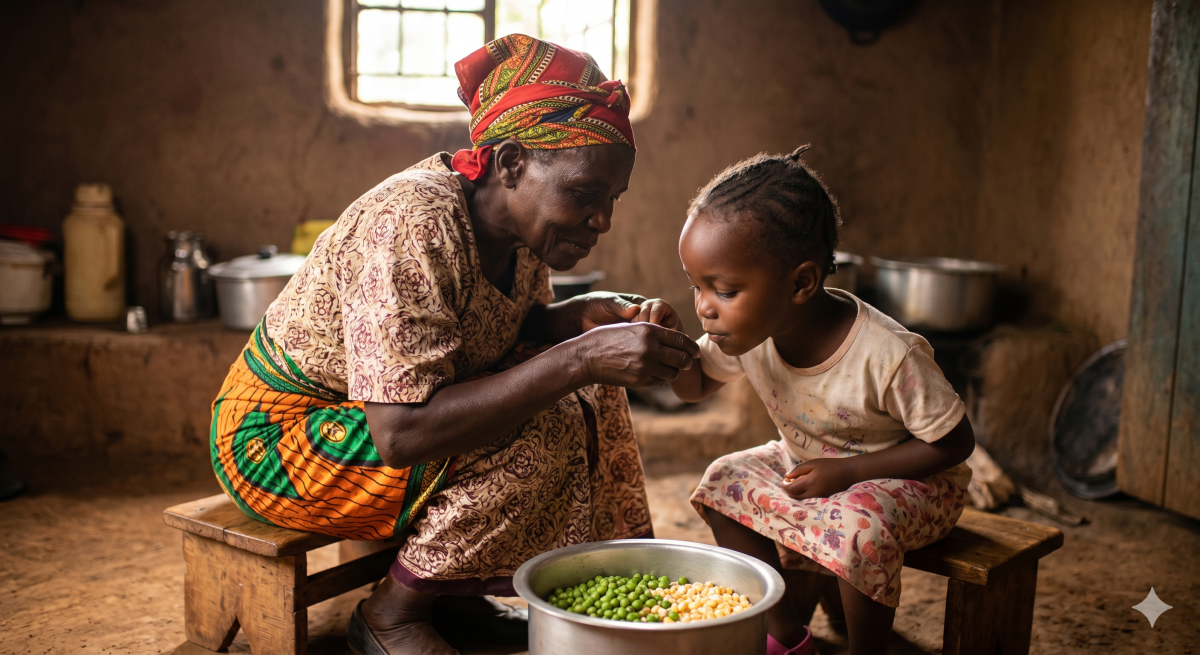
For Prof Mansoor Saleh, Co-Principal Investigator and Founding Director of the Cancer Centre at Aga Khan University, the study set out to answer a simple question: how does the brain age under stress, and what protects it? “We knew from the data that childhood hunger below the age of five impacts your brain health when you are an adult,” he explained.
To test resilience without inflicting harm, researchers turned to a population already living through a demanding experience: a cancer diagnosis. Fifty patients, split evenly between breast and prostate cancer, were enrolled alongside 50 of their caregivers, with testing carried out every three months, from diagnosis through to 12 months after treatment ended.
Researchers expected anxiety and depression to climb as chemotherapy, hair loss and disrupted routines took their toll. Instead, the opposite happened. “The findings are exactly the opposite. In both breast and cancer patients over time, over the baseline to 12 months, anxiety went down, depression went down,” Prof Saleh said.
Early life experiences play a very important role in how resilient you are later in life
Caregivers, who lacked the same clinical support, saw their own anxiety edge upward instead. He credits the clinic environment itself, the psychologists, nurses and physicians surrounding patients, for the improvement. “The support system within the clinic gives you a cocoon of safety, is like a resilient factor,” he said, adding that the team has since launched a breast cancer support group in response.
Prof Zul Merali, Founding Director of the Brain and Mind Institute, said the study drew on lifelong stressor histories, biomarkers, brain scans and social and educational factors together, rather than any single measure. He highlighted the study’s retention rate: of more than 400 people recruited, 91 per cent stayed through its several-year run.
“We’ve found out that early life experiences play a very important role in how resilient you are later on in life in dealing with stressors, dealing with challenges,” Prof Merali said, pointing to nutrition, exercise and social connectedness as recurring protective factors. He was equally direct about the community’s role once someone falls ill.
“How successful you are also depends not just on the treatment that you got, but on the community that you live in, how you are received, how you are supported or how you are ostracised,” he said, noting that stigma can shape outcomes as much as clinical care does. He framed resilience as something built rather than innate, nurtured by families, strengthened by communities and encouraged through public policy.
Dr Karen Blackmon, Consultant Neuropsychologist at the Institute and Co-Principal Investigator, said the layered method gave researchers a fuller account of brain ageing than any single tool could. Nutrition and education in childhood were among the strongest predictors she identified. “How much food someone ate in childhood, the nutritional availability of nutrients and the availability early in life of education… predicted lifelong brain health,” she said.
Cancer patients with committed caregivers were less anxious, less depressed a year into treatment
She was struck, too, by softer factors, including a person’s inner sense of safety and access to a caring community. Cancer patients with committed caregivers were often less anxious and less depressed a year into treatment than at the start, a finding she attributed to the support of family and the research team itself. “We study them to make a difference, to have an impact,” she said.
The BRK findings land against a backdrop of a rapidly ageing Kenyan population and a health system still building the infrastructure to respond to it. Kenya’s over-65 population, currently around 1.3 million people, or roughly 2.4 per cent of the population, is projected to more than double as a share of the population by 2050, according to a STRiDE Kenya situation report on dementia.
Age-standardised dementia prevalence is projected to climb from about 600 cases per 100,000 people in 2020 to 660 by 2050, a rise of more than 300 per cent in the total number of people affected.
Kenya has no national dementia policy or dedicated legislation protecting people living with the condition, though the Ministry of Health has been working with the World Health Organization and local partners including the Alzheimer’s Dementia Organisation Kenya (ADOK) and the Africa Mental Health Research and Training Foundation (AMHRTF) towards a National Dementia Plan.
Dr Mercy Karanja, Director of the Mental Health Division at the Ministry of Health, has said the government is training healthcare workers and improving diagnostic access, while acknowledging that clear national policy remains a work in progress.
A 2024 study led by AMHRTF screened 3,546 older adults in rural Kenya and estimated that roughly 258,000 older Kenyans could be living with dementia, many without a formal diagnosis, with poorer quality of life and greater loneliness among those who screened positive.

Burden of neurological and psychiatric conditions now exceeding cancer or cardiovascular diseases
Globally, the WHO estimates that more than one in three people will experience a brain disorder during their lifetime, with the burden of neurological and psychiatric conditions now exceeding that of cancer or cardiovascular disease.
Dementia cases worldwide are projected to rise from roughly 57 million today to around 78 million by 2030 and close to 139 million by 2050, with the steepest growth expected across low- and middle-income countries, including much of East Africa.
The World Economic Forum, citing a 2026 report on brain health, estimates that stronger investment in prevention could avert 267 million years of disability worldwide by 2050 and generate trillions of dollars in economic gains.
Set against that trajectory, the BRK study’s emphasis on childhood nutrition, education, social connection and community support reads less like an academic footnote and more like an early warning about where Kenya’s health priorities may need to shift.
The interventions likely to matter most, researchers argue, are not confined to hospitals: school feeding, education access, cardiovascular care and efforts to keep older people embedded in supportive families rather than isolated by stigma or poverty.
AKU-BMI says the findings will feed into future research, public health programming and policy discussions aimed at protecting brain health across Kenya and the wider continent.
For a country still without a national dementia plan, the study adds a Kenyan, community-rooted evidence base to a conversation that has, until now, relied heavily on data generated elsewhere.