Why you should choose a Ksh80K suit over a Ksh8K one
By Dan Kauna, July 20, 2026When shopping for a suit, the price gap between an entry-level set and a high-end option can feel puzzling. Most buyers assume that paying Ksh80,000 instead of Ksh8,000 simply buys a designer name.
However, the real difference comes down to fabric quality, the hidden engineering inside the jacket, and how well the garment holds up over time.
How fabric choice and inner lining react to heat
Budget suits costing around Ksh8,000 are usually made from synthetic fabrics like polyester. While these materials keep prices down, they trap heat and moisture, making the jacket feel stiff and warm during sunny afternoons.
High-end suits, on the other end, use natural wool or wool blends. Wool lets air pass through easily, keeping you cool throughout the day.
Peer-reviewed research on textile comfort notes that “there is a strong relation between air permeability and water vapour permeability for most of the textile material”, explaining why natural fabrics stay comfortable while synthetic ones trap sweat.
Inside the jacket, construction matters even more. Cheap suits rely on fused interlining, where glue bonds the outer fabric to an inner layer.
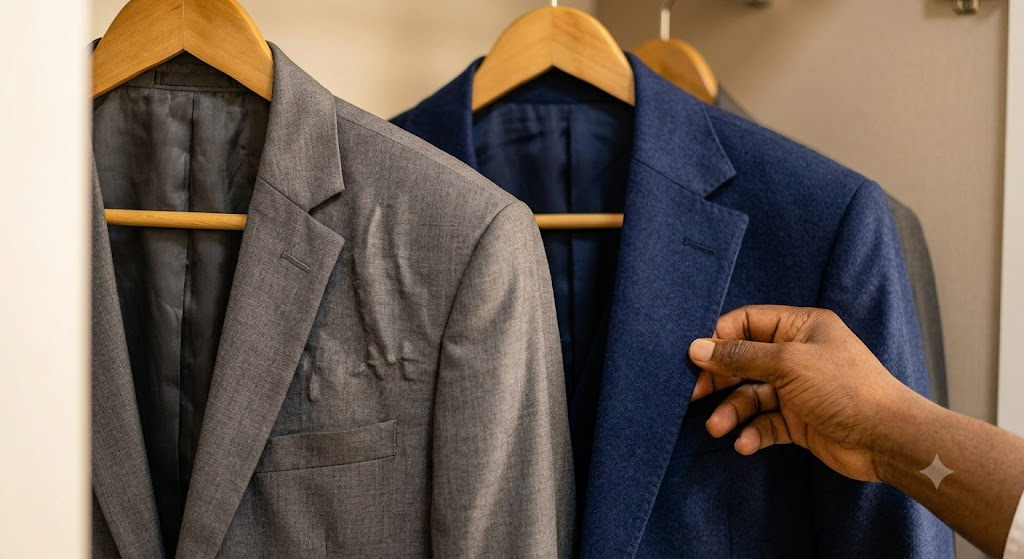
Heat, rain, and dry cleaning eventually break down this glue, creating permanent bubbles across the chest.
Premium suits use floating canvas construction made from natural hair. Suspended freely inside, this canvas gradually moulds to your body shape, helping the jacket drape naturally without bubbling.
Tailoring craftsmanship and the actual cost per wear
Quality shows in the subtle details. A well-made jacket features soft shoulder padding, neat pick-stitching along the lapels, and flexible interior seams that move with you.
In contrast, cheap options rely on thick shoulder pads and stiff synthetic thread that restricts movement.

Understanding how often you wear a suit changes the financial decision.
Buying an Ksh8,000 fused suit works well for a one-off event or job interview. However, wearing that same suit three days a week leads to shiny friction patches and loose stitching within six months.
A well-cared-for Ksh80,000 wool suit lasts for years, delivering far better value per wear over time.