Clothes that photograph worst on social media: what to wear instead
By Dan Kauna, May 15, 2026The outfit looked perfect in the mirror. Then the photo came through and suddenly the fabric was rippling, the pattern had collapsed into visual chaos, and the colour managed to age you by ten years.
Sound familiar? This is not a lighting problem. It is a wardrobe one. And once you understand why cameras behave the way they do, it is completely fixable.
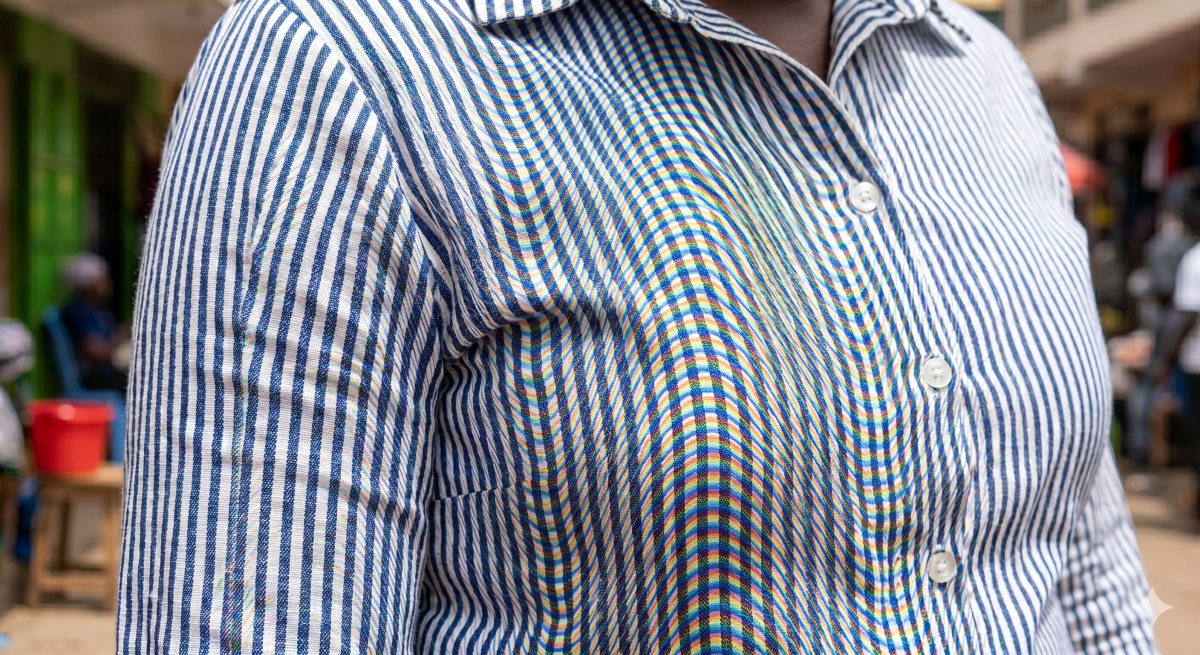
The camera does not see the way the human eye does. Every digital sensor samples light at a fixed resolution, and when the pattern in a fabric is finer than that resolution can cleanly capture, the sensor produces its own interpretation.
Researchers publishing in Information Sciences identified this, noting that “there are many kinds of moiré patterns in real life, such as those arising from stripes in clothing”, a distortion produced when two conflicting grids, the camera sensor and the fabric weave, clash and create wavy, shimmering interference across the final image.
It is why your favourite pinstripe shirt, houndstooth blazer, or fine-check kitenge can photograph like a hallucination even in good light.
Why some outfits fall apart on camera
Beyond fine patterns, shiny fabrics are among the most reliably damaging on-camera choices.
Sequins, satin, metallics, and high-sheen polyester catch and bounce light unpredictably, creating hotspots that blow out the exposure and flatten colour.
A 2025 study published in Scientific Reports by researchers at Incheon National University found that “textiles vary in surface properties such as gloss, transparency, and texture, and these variations can influence the colour of the textiles in digital images” – which explains why the same top can photograph completely differently depending on your light source and why glossy fabrics are a gamble even when everything else is right.
Oversized, boxy silhouettes also create trouble. The camera collapses three dimensions into two, and when the cut does not follow the body, there is nothing to anchor the eye, only visual bulk where there is none in real life.
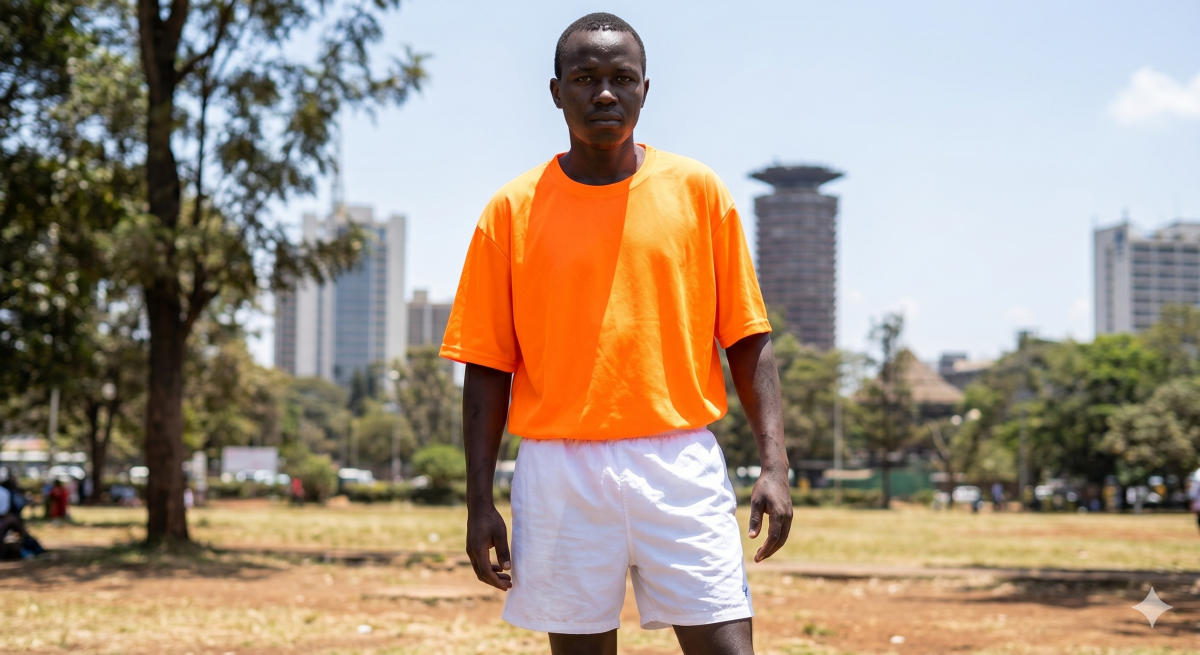
Neon and heavily saturated colours, particularly fluorescent yellow, electric orange, and hot pink, exceed what most smartphone sensors handle well, resulting in a blown-out, flat appearance on screen.
Very bright white presents its own challenge: on deeper skin tones especially, a white garment can force the camera’s auto-exposure to compensate for the high luminance, underexposing the face and body in the process.
What to reach for instead
The camera-friendly wardrobe is, fortunately, a genuinely beautiful one.
Solid, matte fabrics (cotton, linen, crepe, and jersey) absorb light evenly and translate their colour cleanly to the sensor. They are the photographic equivalent of a clear signal.
Mid-toned and jewel-toned colours are your camera’s closest allies. Deep olive, terracotta, burgundy, forest green, and navy consistently photograph well across a wide range of skin tones, offering enough contrast to separate clearly from most backgrounds without overwhelming the sensor.
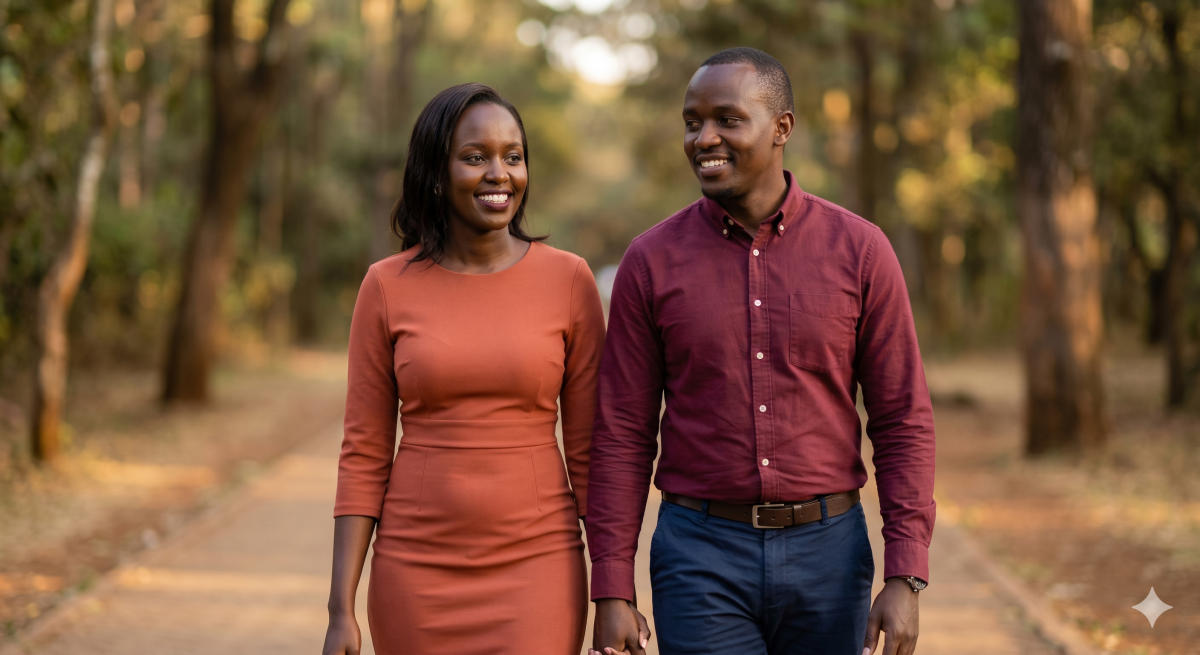
On deeper skin tones specifically, these rich mid-tones bring out warmth and depth rather than competing with them.
Fit is as important as fabric. Tailored pieces with a defined structure – a nipped-in waist, a clean shoulder line, an A-line skirt – give the camera something to work with.
A well-fitting outfit reads as intentional and composed on screen in a way that oversized or ill-fitting clothing rarely does. A well-fitted outfit consistently looks more polished than expensive clothing that does not fit correctly. The same holds on camera, and doubly so.
If you are new to dressing with photography in mind, start with one rule: when in doubt, go for solid.
A single-colour outfit in a matte, mid-toned fabric is the most reliable foundation for a strong social media picture. From there, you can build confidently, and the camera will keep up.