Beyond donations: 5 meaningful ways to support people with disabilities
By Cynthia Lodite, September 19, 2026When Kenyans hear about someone living with a disability who needs help, the first response is often to contribute money, food, clothes or other items.
Fundraising through WhatsApp groups, churches, chama groups, workplaces and neighbourhoods has become one way people rally around families going through difficult situations.
While donations can make a difference, support does not always have to involve money. Sometimes, what a person with a disability needs is an accessible environment, an opportunity to earn a living, assistance with a task or simply to be treated with dignity.
Here are five meaningful ways Kenyans can offer support beyond donations.
1. Make everyday spaces more accessible
A person using a wheelchair may struggle to enter a shop, church, office or public building if there is no ramp. Someone with a visual disability may also find it difficult to navigate spaces without appropriate assistance.
Simple changes can make a difference. Businesses, churches, schools and landlords can consider ramps, accessible toilets, clear pathways and other features that make spaces easier to use.
Accessibility should not only be considered when a person with a disability asks for it. It can be part of how public and private spaces are designed from the beginning.
2. Offer opportunities, not just handouts
A person living with a disability may want to work, run a business or develop a skill rather than depend on donations.
If you own a business, consider whether there are jobs that can be done by people with different disabilities. If you know someone with a particular skill, you can also recommend them for opportunities instead of assuming they only need financial assistance.
For example, recommending a talented baker, tailor, graphic designer, journalist or phone repair technician to potential customers can help create a source of income.
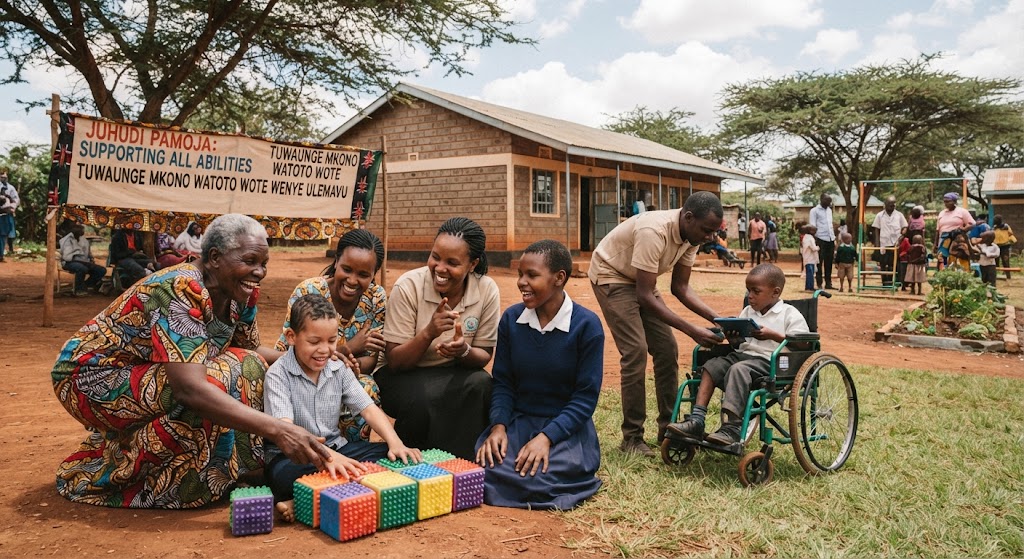
3. Ask before offering help
Seeing someone struggling with a task does not always mean they need assistance.
Before pushing a wheelchair, holding someone’s belongings or physically guiding them, ask whether they would like help and how you can assist.
This is especially important because people with disabilities have different needs. What helps one person may not work for another.
A simple “Can I help you?” gives the person an opportunity to explain what they need.
4. Include people in everyday activities
Disability should not automatically mean being left out of social life.
Invite your friend, relative, colleague or neighbour with a disability to weddings, family gatherings, church activities, chama meetings, trips and other social events.
But think about accessibility when making the invitation. If an event is being held upstairs in a building without a lift, for example, a person using a wheelchair may not be able to participate.
Inclusion means making it possible for people to take part, rather than inviting them to an environment they cannot access.
5. Treat people with dignity
One of the simplest ways to support someone with a disability is to treat them like everyone else.
Avoid staring, making jokes about someone’s disability or assuming that they cannot make decisions for themselves. Speak directly to the person rather than automatically addressing the person accompanying them.
Even when fundraising for someone, think carefully about the information and photographs being shared on social media. A person’s difficult circumstances should not become entertainment simply because people are trying to raise money.