Advertisement
Inside the 72 hours that defined Raila Odinga’s final journey
19th October, 2025 11:58 PM
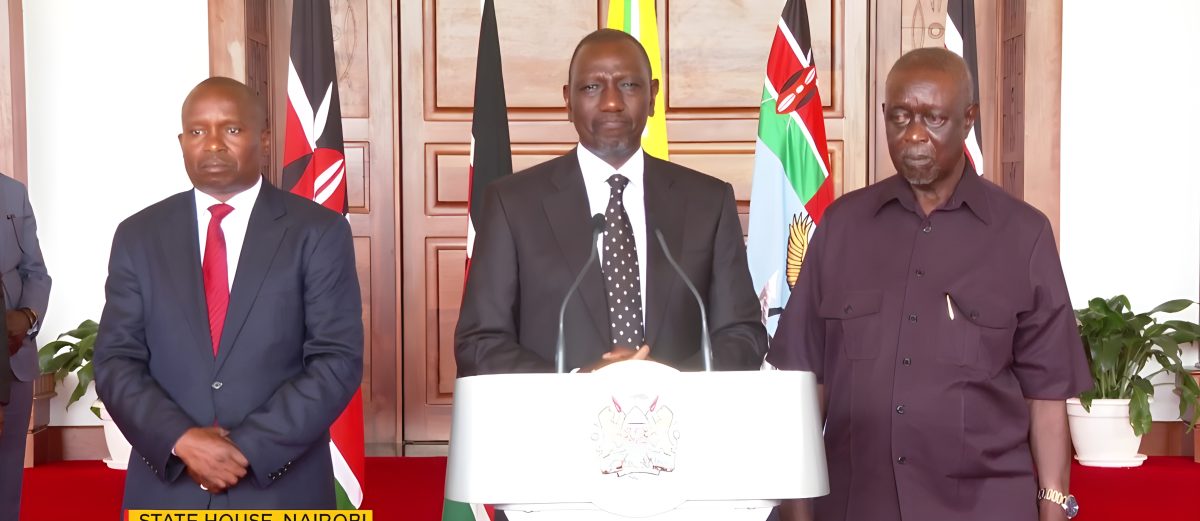
Sandwiched by his Deputy President Kithure Kindiki on one side and the late Raila Odinga’s elder brother Oburu Odinga on the other, President William Ruto, on Wednesday, October 15, 2025, confirmed Kenyans’ worst fears.
Fears that their enigma, their Jakom, their Agwambo, was no longer breathing. Reason? He succumbed to a cardiac arrest while in India.
Also Watch: Leaders break down in tears as they mourn Raila Odinga
He was 80. The nation froze. A wave of disbelief rippled across counties and continents.
Offices fell silent, matatus stalled mid route, and radios dimmed before switching to solemn tunes. For millions, it felt as though the country’s heartbeat had stopped.
Raila Amolo Odinga, former Prime Minister, freedom fighter, political firebrand, and the face of Kenya’s democracy, was gone.
But even in death, he had the final word. In his will, he had requested to be laid to rest within 72 hours of his passing. That wish set an entire nation in motion.
The Mission to Bring Baba Home
Within hours of the announcement, President Ruto addressed the nation. His voice, heavy yet steady, called Raila a “once in a generation leader” and “a tower of principle and courage.”
He declared seven days of national mourning and ordered flags to fly at half mast. For a brief, rare moment, Kenya stood united in grief.
A high-level delegation led by Prime Cabinet Secretary Musalia Mudavadi, accompanied by Cabinet Secretaries Hassan Joho and Kipchumba Murkomen, boarded a Kenya Airways flight to India to oversee the repatriation of Raila’s body.
Also watch: Leaders stream into Jaramogi University for Raila’s final rites
The flight’s callsign was renamed RAO001 in his honour, a symbolic callsign that soon became the most tracked in the world.
As thousands followed its path home on Flightradar24, social media turned into a silent vigil.
The screen showed a single plane gliding across oceans, carrying with it the weight of a nation’s sorrow.
When the aircraft touched down at Jomo Kenyatta International Airport on the morning of Thursday, October 16, a sea of mourners awaited.
Some wept openly, others whispered prayers. The tarmac became sacred ground.
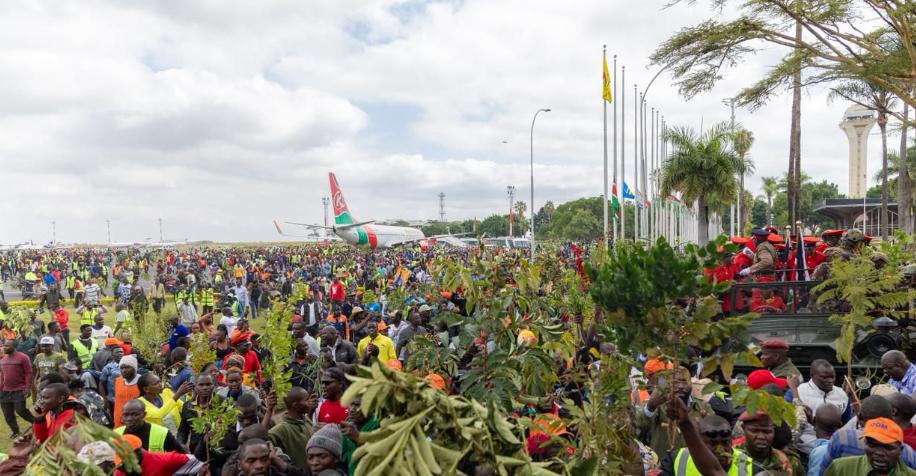
For those few hours, JKIA was no longer an airport. It was a shrine for a man whose story had shaped Kenya’s destiny.
The Kasarani Stadium rally
The convoy that left the airport turned into an unplanned procession of love and defiance.
From Mombasa Road to Kasarani, the streets were lined with flags, tears, and song. Some held placards that read “Baba Forever” while others waved twigs of remembrance, and others wept loudly and bitterly.
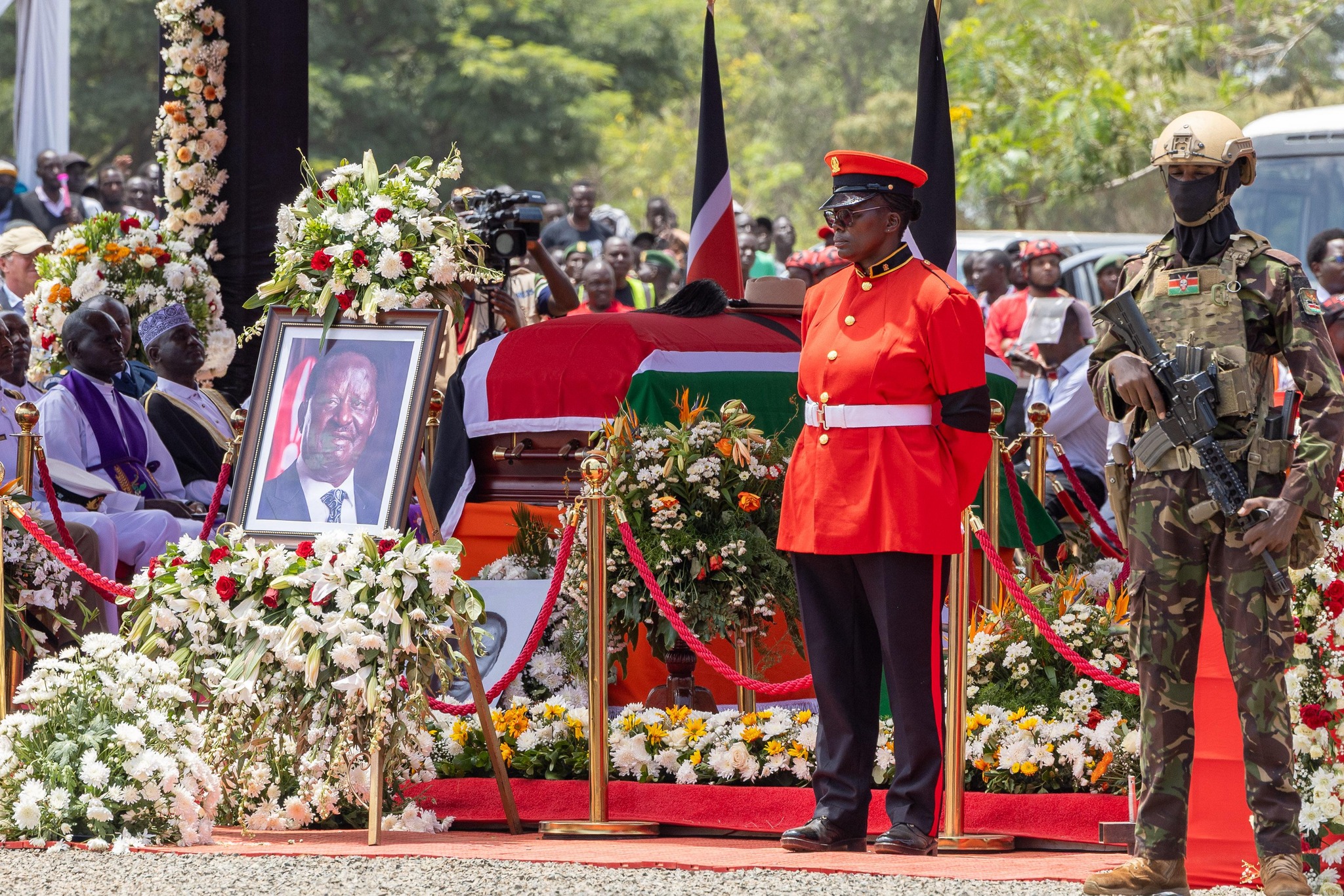
At Kasarani, the mood was heavy yet proud. Freedom songs echoed as thousands filed past the casket, draped in the national flag.
But amidst the emotion came tragedy. In the stampede that followed, three mourners lost their lives. Kenya mourned them too, recognising the deep devotion Raila had inspired.
On Friday, a state funeral was held at Nyayo Stadium. President Ruto, former President Uhuru Kenyatta, African heads of state, and global dignitaries filled the stands. As the band played “Kenya Yetu,” the crowd fell into collective silence.

“He was unyielding in his vision for a just and united Kenya,” President Ruto said, his voice momentarily breaking. The words hung in the air, both tribute and truth.
Later that evening, a Kenya Air Force plane ferried Raila’s body to Kisumu. Tens of thousands lined the road from the airport, singing his name, holding candles and portraits.
For hours, the city stayed awake, unwilling to let go.
By dusk, a helicopter lifted off, carrying him to his ancestral home in Bondo, where it all began.
Raila’s funeral takes place in Bondo, Siaya County
On Sunday, October 19, Kenya gathered for the last goodbye at the Jaramogi Oginga Odinga University of Science and Technology.
The field, once home to youthful rallies and songs of freedom, was now a resting ground for its most formidable son.
Leaders, family, and citizens watched as the casket was lowered beside his father’s grave.
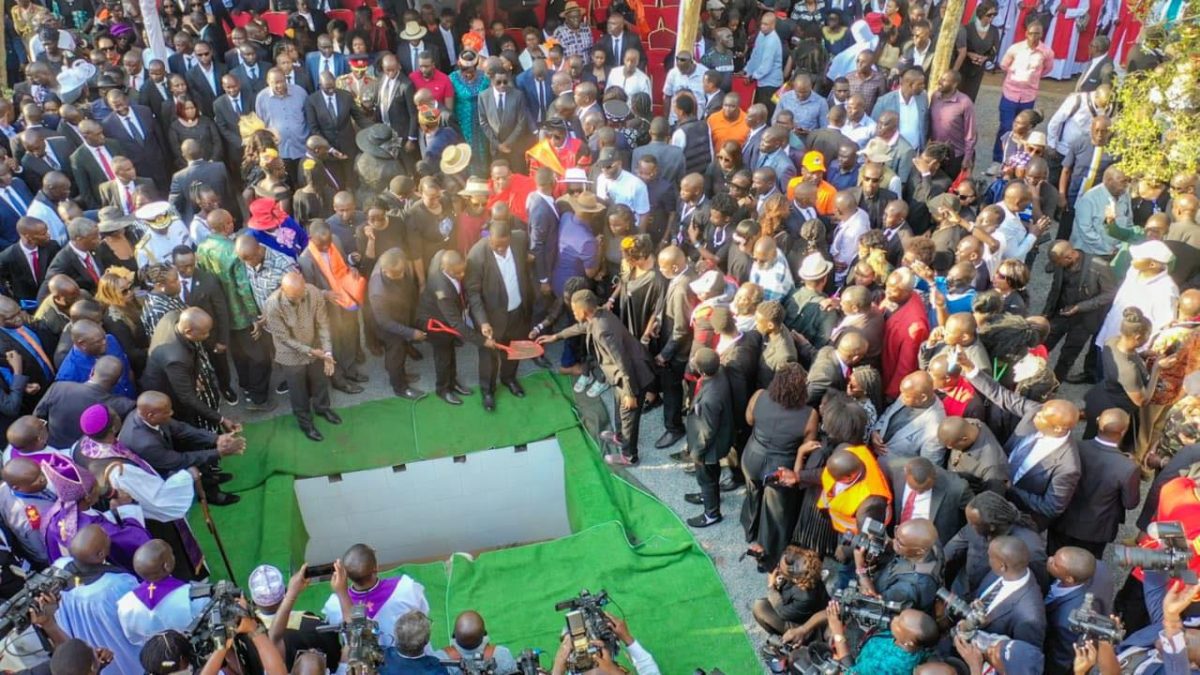
The crack of a 17-gun salute split the silence, echoing across Lake Victoria’s horizon. Birds scattered, children clutched their mothers, and men bowed their heads.
At that moment, Kenya stood still. In just 72 hours, a nation had cried, remembered, and reconciled.
The journey from Kerala to Bondo had been more than a passage of death. It was a pilgrimage of gratitude.
Raila Odinga had fought the good fight. He had shaped generations, defied regimes, and redefined democracy.
The soil closed above him, but the story of his life and the spirit of his struggle will echo through Kenya’s hills and valleys for years to come.