Advertisement
Original content era: What Instagram’s new update means for content creators
03rd May, 2026 11:56 AM

Instagram has officially ushered in the “Original Content Era.” On Thursday, April 30, 2026, the platform announced a major algorithm expansion that extends its originality protections previously limited to Reels to photo posts and carousel content.
Accounts that mainly re-upload other creators’ work will no longer be recommended in Explore, the Reels tab, or other discovery surfaces. The move is designed to prioritise genuine creators and ensure original work receives the visibility it deserves.
For years, creators have expressed frustration as repost pages gained more reach and engagement than the source.
This update directly addresses that concern by shifting the platform’s focus toward authenticity and creator ownership. Instagram has made it clear that original creators are central to its future direction.
How the system works
Instagram has not fully disclosed the technical details, but the system evaluates originality mainly within the platform over a rolling period, often around 30 days.
If an account is found to post mostly unoriginal content, it may lose recommendation eligibility to non-followers, although its posts can still reach existing followers.
The system does not only check who posted first. It also analyses whether content appears widely reposted, whether similar material already exists on the platform, and whether there are signs of reuse, such as watermarks from other apps like TikTok.
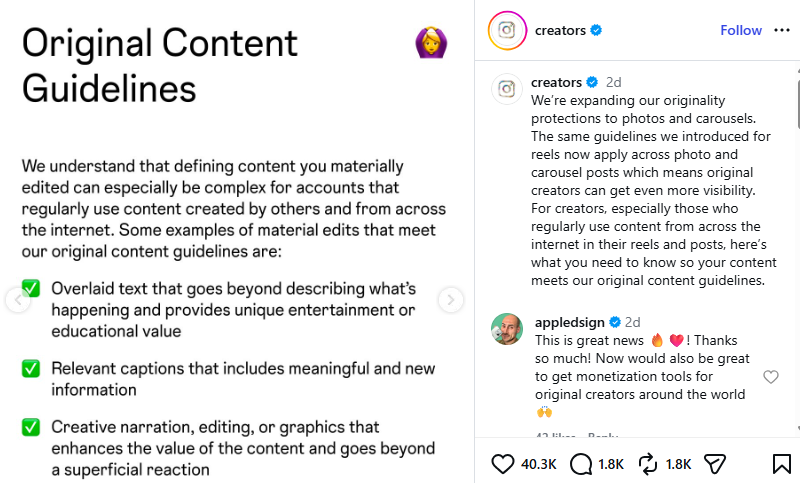
Simple reposting or minor edits like adding borders, subtitles, or credits are no longer enough. Instead, Instagram now rewards meaningful transformation, including commentary, storytelling, narration, or creative editing that adds new value.
Creators can still share content from TikTok or other platforms, but performance depends on originality. If the content is created by the user, it is generally acceptable to repost.
Instagram is encouraging creators to use official tools instead of simple reposting. Features like Collabs allow shared credit and reach, while Remix lets creators add their own input. Proper credit and paid partnership tags also help maintain visibility while sharing content ethically.
However, videos with visible watermarks, viral repost clips, or meme compilations without added value may see reduced reach. Instagram is not banning reposts, but it is clearly prioritising content that is original or creatively transformed.
Impact on reach and monetisation
This update significantly changes how content is distributed. Original posts are more likely to appear in Explore and recommended feeds, giving creators greater exposure to new audiences. On the other hand, repost-heavy accounts may experience reduced visibility, slower growth, and fewer impressions from non-followers.
Memes pages, clip accounts, streamer highlights, and celebrity update blogs are among the most affected. These pages often rely on reposted material and may now need to adapt by adding commentary, edits, or storytelling to maintain engagement.
Meanwhile, creators who produce original content, such as lifestyle influencers, photographers, and fashion creators, are likely to benefit from stronger reach and more meaningful interactions.
Because reach and engagement are closely tied to income, the update also affects monetisation. Creators who consistently produce original content may see improved performance in brand deals, sponsorships, and other revenue streams. Higher engagement and better visibility can translate into stronger earning potential.
In contrast, accounts that depend heavily on reposted content may face declining engagement, which could reduce their attractiveness to brands unless they adjust their strategies.
Author
William Muthama
William Muthama is a digital journalist with a focus on entertainment, human interest, and current affairs. Share stories: [email protected]/ [email protected]
View all posts by William Muthama