Advertisement
DC cuts Wonder Woman from its new superhero universe
04th September, 2026 04:34 PM
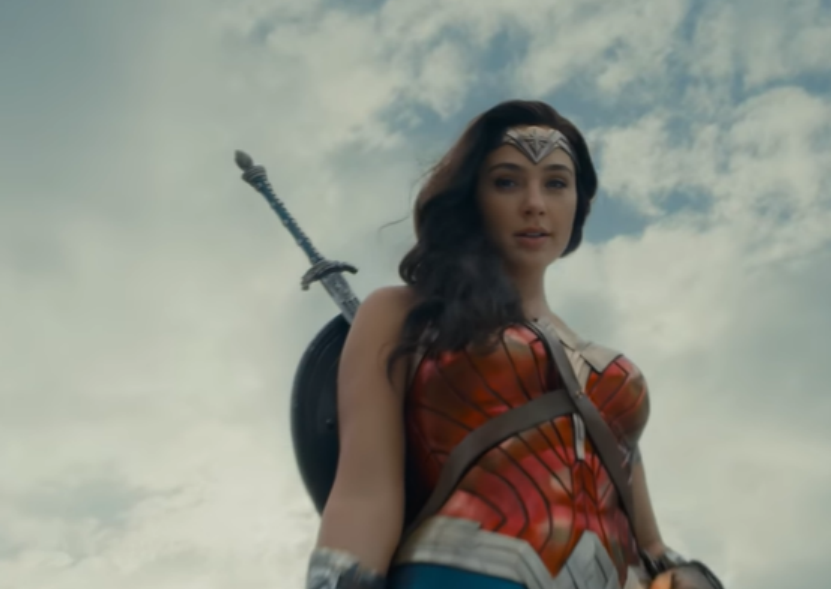
There was never going to be a completely painless way to break up the old DC gang. Warner Bros’ DC Extended Universe probably needed to be ruthlessly ripped apart in order to create space for James Gunn and Peter Safran’s brand-new DCU. We almost certainly did need a clean break from the likes of Ben Affleck (Batman) and Henry Cavill (Superman), if only to persuade audiences that this really was a proper reboot. The question, as Gal Gadot may have been pondering this week, is quite why some of the old universe’s supporting players were smuggled safely into the new continuity while others were left sprawling amid the ruins.
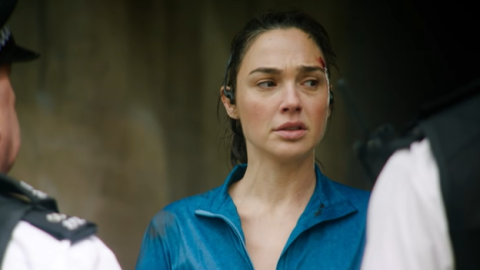
Speaking on the Happy Sad Confused podcast, Gadot, who starred in two solo Wonder Woman movies for director Patty Jenkins, revealed that nobody at DC Studios ever formally told her she had been dropped. One minute, Gadot says, she was being assured by Gunn and Safran that they would develop a third instalment with her; the next, she was looking on in mounting alarm as the entire infrastructure of the previous DC continuum was blown to smithereens. “They were like, ‘We’re going to develop it with you, the third one,’” she said. “But I saw the way everybody else was handled, right? And I, you know – the Henry [Cavill] situation was unfortunate. I was in the middle of that. The Henry situation was not handled elegantly, to say the least. Same with Patty – it was not handled elegantly.”
Gadot, most would accept, has a bit of a point here, even if sources close to DC Studios told Variety at the time that no outright promises were ever made to her. Cavill was brought back by the previous DC regime for a cameo at the end of the 2022 Dwayne Johnson superhero vehicle Black Adam, and even encouraged to announce publicly that he was Superman again – only for Gunn and Safran to tell him a few weeks later that they were recasting the role. Jenkins submitted a treatment for Wonder Woman 3 that the studio rejected as the new DCU took shape, and was later forced to deny reports that she had walked away from the film. Against such backdrops, it is hardly surprising that Gadot decided the writing was on the wall and moved on to other projects, though she says she holds no grudges. “I feel like we’re all adults and it’s all good,” she told the podcast. “It’s not even about them. They are there and they’re there to do what they believe in.”
There’s plenty to explore here, not least because Gadot’s Wonder Woman was one of the few major box office and critical successes of Warner Bros’ previous DC universe. If there was room in the new DCU for John Cena’s Peacemaker, who survived into a second small-screen season in the new reality, and even Xolo Maridueña’s Blue Beetle (who will now appear in the upcoming Superman sequel Man of Tomorrow), why was there no room for the actor who anchored 2017’s Wonder Woman, the old regime’s best-received film? The simple answer is that DC’s holy trinity – Cavill’s Superman, Affleck’s Batman and Gadot’s Wonder Woman – were the central faces of the old Zack Snyder-led DC-verse. Discarding all three announced that Gunn was building his own world, while retaining peripheral figures did not threaten the brave new reality.
Gadot may also have suffered due to the lukewarm reception for 2020’s Wonder Woman 1984, although its box-office performance is almost meaningless because it opened during the pandemic and simultaneously appeared on HBO Max. In any case, one average sequel should not have made Gadot herself completely unusable, and probably wouldn’t have done if the entire DC cinematic universe had not been fed into an industrial woodchipper around her.
There is also the continuity problem. Keeping the old universe’s Wonder Woman while replacing its Batman and Superman might have confused audiences and made the new universe feel like a patch-up job. And yet Peacemaker season two has already demonstrated Gunn’s willingness to rewrite inconvenient history and expect everyone to get on with it. The studio chief has left the door open for Margot Robbie to return as Harley Quinn, though there are currently few signs she will.
What then really is the difference between the two DC realities, other than that the new one offers the convenient opportunity to dispense with certain superheroes that were not immediately connecting with audiences? Is David Corenswet’s Kal-El really so much more intriguing than Cavill’s? Will forthcoming Batman film The Brave and the Bold finally give us a version of the Dark Knight who can turn up alongside other superheroes without spending the first hour trying to murder one of them and the second demanding to know his mother’s first name?
For now, the only iron law of Gunn’s new universe appears to be that continuity is infinitely flexible provided you were already in his contacts book when the apocalypse arrived. Gadot, despite fronting one of the old regime’s few unqualified triumphs, apparently was not. That may be a perfectly defensible way to repopulate a superhero franchise; it is rather harder to explain why nobody thought to tell Wonder Woman.