Kitt Kiarie calls out iPhone obsession, labels it a cult
By Paulette Mboga, April 24, 2026Content creator Kitt Kiarie has called out the growing obsession with iPhones, describing it as a “cult” during a recent question-and-answer session she had with her fans on Instagram on Friday, April 24, 2026.
She reacted to a prompt about social media trends and used the moment to question the strong attachment many people have to the device.
In many spaces around the world, especially in Kenya, owning an iPhone is seen as a sign of status. She said some people are judged based on the type of phone they use, with those without iPhones sometimes viewed as less important.
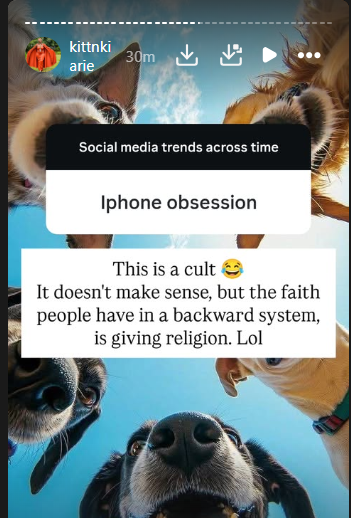
“This is a cult. It doesn’t make sense, but the faith people have in a backward system is giving religion. Lol,” Kitt Kiarie said.
She went on to explain that the pressure to own an iPhone has influenced how people spend their money. She said some individuals go to extreme lengths just to have the device, even when it affects their daily needs.
“iPhone obsession,” a fan said.
iPhone status pressure in social circles
In certain groups, not owning an iPhone can lead to exclusion or judgment. The device has become more than just a phone, turning into a symbol that defines how people are perceived.
Today, some people would rather struggle financially but still prioritise owning the device. She said this shows how deeply rooted the obsession has become in everyday life.
During the same session, she also addressed another question that focused on relationships. She reacted to a query about how to find and keep white men, showing surprise at the nature of the question.
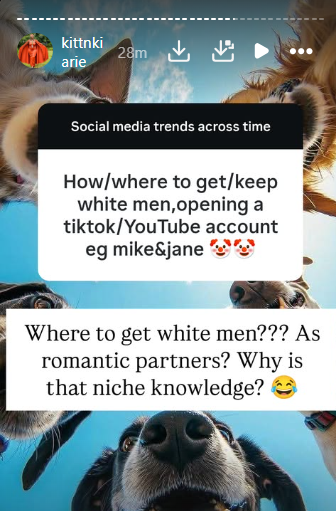
“How/where to get/keep white men, opening a TikTok/YouTube account, e.g., mike&jane,” a fan asked.
Kitt questioned why such information would be treated as something special or exclusive. She said relationships should not be viewed in that way or reduced to a specific category.
“Where to get white men??? As romantic partners? Why is that niche knowledge?” Kitt Kiarie said.
She explained that questions like these reflect certain attitudes that are worth examining. She said people should focus on meaningful connections instead of chasing ideas based on trends or perceptions.
Kitt concluded her responses by maintaining her critical stance on social trends. She made it clear that not every popular idea should be followed without question, especially when it shapes how people see themselves and others.