Inside controversy surrounding Lupita Nyong’o’s casting in The Odyssey
By Ascah Mwango, May 23, 2026Christopher Nolan’s upcoming epic “The Odyssey” has not even reached cinemas yet, but one of its biggest stars, Kenya’s own Lupita Nyong’o, is already at the centre of a heated global conversation. The Oscar-winning actress has found herself facing criticism online over her casting as Helen of Troy, a role that has traditionally been imagined through a very narrow and often rigid visual lens. What should have been a celebration of a major Hollywood role for an African star has instead turned into a wider debate about race, mythology, and who gets to be seen as “beautiful” on screen.
A Kenyan star in a Greek legend
Lupita Nyong’o’s casting in The Odyssey places her in one of the most iconic mythological stories ever told. Directed by Christopher Nolan, the film retells Homer’s ancient epic and brings together a large ensemble cast, including major Hollywood names. In the story’s wider mythology, Helen of Troy is often described as the most beautiful woman in the world, a figure whose presence sparked the Trojan War.
For many viewers, especially those used to older artistic depictions, Helen has been traditionally imagined as fair-skinned and European-looking. That long-standing image is part of why Nyong’o’s casting has triggered strong reactions in some online spaces.
Why the criticism started
The backlash began after the casting announcement spread online, with some critics arguing that Helen of Troy should only be portrayed by someone who fits a “traditional Greek” appearance. Others took issue specifically with Nyong’o being cast as a character historically associated in Western art with Eurocentric beauty standards.
This line of criticism quickly grew beyond film discussion and entered the familiar territory of internet culture debates about representation. Some online commentators questioned whether casting a Black actress in such a role was “accurate,” even though Helen of Troy is a mythological figure rather than a historical one.
Several public figures also weighed in, adding fuel to the debate. Among them, tech billionaire Elon Musk publicly reacted to the casting in a way that amplified online criticism, turning a film discussion into a wider cultural argument about identity and storytelling.
Lupita Nyong’o’s response
Rather than engaging in prolonged online arguments, Lupita Nyong’o has responded with calm clarity. She has repeatedly emphasised one central point, that The Odyssey is a mythological story, not a historical document.
In interviews, she explained that mythology is meant to be interpreted, reimagined, and retold across generations and cultures. She also expressed support for Christopher Nolan’s creative direction, noting that the film’s cast reflects a global and modern perspective rather than a narrow historical reconstruction.
She also addressed the idea that beauty can be strictly defined by appearance alone, stating that “you cannot perform beauty,” and that what matters more is the depth and humanity of a character rather than a fixed physical stereotype.
Her position is simple but powerful; she is focused on the role as an artistic interpretation, not a literal reconstruction of ancient imagery.
The real issue behind the debate
At the heart of the criticism is not really about one film. It reflects a much larger ongoing tension in global entertainment.
For decades, Hollywood has been shaped by narrow ideas of who gets to play iconic roles, especially in historical or mythological adaptations. When casting breaks away from those expectations, it often sparks debate, even when the source material itself is flexible or symbolic.
In the case of The Odyssey, the entire story is built on mythology. Gods change forms, mortals interact with supernatural beings, and characters often represent ideas rather than fixed historical identities. Yet modern audiences sometimes still apply real-world expectations to fictional worlds that were never meant to function like documentaries.
Why Lupita Nyong’o stands at the centre of it all
Lupita Nyong’o is not new to global recognition. She is an Academy Award winner and one of the most respected actors of her generation, known for roles in films like 12 Years a Slave, Black Panther, and Us. Her presence in The Odyssey is part of a larger ensemble that includes some of the biggest names in Hollywood.
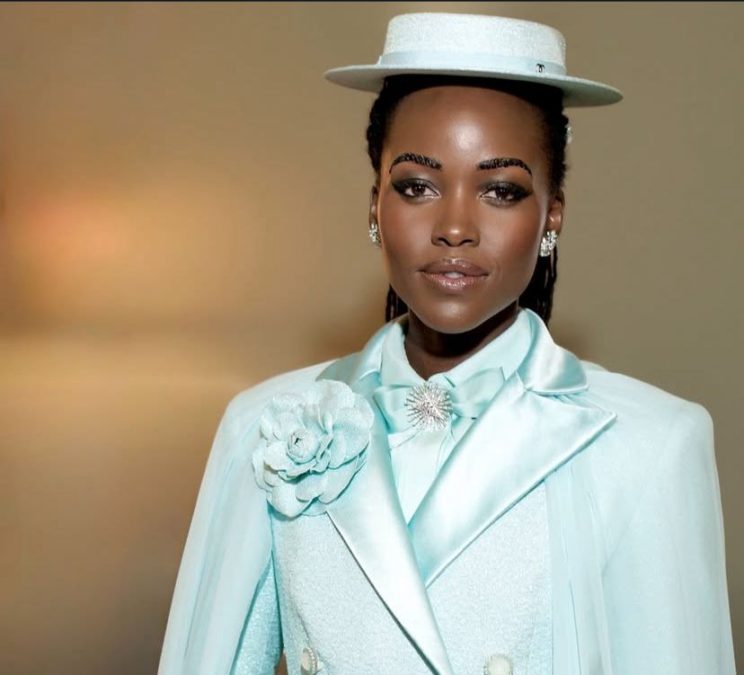
However, her casting as Helen of Troy carries symbolic weight. Helen is not just a character; she is often treated as an ideal of beauty in Western storytelling traditions. That symbolic status is what makes her portrayal so sensitive for some audiences.
At the same time, it is also what makes Nyong’o’s casting significant. It challenges long-held assumptions about who can embody such figures on screen, especially in stories that are already rooted in imagination and mythology.