Advertisement
How Nameless’s hit songs Juju and Majitu became linked to illuminati claims
17th May, 2026 01:02 PM

Kenyan musician David Mathenge, widely known as Nameless, has humorously addressed long-standing rumours that once linked him to devil worship and the Illuminati because of some of his hit songs, particularly Juju and Majitu.
In light-hearted social media posts shared ahead of his silver jubilee concert, the veteran singer laughed off the claims, saying many Kenyans were once warned by parents and relatives that he was involved in dark forces simply because of the artistic themes in his music.
“Naskia wengeni waliambiwa Nameless ni devil worshipper juu ya hiyo song yengine majitu, poleni guys, muliambiwa vile mimi ni illuminati, devil worshipper. Musipanic it is called art, just art,” Nameless said.
The singer explained that the songs were purely creative expressions and not connected to any secret cults or satanic practices, as some people had claimed years ago.
“Don’t be too imaginative; it is just art. as you can see, I am just normal; I am not a devil worshipper,” he added.

When music videos sparked fear and rumours
During the early 2000s, Kenyan pop culture was heavily influenced by growing global conspiracy theories surrounding celebrities and the Illuminati. Any music video with mysterious symbols, dramatic visuals, dark styling, or unusual storytelling often attracted suspicion from sections of the public.
Songs like Majitu and Juju stood out because of their unique concepts, costumes, and artistic direction, making them easy targets for speculation among fans and parents alike.
For many millennials who grew up during that era, warnings about musicians being linked to dark forces became surprisingly common.
Nameless jokingly recalled how some people were told by parents to avoid his music because he was connected to Illuminati groups.
“Kama uliambiwa na wazazi eti Mimi ni Devil worshipper juu ya ngoma zangu MAJITU na Juju, jitambulishe kwa comments tuongee! Musipanick! Mimi si Illuminati, nakunywanga chai na Githeri,” Nameless humorously wrote.

Art versus public interpretation
The singer’s remarks have reignited nostalgic conversations online about how Kenyan audiences used to interpret music and entertainment in the early days of modern Kenyan pop culture.
At the time, artists experimenting with creativity, symbolism, or unusual visuals were often misunderstood. Anything outside “normal” entertainment quickly attracted rumours.
Nameless, however, insists the songs were simply artistic projects meant to entertain audiences and push creative boundaries.
“Hizi story za dark forces na Illuminati mulitoanga wapi, jameni?” he jokily asked.

Turning old rumours into humour
Rather than being offended by the rumours, Nameless has chosen to laugh about them years later, turning the old conspiracy theories into comedy and nostalgia.
His posts have since attracted reactions from Kenyans sharing memories of how seriously such rumours were taken back then.
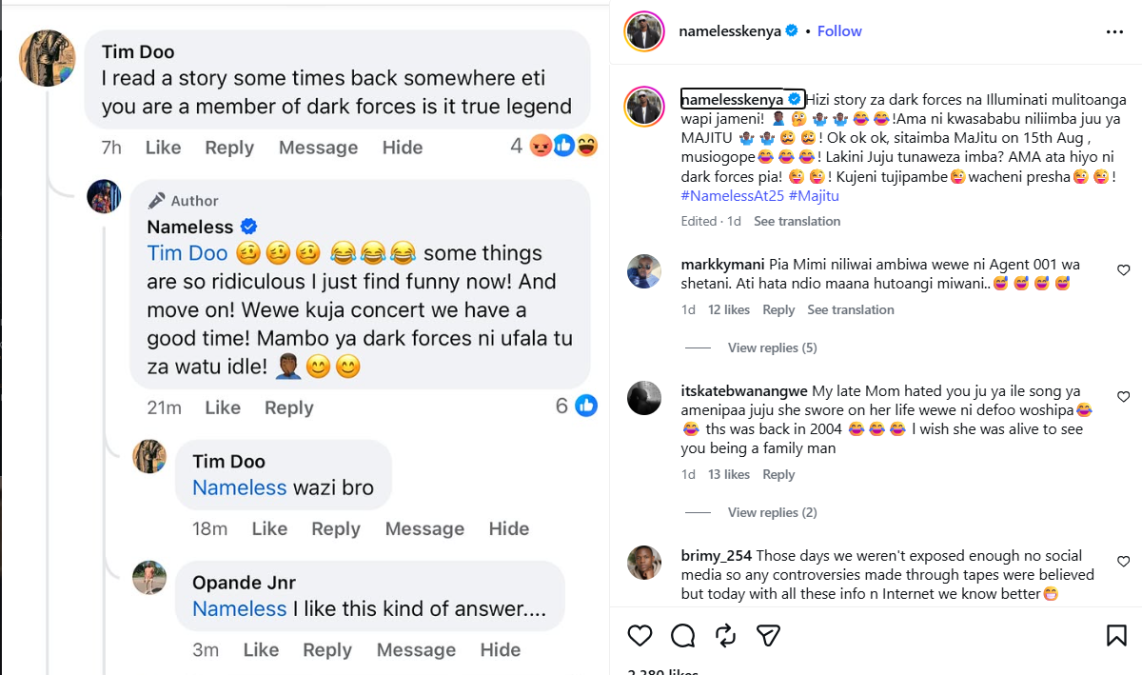
Others admitted they genuinely believed some musicians were connected to secret cults simply because of dramatic music videos or song themes.
Still, the conversation highlights how far Kenyan entertainment has evolved, with audiences today more accepting of artistic expression than they were decades ago.
And despite the old rumours, songs like Juju and Majitu remain memorable parts of Kenya’s pop culture history, not because of conspiracy theories, but because of the creativity that made them stand out.