What a great vision: Eddie Butita praises Dangote Refinery as Kenya launches Ksh2T Lamu project
By Katemarthason Okudo, September 30, 2026Kenyan comedian Eddie Butita has praised the planned construction of the Dangote East Africa Oil Refinery in Lamu, describing its proposed 700,000-barrel-per-day capacity as a major vision.
In a post shared on his X page on Wednesday, September 30, 2026, Butita wrote, “700,000 barrels per day. Dangote refinery will surely be a game changer. What a GREAT vision.”
Butita’s comment comes as Kenya marks a major step in the project, with President William Ruto and Nigerian businessman Aliko Dangote expected to preside over the groundbreaking ceremony for the refinery in Lamu on Wednesday, September 30, 2026.
What Butita means by 700,000 barrels
The figure of 700,000 barrels refers to the amount of crude oil the planned refinery is designed to process each day when operating at full capacity. It does not mean the plant will produce 700,000 barrels of petrol daily.

One barrel contains about 159 litres, meaning the refinery’s full processing capacity would amount to more than 111 million litres of crude oil a day.
The refinery is expected to produce products including petrol, diesel and jet fuel. Dangote has also said the facility will produce polypropylene for the plastics industry and base oil for industrial use.
This explains why Butita referred to the project as a potential “game changer”. Its impact is expected to go beyond fuel and could create an industrial base around the refinery.
Where will the refinery be?
The Dangote East Africa Refinery will be built in Lamu County, along Kenya’s northern coast, on land within the LAPSSET corridor.
The location was selected after Dangote Group considered other areas, including Mombasa and Tanzania’s Tanga. Dangote said Lamu offered suitable land, water and deep-sea access, making it suitable for a large refinery and related industrial activities.
Heavy machinery has already arrived at the Port of Lamu ahead of construction. About 2,930 tonnes of construction machinery and materials were delivered to the port in preparation for the project.
How could Kenyans benefit?
One of the biggest expected benefits is employment. Dangote has said the project could require more than 60,000 people at the height of construction, although that figure covers the wider workforce and economic activity around the project rather than 60,000 permanent refinery jobs.
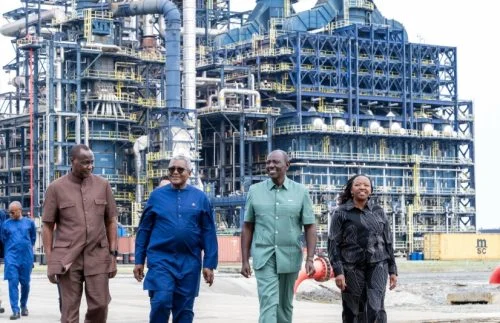
The company has also said it plans to train workers to take up opportunities created by the development. The refinery could also create opportunities for businesses supplying food, transport, accommodation, construction materials and other services.
The refinery is also being positioned as part of a wider industrial development around Lamu, with the government linking it to investment, manufacturing and logistics opportunities.
What could it mean for fuel prices and supply?
Kenya currently relies heavily on imported refined petroleum products. A refinery in Lamu could reduce part of that dependence by allowing crude oil to be processed closer to the Kenyan and East African markets.
The facility is expected to serve Kenya as well as neighbouring countries, with its proposed capacity significantly larger than the region’s current demand for refined petroleum products.
However, the refinery will not automatically make fuel cheaper. Pump prices will still depend on the cost of crude oil, transport, taxes, refining costs, and other factors.
There are also unresolved issues surrounding the project. Residents have raised concerns over land ownership and compensation, while a court case involving disputed land remains ongoing. Despite those issues, the government and Dangote Group have proceeded with the planned groundbreaking.
The project is estimated at Ksh2.2 trillion and is expected to take several years to complete. For Butita, the 700,000-barrel figure represents the scale of what Kenya is beginning today.