Advertisement
The rise of forex traders: How musicians lost their grip on Kenya’s celebrity wealth
28th September, 2026 05:33 PM

For years, musicians were the undisputed kings of flashy wealth in Kenya’s entertainment scene.
They were the celebrities associated with the biggest cars, designer clothes, expensive holidays and lavish nights out.
From Jaguar, Prezo, KRG The Don and other established entertainers, the music industry produced some of the country’s most recognisable “flashy” celebrities.
But the face of Kenya’s celebrity wealth is changing, with forex traders doubling up as content creators increasingly joining the ranks of the country’s most visible high spenders.
Luxury cars, cash, international trips and expensive nights out have become part of the content shared by a new generation of online personalities, putting them in the same conversations that were once dominated by musicians.
The shift comes at a time when the Directorate of Criminal Investigations (DCI) has raised concerns over some of the wealth being flaunted online by individuals linked to forex, cryptocurrency, arbitrage and other money-making ventures.
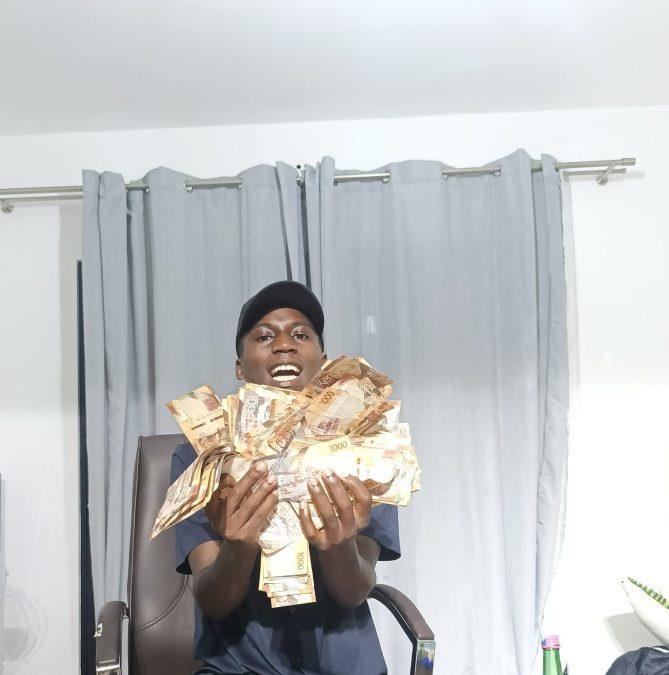
From musicians to forex traders
Today, you do not necessarily need a hit song to become a celebrity. A large social media following, a trading platform, and a lifestyle that gets people talking can also turn someone into a household name.
Forex traders have become particularly visible in this new celebrity economy.
Sammy Boy, Kenyan Prince, and Chuka Kenyan Prince are among the forex personalities who have attracted attention for their lavish lifestyles and expensive cars.
Kenyan Prince recently made headlines after claiming to have bought a Lamborghini Urus for Ksh64.5 million, while Sammy Boy has also showcased a Lamborghini Urus.
The two luxury SUVs have fuelled conversations about the kind of money being made by some of Kenya’s young forex personalities.
But the cars are only part of the appeal.
The forex personalities have also embraced content creation, using social media to document their holidays, watches, restaurants, nightlife and luxury cars.
For their followers, the content is often as much about the lifestyle as it is about trading.
A luxury car becomes a video backdrop. A foreign trip becomes content. Screenshots showing trading activity or profits can generate curiosity and engagement.
As their audiences grow, some can also tap into other income streams through advertising, partnerships, courses and business ventures.
This has blurred the line between forex trading, content creation and entertainment, allowing some traders to build public profiles that extend far beyond the financial markets.

So, are forex traders the new celebrities?
That may depend on how celebrity wealth is measured.
Musicians still have major income streams through concerts, endorsements, streaming, appearances and businesses. They also continue to command large audiences and influence popular culture. But when it comes to the flashy lifestyle traditionally associated with Kenyan showbiz, they now have new competition.
For years, musicians were the faces of expensive cars, designer outfits and high-end living. Now, forex traders, entrepreneurs and content creators are increasingly appearing in the same conversations.
The Lamborghini Urus displays by Kenyan Prince and Sammy Boy are a striking example of how the traditional celebrity flex is evolving.
Whether the wealth displayed online comes from forex trading, other businesses, investments or something else cannot always be established from a social media post.
What is clear is that Kenya’s celebrity economy is becoming more diverse.
You no longer necessarily need a hit song to get people talking about your money. Sometimes, the lifestyle itself is the content.

DCI on flashy lifestyle
The growing culture of displaying wealth online has now attracted the attention of the DCI.
In a statement on September 28, 2026, the agency warned Kenyans about what it described as “Masharp Boys/Girls” and an online world involving forex, cryptocurrency, arbitrage, betting, trading platforms and Telegram signals.
The DCI cautioned that some individuals use displays of luxury cars, cash, expensive drinks, international trips and impressive trading dashboards to create an image of easy wealth and attract followers or potential investors.
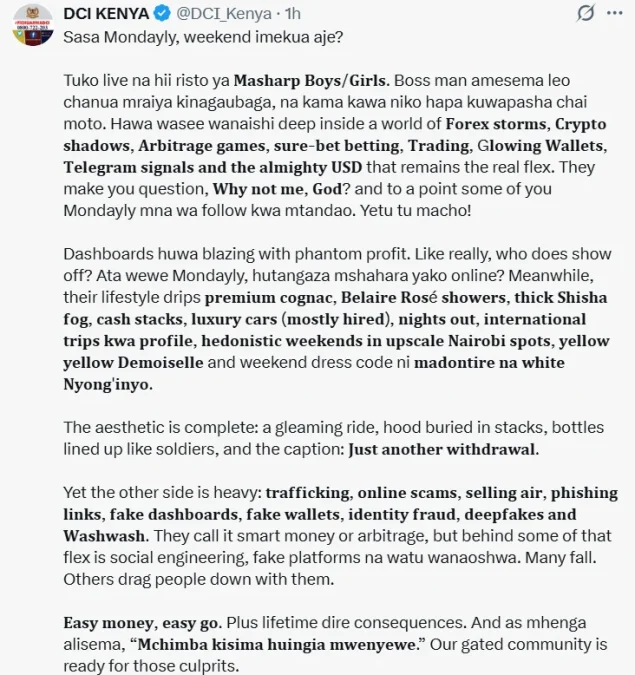
It warned that behind some of these displays could be fraudulent schemes involving fake investment platforms, phishing links, counterfeit cryptocurrency wallets, identity fraud, deepfakes and other forms of social engineering.
The agency also noted that some luxury vehicles showcased online may be hired, while apparent trading profits displayed on social media may not necessarily represent genuine earnings.
The warning, however, does not mean every forex trader showcasing a lavish lifestyle is involved in fraud. Rather, it highlights the need for Kenyans to look beyond social media displays when assessing claims of financial success.