Muthoni Mukiri reveals 7 childhood wounds women may mistake for normal habits
By Paulette Mboga, September 7, 2026Counsellor and mindset coach Muthoni Mukiri has revealed seven habits that women may think are normal but could be signs of unhealed childhood wounds and trauma.
She explained that some behaviours can be linked to experiences from childhood and may affect how people see themselves and relate to others.
One of the signs she highlighted is never feeling good enough. She explained that constantly comparing yourself to others and feeling left behind may come from being compared to your siblings while growing up.
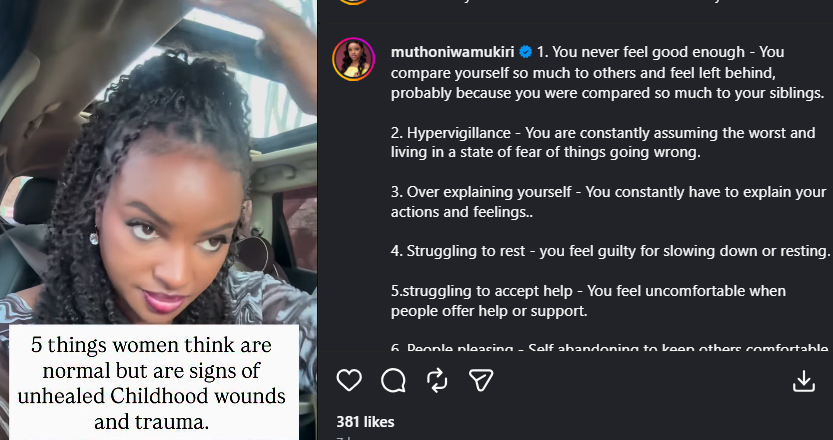
“You compare yourself so much to others and feel left behind, probably because you were compared so much to your siblings,” Muthoni Mukiri said on Monday, September 7, 2026.
Habits that may point to childhood wounds
Muthoni also pointed to hypervigilance as another sign. She explained that this happens when a person is constantly assuming the worst and living in a state of fear that things could go wrong.
“You are constantly assuming the worst and living in a state of fear of things going wrong,” Muthoni Mukiri said.
She also listed over-explaining yourself as another behaviour that may be linked to unhealed childhood wounds. According to her, a person may feel the need to constantly explain their actions and feelings instead of simply expressing themselves.

“You constantly have to explain your actions and feelings,” Muthoni Mukiri said.
Another habit she highlighted is struggling to rest. She explained that some people may feel guilty when they slow down or take time to rest, making it difficult for them to allow themselves to pause.
“You feel guilty for slowing down or resting,” Muthoni Mukiri said.
Muthoni further identified struggling to accept help as another sign. She explained that some people can feel uncomfortable when others offer them help or support, even when the help is available.
“You feel uncomfortable when people offer help or support,” Muthoni Mukiri said.
She also included people-pleasing and described it as self-abandoning to keep other people comfortable. She explained that another sign is not standing up for yourself, where a person may withdraw, shut down, go silent or enter a ‘freeze’ mode instead of expressing their needs.
“Instead of expressing your needs, you withdraw, shut down, go silent or go into ‘freeze’ mode,” Muthoni Mukiri said.