Ben Githae calls for reform of music royalties system after Ruto’s Ksh109M disclosure
By Steve Ireri, April 22, 2026Kikuyu gospel singer Ben Githae has called for urgent reforms in the country’s music royalty management system, following recent remarks by President William Ruto on the state of artistes’ earnings.
Speaking during the burial of Karangu Muraya’s brother on Wednesday, April 22, 2026, Ben Githae welcomed the president’s concerns, describing the announcement as a positive step toward improving transparency and accountability in the creative sector.
He stated that improved collection systems were necessary and acknowledged that better revenue mobilisation efforts should be supported.
“I want to comment on what the president recently announced about musicians and the money they make. We are saying that is good because everywhere, collection is being maximised and we cannot complain,” he said.
However, he urged that greater attention be given to how the collected funds are distributed, arguing that the current structure does not fairly benefit original content creators, particularly songwriters and performers.
Githae highlighted that royalties often originate from the original rights holders, meaning the artistes who compose and perform the songs. He also pointed out the existence of related rights, stressing that both categories should be properly recognised and compensated.
“But there is one thing I want to request be implemented. The collections being talked about usually originate from the rights holder, meaning the singer behind the song. There is also something called related rights,” he said.
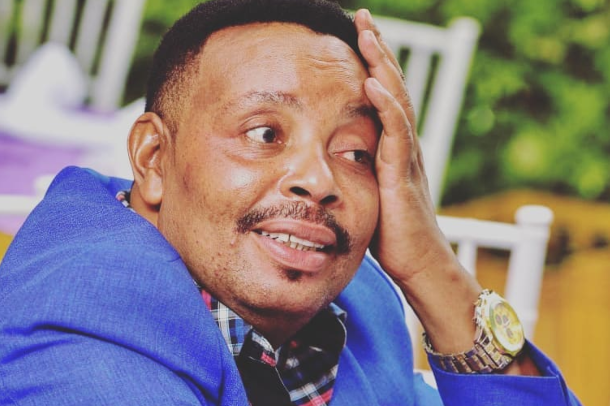
He expressed concern about elderly and deceased musicians whose works continue to generate income long after their active careers, saying that their families often receive little or no financial benefit.
According to him, many children of late musicians have been left struggling despite their parents’ songs being widely played, performed, and monetised.
He argued that while it is not practical to stop people from performing or remixing older songs, there must be a structured system that ensures rightful beneficiaries continue to earn from their work.
“We now have some old musicians, and if you go online, you will see their children crying every day, saying their parents’ songs are being sung and performed, but they do not earn anything. We cannot ask those performing the songs to stop,” he added.
To illustrate his point, Githae referenced global examples, noting that in international music industries, original rights holders and their families continue to benefit when songs are remixed or reinterpreted.
He mentioned songs such as Bob Marley’s “I Shot the Sheriff”, which gained further popularity after Eric Clapton’s cover, explaining that structured royalty systems ensured proper compensation to the original creators.
He also cited the Kenyan classic “Malaika” by Fadhili Williams, noting that the song has continued to generate income over the years, with the original creator’s family benefiting through established royalty processes whenever the song is performed or remixed by other artistes.
Githae said these examples provide a clear benchmark for how Kenya’s system should function, where both original creators and their estates are fairly compensated.
“Even someone like Bob Marley, who sang ‘I Shot the Sheriff’ in 1973, saw the song become a hit again when Eric Clapton did a cover in 1974. But there is a proper system where whatever is made from the song benefits the rights holder’s family. In Kenya, Fadhili Williams sang ‘Malaika’, and he earned from it because when Miriam Makeba remixed it, there was a process, and his family continues to benefit. That is a good benchmark of how things should be done. I am appealing to Moses Kuria, who is here today, to also help address this issue,” he said.
President Ruto had previously revealed that a collective management organisation responsible for collecting royalties generated approximately Ksh109 million, but only Ksh13 million was distributed to artistes.
The head of state noted that the figures exposed deep inefficiencies and possible exploitation within the system, where creators receive only a small fraction of revenue earned from their intellectual property.