Why Riek Machar’s trial brings existential high stakes for South Sudan
By Al Jazeera, October 27, 2025As he was ushered into a barred holding cell inside an events hall turned courtroom on a morning in mid-October 2025.
The bright smile and relaxed demeanour of Riek Machar, South Sudan’s embattled first vice president and opposition leader, belied both the severity of the charges against him and the immense stakes for his country.
In September 2025, Machar and 20 co-defendants from his Sudan People’s Liberation Movement/Army-in-Opposition (SPLM/A-IO) party were indicted on charges of terrorism, treason, and crimes against humanity for their alleged role in a March attack on a military garrison that the government says killed more than 250 soldiers.
Machar has denied the charges while the SPLM-IO has called the accusations “baseless” and “politically motivated”.
As more than 1,000 people streamed into the venue to watch the proceedings, which began in late September 2025, and have been open to the public, several observers told Al Jazeera they were concerned by what they saw as the government’s weaponisation of the justice system to sideline President Salva Kiir’s chief political rival. They warned that the trial was deepening resentment among communities that revere Machar, and risked intensifying violence already unfolding across rural swaths of the country.

“This is a political trial. The state is using the court against its opponents,” said Lincoln Simon, a 37-year-old nonprofit director who says he’s attended every session out of a sense of civic duty. He thinks Machar is being scapegoated to hide broader government failures, like spiralling inflation.
“Our leaders have failed, and now they are looking for someone to pin the blame on.”
William Tong, 62, a retired factory worker, is a longtime supporter of Machar’s opposition party who has also been attending the proceedings.
“We are watching this trial to see whether or not this is a country run by the rule of law,” he said, adding that he is keeping an open mind but hasn’t yet seen evidence that he finds compelling.
“The people are eager to see evidence. We can be convinced, but we aren’t yet.”
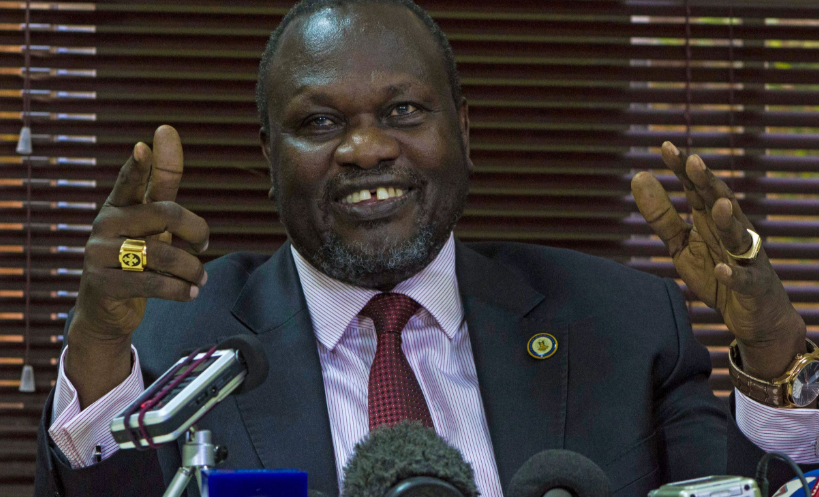
Machar’s trial
Others, like James Majok, support the trial. Majok says the proceedings have divided people in his hometown of Aweil, approximately 780km (500 miles) north of the capital Juba, into “those that want the trial to continue and those that object”. For Majok, it is a first step towards broader accountability for public officials.
“Anyone that is accused should be tried,” said the 37-year-old, adding that the defendants should be presumed innocent until proven guilty. “Our hope is that this is the first but not the last. The law should apply to everybody.”
The three men, like other members of the public who spoke to Al Jazeera about the trial, provided a pseudonym out of fear for their safety. Justice Minister Joseph Geng Akech has publicly warned that commenting on the ongoing trial of Machar and his co-accused could amount to contempt of court.
While Machar, 73, cannot legally face the death penalty, the constitution bars capital punishment for individuals older than 70; many of his co-defendants are eligible, and Machar faces life in prison and disqualification from holding political office.
The trial is in many ways the culmination of decades of mistrust between Machar and Kiir, who, between 2013 and 2018, led opposing armies during a civil war that killed an estimated 400,000 people.
A peace agreement brought the two men into a unity government, but its provisions have gone largely unimplemented while economic and humanitarian crises have expanded in the years since.
Like that war, many feel that the trial has taken on ethnic overtones. Kiir and much of his inner circle are Dinka, the largest of the country’s 60-plus ethnic groups, while all 21 of the accused are Nuer, the second largest ethnic group. In the shadow of recent bloody intercommunal strife, Simon believes the trial will “divide the country along ethnic lines”.