200 terrorists killed in Nigeria
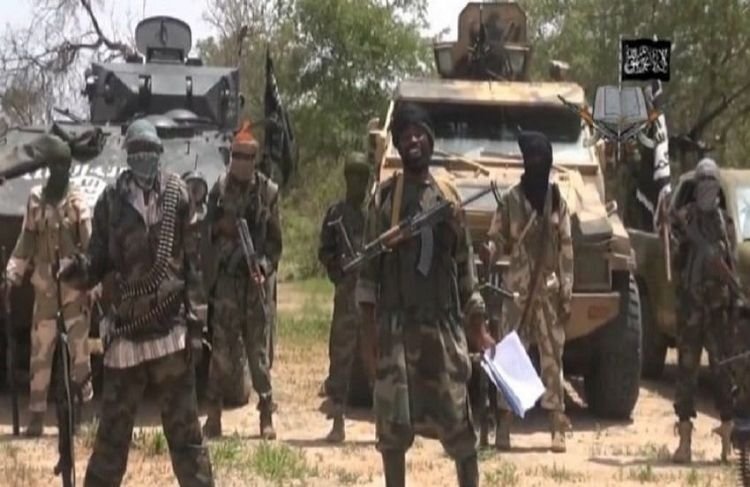
By The Guardian, November 10, 2025As many as 200 terrorists were killed in a turf war on Sunday between rival jihadists in north-east Nigeria.
The fighting between Boko Haram and rival militants from Islamic State West Africa Province (ISWAP) broke out over the weekend in the village of Dogon Chiku, which lies on the shores of Lake Chad, a restive area located at the junction of Nigeria, Niger, Chad and Cameroon.
The lake’s riverine corridors serve as operational zones for jihadists who also rely on revenues from taxing fishers, loggers and herders.
The violent episode was the latest in an ongoing battle between the groups for territory and influence as more non-state actors compete for dominance across the wider Sahel region. According to reports, ISWAP suffered heavier losses, and several boats used in the assault were seized by Boko Haram forces.
“From the toll we got, around 200 ISWAP terrorists were killed in the fight,” said Babakura Kolo, a member of a vigilante group that works with the Nigerian military, speaking to Agence France-Presse.
“We are aware of the fighting, which is good news to us,” AFP also quoted a Nigerian intelligence source as saying. The source added that the casualty figure was “more than 150”.
ISWAP began as a splinter group from Boko Haram that allied itself with the Islamic State. Since the split in 2016, both factions have fought repeatedly, primarily in the Lake Chad Basin area. Other groups have since broken away from Boko Haram, spreading to other parts of northern Nigeria.
Lake Chad has lost more than 90% of its surface area since the 1960s, according to the UN Environment Programme. As the water recedes, new land routes across the territory have opened up.
By many analysts’ accounts, ISWAP was long considered the stronger and more resourceful of the two factions, but Boko Haram has remained dominant in the fight to control the Lake Chad area. Sunday’s clash was potentially the deadliest between them yet.
In May 2021, ISWAP launched an offensive on Sambisa, the forest enclave that served as Boko Haram’s longtime base and where it held abducted schoolgirls. It is believed that Abubakar Shekau, the notorious Boko Haram leader, killed himself during a clash with ISWAP in Sambisa.
Between December 2022 and January 2023, Boko Haram also carried out major raids on two ISWAP bases in Borno State, the birthplace of the group’s radical ideology.
Caches of weapons were seized, with more than 100 ISWAP fighters killed and 35 others injured, according to reports by the Guardian Nigeria and Punch newspapers.
Since the extrajudicial killing in 2009 of Shekau’s predecessor, Mohammed Yusuf, the jihadist conflict has claimed more than 40,000 lives and displaced around 2 million people in Nigeria’s predominantly Muslim north-east.