Sending Ksh20k from Saudi better than slaving for Ksh7k Kilimani jobs — Ruto’s adviser Ndii
By Cynthia Lodite, November 17, 2025Presidential Council of Economic Advisors Chairperson David Ndii has come out strongly backing the recent move by the Kenyan government on the increment of minimum wages for Kenyans working in Saudi Arabia.
In a post on his official X account on Monday, November 17, 2025, Ruto’s advisors expressed his opinion on the increment of the salary, noting it is better compared to home.
Also Watch: Kenyan family cries for justice after the death of their daughter in Saudi Arabia
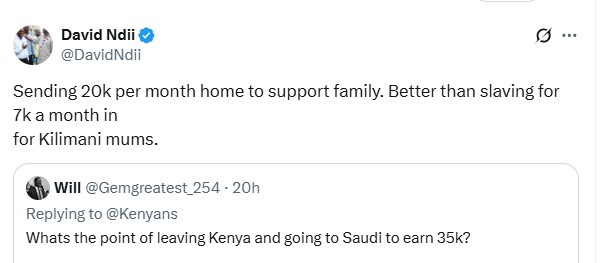
On his part, he argues that sending Ksh 20K to Kenya is way better than slaving for Ksh 7K a month while working in Nairobi’s suburb, Kilimani.
“Sending 20k per month home to support family. Better than slaving for 7k a month for Kilimani mums,” David Ndii wrote.
David Ndii was responding to a tweep who had questioned Kenyans going to Saudi Arabia only to end up earning Ksh35K.
Also Watch: CALL TO PROTECT KENYAN MIGRANT WORKERS IN GULF
“What’s the point of leaving Kenya and going to Saudi to earn 35k?” the tweep tweeted.
Salary review
Kenyans employed in Saudi Arabia are expected to receive a pay increase following the Middle Eastern nation’s announcement of a new minimum wage for all employees.
In a Facebook post on Sunday, November 16, 2025, the Kenyan Embassy in Riyadh revealed the new update, urging workers to confirm implementation of the new minimum salaries with their respective employers.
“The Embassy wishes to inform all Kenyan workers that, effective February 2026, the Government of Saudi Arabia will implement a minimum salary of SAR 1,000 per month for all workers. This is in line with ongoing labour reforms following changes to the Kafala system,” the statement read.
Effective next year, each worker working in Saudi Arabia is set to earn a minimum of about Ksh34,455 per month.
This comes even as the government is under fire over claims that it has failed to provide diplomatic assistance to stranded mothers in the Kingdom.
The new salary structure is set to take place starting February 2026 as part of the Kingdom’s ongoing labour reforms following changes to the Kafala system.
The Embassy further said, workers have been advised to raise issues promptly to ensure compliance while also safeguarding their rights under the revised labour regulations.