Report: Nairobi struggles as Africa’s waste crisis grows
By Aloys Michael, August 24, 2025Only six in ten Africans have their household waste collected, a sobering statistic that highlights a growing trash crisis across the continent and its impact on urban life in cities like Nairobi.
The Sustainable Development Goals (SDG) Report 2025, released on Sunday, August 24, 2025, reveals that sub-Saharan Africa’s waste collection coverage stands at just 62.6 per cent, leaving nearly 40 per cent of households exposed to uncollected garbage. The consequences range from clogged drains and breeding grounds for mosquitoes to frequent cholera outbreaks.
“Sub-Saharan Africa recorded the lowest waste collection coverage among all regions, averaging 62.6% in 2022. Inadequate waste management remains a major barrier to sustainable urban development, contributing to environmental degradation and public health risks,” the UN report released on Sunday, August 24, 2025, reads.
In Nairobi, the report says the problem is both visible and persistent. Piles of uncollected waste in estates like Eastleigh, Kayole and Kibera frequently block drainage systems, worsening flash floods during heavy rains. The Dandora dumpsite, officially declared full in 2001, continues to receive thousands of tonnes of waste daily, with little sorting or recycling.
The UN report warns that unmanaged waste is directly linked to rising disease outbreaks. During the last rainy season, parts of Nairobi and Kisumu reported spikes in waterborne diseases, worsened by blocked sewers and contaminated water supplies.
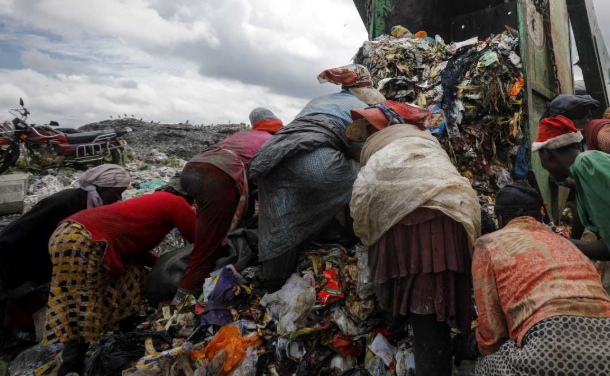
Nairobi’s trash reality
“As cities expand rapidly, waste generation is rising faster than the capacity of many governments to manage it. Without urgent investments, unmanaged waste will continue to undermine health, the environment, and the achievement of sustainable development goals,” it notes.
In Kenya, devolved governments shoulder much of the responsibility for solid waste management, but county budgets often fall short. Nairobi County spends billions on collection contracts, yet coverage remains patchy, with informal settlements the hardest hit.
The report calls for new approaches that combine infrastructure, community engagement, and recycling.
“Integrated waste management systems, including reduction, recycling and recovery, are essential for achieving environmental sustainability,” it stresses.
According to the report, Nairobi must invest in separation at source, expand recycling industries, and close unsafe dumpsites.
“Kenya cannot keep dumping waste at Dandora forever. If we reallocated even half the money spent on failed collection tenders, Nairobi could build a modern recycling plant,” it reads.