Peter Kagwanja calls upon govt to stop funding Nairobi County
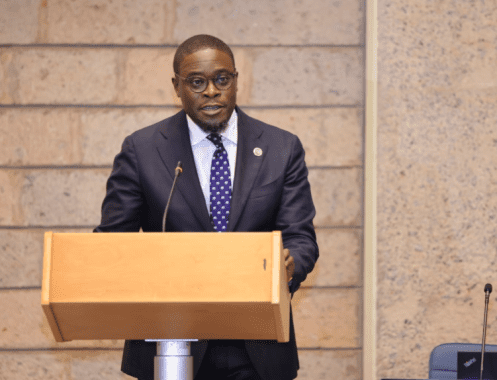
By David Nthua, August 13, 2025The Chief Executive at the Africa Policy Institute (API), Peter Kagwanja, has asked the national government to rethink its decision to continue funding Nairobi County like other devolved units.
Speaking to a local radio station on Wednesday, August 13, 2025, Kagwanja complained that most of the services and amenities in Nairobi are taken care of by the national government, given that it is the capital city.
This, he noted, includes key infrastructure such as major roads and big hospitals.
According to him, allocating the same kind of resources to Nairobi as to other counties does not make sense when many of its core services are already under national management.
Therefore, he argued, the money could be better utilised in regions that rely entirely on county governments for such services.
Questioning resource allocation
“There are counties, such as Nairobi, that are not supposed to receive resources. Why would you give Nairobi money?” Kagwanja asked.
He explained that while Nairobi remains important as the country’s economic hub, its needs are met differently compared to purely devolved regions.
Moreover, he pointed out that the allocation formula should recognise the unique nature of the city’s governance, where national agencies handle responsibilities typically managed by counties elsewhere. This, he said, would allow funds to be redirected to underserved areas where essential services remain under-resourced.
Uniting through fairness
Kagwanja also stressed that unity in the country can only be achieved if the government listens carefully to the grievances of its people.
“You unite the nation by listening to the grievances of the people. The centralisation of power and resources is what is killing us,” he said.
Thus, he linked the Nairobi funding question to a broader need for fair resource distribution, adding that any form of over-centralisation creates feelings of neglect in other parts of the country.
Balanced governance
The policy expert urged policymakers to review how resources are shared and to ensure that funding reflects the realities on the ground. Consequently, he encouraged leaders to engage in open dialogue with citizens, noting that public trust grows when resource allocation is transparent and tailored to actual needs.
Kagwanja concluded that balanced governance and listening to public concerns are essential steps toward building a more united and equitable nation.