Ministry of Health issues rabies alert amid WHO warning on rising deaths
By Valerian Khakayi, August 18, 2025The Ministry of Health has urged Kenyans to take immediate precautions against rabies following a global alert issued by the World Health Organisation (WHO) on the rising number of rabies-related deaths.
In a statement issued on Monday, August 18, 2025, the Ministry emphasised the importance of prompt first aid and immediate medical intervention in the event of dog bites.
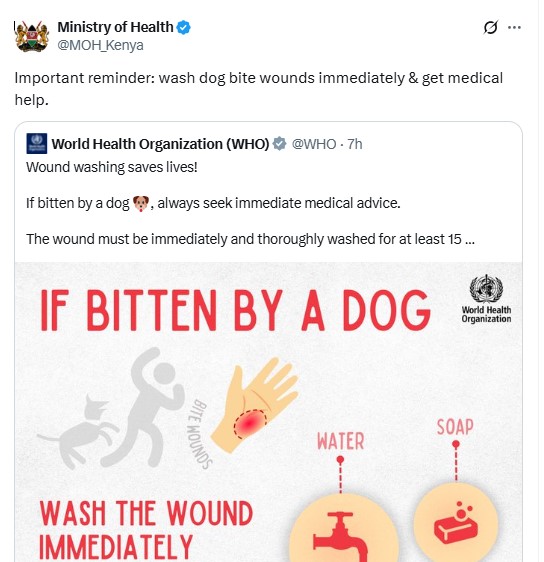
“Important reminder: wash dog bite wounds immediately & get medical help,” the MOH’s call for action read.
Action to take after a dog bite
This comes after the WHO advised Kenyans that wound washing can save lives in the event of a dog bite.
The health organisation noted that anyone bitten by a dog should immediately and thoroughly wash the wound with soap and water for at least 15 minutes before seeking urgent medical attention. It added that those affected may require post-exposure vaccination against rabies.
“Wound washing saves lives! If bitten by a dog, always seek immediate medical advice. The wound must be immediately and thoroughly washed for at least 15 minutes with soap and water. Then visit a clinic, as you may need #rabies post-exposure vaccination!,” the WHO stated.
WHO on rabies deaths
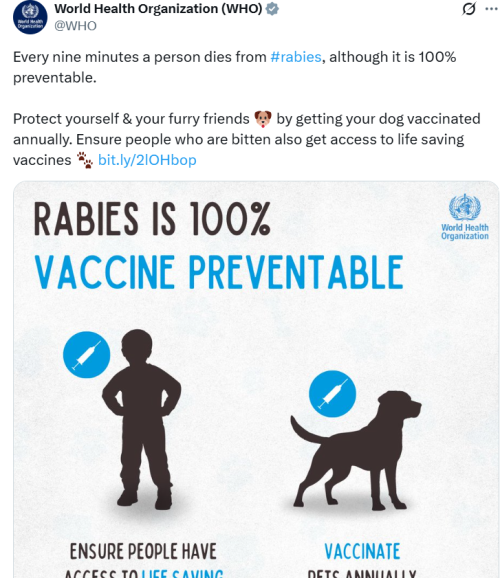
The warning comes after WHO raised the alarm over rabies, noting that every nine minutes a person dies from rabies, although it is 100% preventable.
In the notice dated August 16, 2025, the health organisation further urged immediate action to safeguard both humans and animals.
“Every nine minutes a person dies from #rabies, although it is 100% preventable. Protect yourself & your furry friends by getting your dog vaccinated annually. Ensure people who are bitten also get access to life saving vaccines,” the WHO stated.
Rabies burden in Kenya
Kenya’s Rabies Elimination Strategy aims to end human deaths from the disease by 2030, placing strong surveillance at the centre of its efforts.
A study published in Frontiers in Public Health (June 2025) by researchers from the International Livestock Research Institute (ILRI) and the University of Nairobi analysed national rabies data from 2017 to 2023.
The study found an average of 162 dog cases and 84 dog deaths annually, alongside 53 human cases and six human deaths. While dog bites were strongly correlated with dog infections, their link to human rabies cases was weak, suggesting significant under-reporting, possibly due to misdiagnosis, limited healthcare access, or timely post-exposure treatment.
Also, it identified a negative correlation between rabies cases in dogs and humans, indicating that human cases may be undercounted despite ongoing transmission from animals. The researchers stressed that understanding these patterns is essential to improving surveillance systems and strengthening the national elimination programme.