Historic red card: Almirón punished under new FIFA rule for covering mouth during World Cup match
By Joel Masibo, June 20, 2026Paraguay midfielder Miguel Almiron has become the first player in FIFA World Cup history to be sent off under a controversial new regulation introduced for the 2026 tournament, after covering his mouth while speaking to an opponent during Paraguay’s Group D clash against Türkiye.
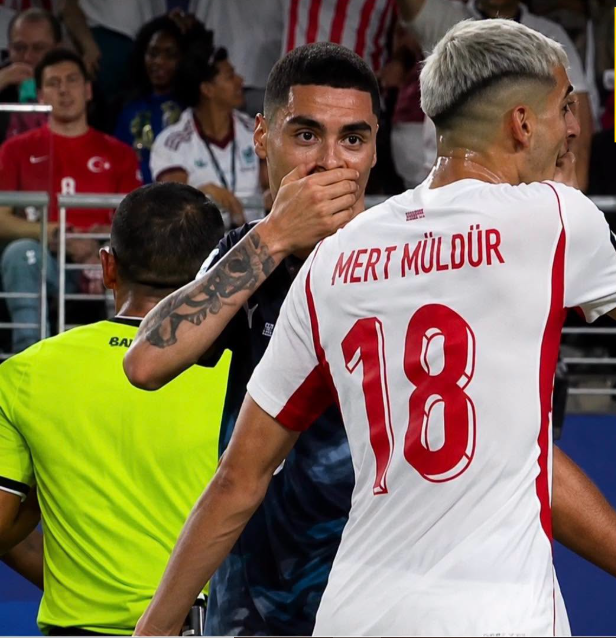
The incident occurred during a heated confrontation late in the first half of Paraguay’s 1-0 victory over Türkiye. Almiron was seen covering his mouth with his hand while addressing Turkish defender Mert Müldür. Following a Video Assistant Referee (VAR) review, the referee issued a straight red card, making the Paraguayan international the first footballer to be dismissed under the newly adopted law.
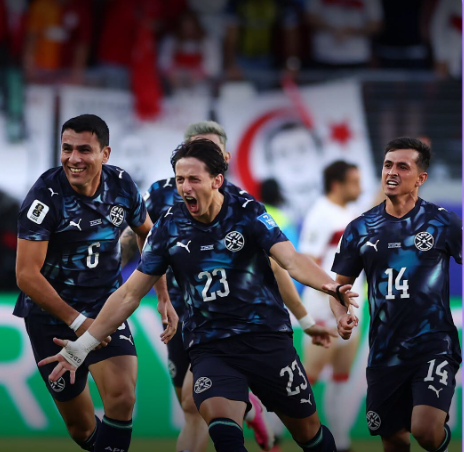
The dismissal has thrust one of football’s newest and most debated regulations into the global spotlight. The rule was approved by the International Football Association Board (IFAB) in April 2026 and implemented specifically for the FIFA World Cup. It allows referees to show a red card to any player who covers their mouth with a hand, arm or shirt while involved in a confrontation with an opponent.
Combating discrimination
According to FIFA, the measure was introduced to combat discriminatory, racist and abusive language on the pitch by preventing players from concealing their words from cameras and match officials. The decision followed a high-profile incident earlier this year involving Benfica’s Gianluca Prestianni and Real Madrid forward Vinicius Junior, where allegations of discriminatory remarks surfaced after the player’s mouth was concealed during an exchange.
Importantly, the regulation does not ban all mouth-covering. FIFA has clarified that players may still cover their mouths during friendly conversations. The offence applies specifically when the action occurs during confrontational situations or disputes involving opponents.
Almiron’s red card is likely to fuel further debate over the practical application of the law. Critics argue that determining the nature of a conversation solely from body language can be subjective, while supporters believe the rule is a necessary step towards increasing accountability and reducing discriminatory conduct in football.
Despite being reduced to 10 men for the entire second half, Paraguay held on to secure a crucial 1-0 win thanks to Matias Galarza’s early strike. The victory revived Paraguay’s hopes of progressing from Group D, while Türkiye’s defeat ended their chances of advancing to the knockout stages.
Almiron’s unwanted record also highlights several other rule changes introduced at the 2026 World Cup. Among them are expanded VAR powers, stricter anti-time-wasting measures, 10-second substitution requirements, five-second restart countdowns and red cards for players who leave the field in protest of refereeing decisions.
Whether the new mouth-covering law becomes a long-term fixture in the game remains to be seen, but Almiron’s dismissal has already ensured that the rule will be one of the most talked-about developments of the 2026 FIFA World Cup.