Advertisement
Experts debate impact of expanded World Cup on fans and the future of football
13th June, 2026 11:38 AM
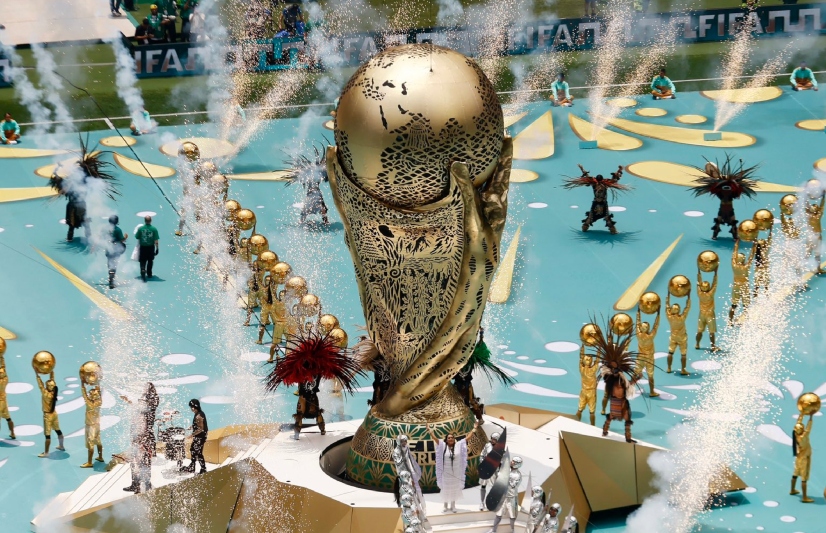
With the 2026 FIFA World Cup beginning in North America, questions are being raised about whether the tournament’s expansion to 48 teams and its hosting across multiple countries could ultimately harm the sport rather than help it.
Professor Ian Scott from the University of Manchester believes the current edition differs significantly from the 1982 World Cup in Spain, a competition he regards as one of football’s finest showcases despite featuring far fewer participants.
Tournament’s implications
Discussing the tournament’s broader implications, Scott said: “One of the fundamentals about this tournament will be the relationship of sport to wider politics and world affairs. We are seeing a six-week tournament with twice the number of teams that took part in what for many remains one of the greatest tournaments ever – Spain 1982.”

He noted that organising an event of such magnitude now requires enormous infrastructure and close cooperation among host nations.
“That can only tell you that logistically the number of venues, the size and scale of the country and the tournament layout that involves the best part of three weeks to remove only a third of the teams, is now only possible if countries team up and facilities are in place. Are countries willing and able to work with FIFA’s demands and seemingly insatiable acquisition rights for broadcasting, global companies and the like?”
Scott also pointed out that despite the larger field, some traditional football nations failed to secure qualification.
“With only 16 UEFA spots in a 48-team tournament, it means recognizable and traditional footballing powerhouses – Italy, Poland, Denmark – are absent. And while it’s great to see smaller nations get a chance, Germany will almost certainly have never played a competitive match let alone a World Cup finals match against a nation as lowly ranked as Curacao.”
According to Scott, financial considerations are likely a key factor behind the tournament’s growth.
“The cynic would say money is the driving force and even the lack of robust ticket sales don’t stop that juggernaut for FIFA…”
He added that expanding participation allows FIFA to strengthen its commercial presence in emerging football markets.
“The simple fact is more teams mean wider FIFA marketing into areas of the world it wants to solidify its base and export the game, largely for the commercial potential it offers.”
Scott believes football authorities also view the World Cup as a diplomatic and political platform.
David Cook’s opinion
Meanwhile, David Cook, a senior marketing lecturer at Nottingham Trent University, expressed concerns that the World Cup’s growing size could weaken its overall identity and value as a sporting brand.
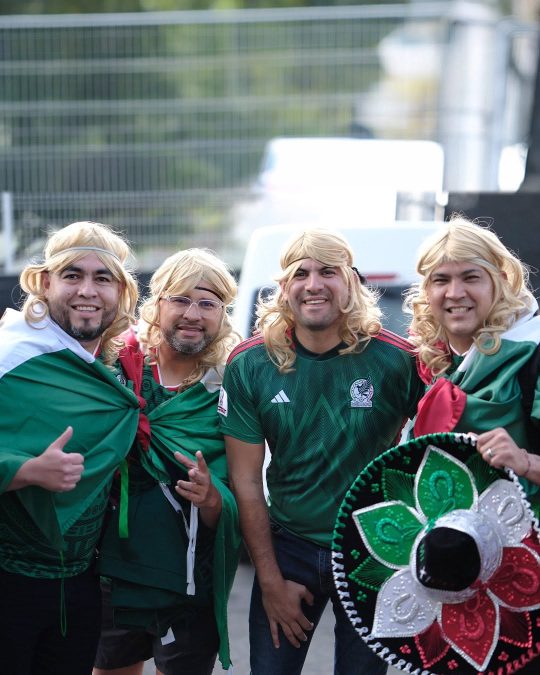
“My outlook on the World Cup is whether the growth has now got to the point of actually determining whether the brand is being slightly diluted. You’ve got so many teams taking part now. This World Cup in particular is being spread cross-continentally across North and Central America. The question is, have we got too much of a good thing now from a branding and a marketing point of view? So many matches, so many teams. Does each match have the same significance? It might have once done when there was a smaller number of teams in there.”
Cook admitted he preferred the previous 32-team structure, which he felt produced a clearer and more competitive tournament.
“As a football fan I liked the 32-team format. I liked the fact that you had four good strength teams in each group, and then you knew that it’d be quite a clear-cut format after that where you progress to the second round and the quarterfinals. A bit like the European Championships, which has changed in a similar way.”