Kenya Met explains why El Niño does not automatically mean heavy rainfall everywhere
By Valerian Khakayi, August 24, 2026As Kenya prepares for the October-November-December (OND) 2026 rainfall season, the Kenya Meteorological Service Authority (KMSA) has urged the public and institutions to look beyond El Niño alone when assessing the country’s weather outlook.
Speaking during the opening of the 13th National Climate Outlook Forum (NCOF13) on Monday, August 24,2026, KMSA Director Edward Muriuki said the success of the OND 2026 forecast would depend not only on its accuracy but also on how effectively the information is used to support early action and timely decisions.
“Climate information must be understandable, relevant and actionable,” Muriuki said.
While El Niño conditions are evolving, Muriuki cautioned against assuming that the phenomenon automatically means heavy rainfall in every location.

Heavy rainfall not everywhere
According to Kenya Met, El Niño is only one of the factors that influence rainfall patterns.
“Under evolving El Niño conditions, preparedness must be strengthened. However, El Niño does not automatically mean heavy rainfall everywhere; other atmospheric and oceanic factors must continue to be monitored,” Muriuki said.
This means that the presence of El Niño should not be interpreted as a guarantee that every part of Kenya will experience heavy rainfall.
Kenya Met has previously explained that the interaction between El Niño and other oceanic and atmospheric conditions, including the Indian Ocean Dipole (IOD), can influence the amount and distribution of rainfall across the country.
Why preparedness remains important
Despite the caution against linking El Niño directly to heavy rainfall everywhere, Muriuki said preparedness must be strengthened as the country approaches the OND season.
The emphasis is on using climate information before extreme weather impacts occur, allowing communities, government agencies and other stakeholders to make timely decisions.
It is worth noting that the latest guidance comes as authorities have already identified several parts of Kenya as vulnerable to possible El Niño-related impacts.
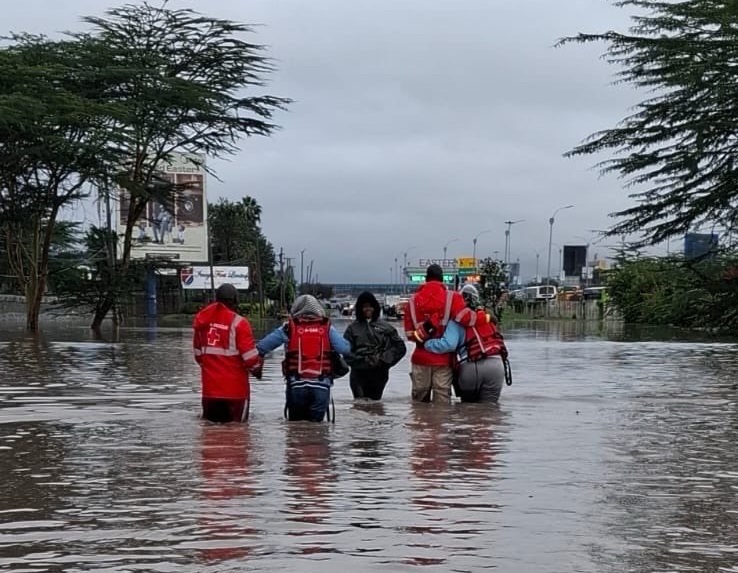
The identified risks include flooding, landslides, drought, food insecurity, disease outbreaks and other possible impacts associated with El Niño conditions. The assessment places counties in the Coastal, Lake Basin, Rift Valley and North Eastern regions among those facing the highest levels of vulnerability.
They include Tana River, Kilifi, Lamu, Kwale, Busia, Siaya, Homa Bay, Migori, Turkana, West Pokot, Narok, Baringo, Garissa, Wajir and Mandera. Nairobi, Mombasa and Kisumu were also identified among high-risk urban centres.
“18 counties have been identified requiring priority preparedness and response measures because of their exposure to flooding, landslides, drought, food insecurity, disease outbreaks and other possible El Niño-related impacts,” the Ministry of Interior stated.
“The national risk assessment, prepared by the National Disaster Operations Centre @NDOCKenya, places counties in the Coastal, Lake Basin, Rift Valley and North Eastern regions among the areas facing the highest level of vulnerability. Nairobi, Mombasa and Kisumu have also been singled out as high-risk urban centres.”