Inside the story of Kisumu mother raising 2 children battling sickle cell
By Viola Kosome, February 19, 2026It is 7:00 pm, and a mother is busy serving a client at a cyber café in Nyahera, Kisumu County, as her daughter looks on. Moments after the customer had left, the daughter cracked a joke about the mother, and they all burst into laughter.
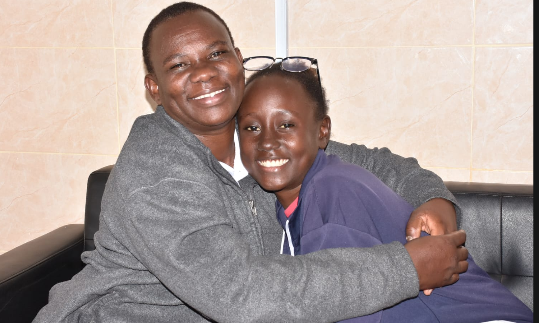
Pamela Atieno, a mother of four, and her daughter, Elizabeth Ouko, 20, are almost like siblings. They have developed a strong bond, and it’s hard to tell the struggles they’ve endured over several years.
Elizabeth is one of the two children of the family who was born with sickle cell and has been in and out of hospitals on several occasions. A costly battle that has drained the family but has given them hope and resilience.
It is a story that highlights hope and resilience as the family trudges on with the fight against sickle cell with sheer optimism in a region where stigma to the disease is still prevalent.
Sickle cell disease is prevalent in the Western, Nyanza, and Coastal regions, with Western Kenya bearing a high burden due to the region’s commonality with malaria.
For Pamela, the condition of her children has given her hope and believe, a lesson she hopes to share with other mothers who are raising children born with sickle cell.
When we caught up with them, she recounted how her journey as a carer has played a crucial role in the well-being of her children and strengthened their fight against the condition.
“It has been a tough journey, but it is something that we have accepted, and we are braving through it with pride. There have been rough days but I have to be there for my two daughters,” she says.
According to Pamela, she learnt her daughter was a sickle cell anaemia patient when she was barely eight months old in 2005. She says her child had been unwell before she was diagnosed with sickle cell.
“At first, we could not figure out where the problem was, and it took us a lot of time to figure it out until she was tested and the test became positive that she indeed had sickle cell,” she says.
After the diagnosis, they went through several counselling sessions and were told by a doctor that the condition was hereditary but could be managed by taking drugs as prescribed.
The mother of the two sickle cell warriors said she did not know how she would handle the disease and if she would be able to support the treatment, which she says is expensive.
“My greatest challenges would be the attacks coming when I didn’t have money, but after knowing that it could be managed, anytime we had the attacks, we would rush to the hospital for immediate medical attention. At times, we could go to the hospital even at night since the attacks could come at any time of the day or night,” she said.
She says that when her daughter, who is currently 20 years old, completed her primary education, she got worried because she did not want her to join boarding school because of her condition, but surprisingly, her daughter declined and insisted that she must join a boarding school.
Pamela argued that she needed her close to her, since she knew the problem they were going through, but her daughter challenged her, saying she could not attend a day school from nursery through high school.
“When she was about to do her KCPE, I sat her down and told her that because of her condition, I needed to take care of her and have her close to me, and informed her that I wanted her to join a day school, but she declined,” she said.
She added that during her daughters’ four years of high school, they had few problems because the school was supportive and would alert her whenever there was an attack.
The mother of four says her youngest was also a warrior. Having known the origin of the disease, which was from her husband’s side, she says she had to accept the situation.
Elizabeth
In an interview on Tuesday, February 10, 2026, Elizabeth says she faced only challenges in primary school, and some classmates made fun of her because of her illness.
“Despite their mockery, I decided to take life positively because my family members and some friends always encouraged me to be positive. Some of my classmates told me that I would not surpass the age of 18,” she says.
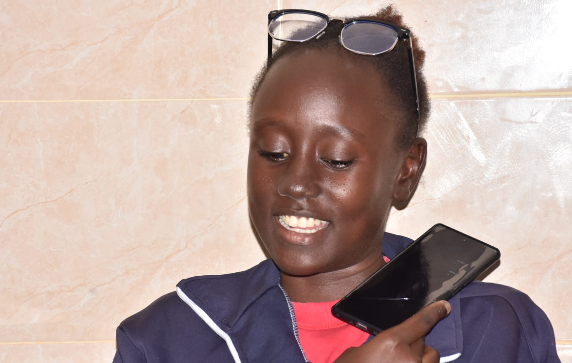
The student at Riat College pursuing a course in fashion and design says her current classmates have been very supportive.
Her other sister, who is also struggling with the condition, however, was unlucky after she suffered an acute stroke in 2017 and has been unable to move.
According to their mother, prior to the stroke, the daughter, who was nine years old at the time, had experienced an attack and was hospitalised for a week.
On the fateful day, her daughter had complained of a headache,e and all of a sudden became restless and helpless.
When the doctor came, she said they were told to go for a CT scan, and when the results came, they indicated that she had an acute stroke, and she ended up staying in the hospital for two more weeks.
She says her relief last year came when she attended a forum of Western Kenya sicklers, where they shared ideas and set up a centre for sickle cell warriors at Hamisi sub-county hospital, where they get drugs free of charge and tests.
The family is optimistic that the government’s efforts, alongside other partners, will strengthen the response to sickle cell and improve access to medication.
Kisumu County government
In Kisumu, the devolved unit is pursuing several initiatives to improve access to treatment for patients with sickle cell disease.
Governor Anyang Nyong’o announced that his administration has entered into a partnership with US-based YUNIGEN Pharmaceuticals to establish a packaging plant.
“In Kisumu County alone, 2 in every 100 residents live with sickle cell disease, most of them children. These children endure recurring pain, frequent hospitalizations, and far too often, premature and preventable deaths before their fifth birthday,” says Nyong’o.
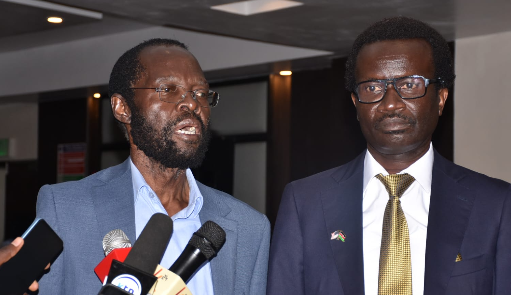
Through the partnership, the devolved unit will conduct routine newborn screening in all public health facilities and deploy digital technologies to track, treat, and follow up with patients through an integrated sickle cell registry.
This comes at a time when the devolved unit has reopened Victoria Annexe as a specialised sickle cell and surgical hub.
“From this centre, we aim to provide wholesome support comprising comprehensive sickle cell care, psychosocial support, nutritional counselling, and cytapheresis services,” said Nyong’o.
According to the county chief, the overall goal is to establish bone marrow transplant services.
Yunigen Chief Medical Officer Dr. Charles Odhiambo said the packaging plant was the first phase for the project, with plans underway to start local manufacturing of hydroxyurea in Kisumu.
“We are going to manufacture the drugs in the US and ship them in bulk to Kisumu. This will not only create employment but also bring down the cost of drugs,” he said.
Kisumu, he said, was the first hub for the giant pharmaceutical in Africa and will remain a hub. Apheresis is not covered under SHA’s benefit package, making it inaccessible to most patients.
While SHA does cater to critical illnesses through the Emergency, Chronic, and Critical Illness Fund (ECCIF), apheresis is not explicitly listed among its covered treatments.