Gachagua claims Somalis, Kikuyus are the foundation of Kenya’s economy
By Nancy Marende, January 21, 2026The Democracy for the Citizens Party (DCP) leader, Rigathi Gachagua, has described himself as a friend of the Somali community, while calling for firm accountability to address what he termed the long-standing underdevelopment of Northern Kenya.
In a statement following a meeting with Somali leaders in Nairobi on Wednesday, January 21, 2026, Gachagua said Somalis and Kikuyus share a deep-rooted business culture that has played a central role in Kenya’s economy, particularly in Nairobi.
“Somalis and Kikuyus are, by culture and practice, business people. Across Kenya and especially in Nairobi, they form the foundation of our economy,” he said.
Gachagua drew parallels between Somali and Kikuyu cultural philosophies.
“The word Somali originates from the phrase “soo maal” which means the obligation to go out and seek sustenance, to hunt, to milk, or to harvest. It is a philosophy of movement and initiative. Among the Kikuyu, the same is captured in “witeithie”, meaning the moral duty to fend for oneself, to seek opportunity, to build through effort,” read the statement in part.
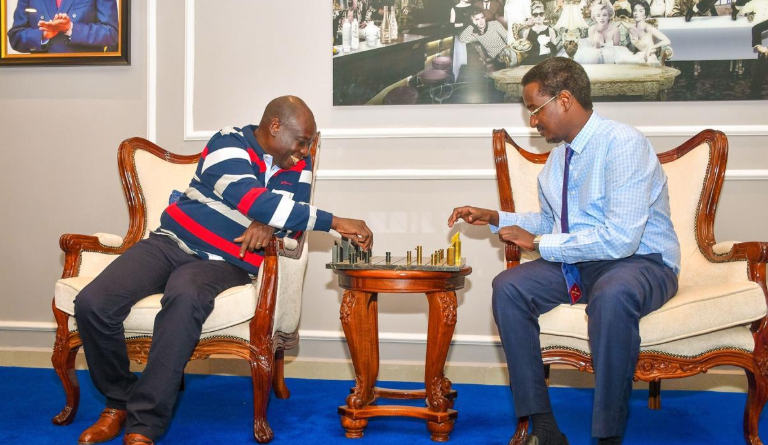
He said his recent discussions with businessman Fazul Mahad at his Nairobi office, held in the company of Democracy for the Citizens Party (DCP) Deputy Leader Cleophas Malala, reinforced what he described as a painful reality facing Northern Kenya.
According to Gachagua, the region remains a silent, ailing patient despite receiving massive public and donor funding over the years.
He noted that since the introduction of devolution in 2013, counties in Northern Kenya, Mandera, Garissa, Wajir, Marsabit, and Isiolo have collectively received more than Ksh1 trillion through national government transfers, NG-CDF allocations, the Equalisation Fund, and Kenya Roads Board disbursements.
In addition, he said trillions more have flowed into the region from multilateral lenders, bilateral partners, United Nations agencies, and international non-governmental organisations, yet little tangible development is visible on the ground.
“This is not a failure of the people. It is a failure of leadership and accountability,” Gachagua stated.
He accused some regional leaders of treating public office as a personal investment opportunity, alleging that many spend most of their time in Nairobi building private wealth instead of delivering essential services such as water, roads, schools, and health facilities to their constituents.

Reaffirming his support for the Somali community, Gachagua said his intention is to help diagnose and address the accountability challenges that have held the region back.
“As for me, Rigathi Gachagua, I am a friend of the Somali community. I seek to diagnose the problem this ailing silent patient has endured over the years, challenges rooted in a chronic lack of accountability.”