Bleeding in silence: Stop whispering about fibroids
By Faith Lagat, July 19, 2025In Kenya, the silence surrounding uterine fibroids is deafening.
Women are bleeding—physically, emotionally, and silently—while a condition that affects millions remains shrouded in stigma, misinformation, and neglect.
Recently, award-winning actress Lupita Nyong’o broke this silence, revealing during Fibroid Awareness Month that she underwent surgery to remove 30 uterine fibroids in 2014. Her revelation came just months after her Academy Award win for 12 Years a Slave.
Her story, shared powerfully on Instagram, exposes a global health crisis that Kenyan women face daily—with little support, inadequate healthcare, and a culture that dismisses women’s pain as simply part of womanhood.
Lupita’s fibroid journey
Nyong’o’s admission is more than a personal story—it’s a wake-up call.
“In March 2014, I won an Academy Award. That same year, I discovered I had uterine fibroids. Thirty fibroids. I had surgery to remove them,” she wrote.
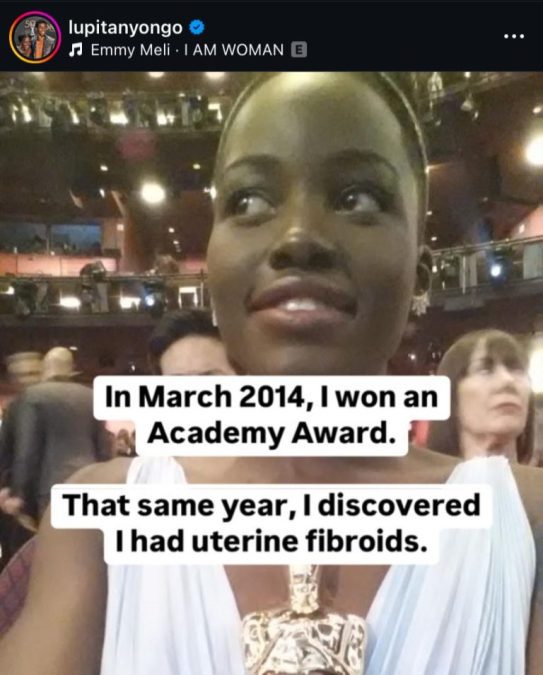
Her diagnosis came at a time when the world celebrated her success, yet privately, she battled a condition that affects up to 80 per cent of Black women globally. For white women, the figure is around 70 per cent.
In Kenya, where healthcare disparities are stark, fibroids are a silent epidemic. Thousands of women endure heavy bleeding, anaemia, pelvic pain, frequent urination, and pregnancy complications—often without diagnosis or treatment.
Crisis behind closed doors
Uterine fibroids are non-cancerous growths in or around the uterus. For some, they are small and harmless. For others, they can grow to the size of melons, disrupting daily life and threatening fertility.
Nyong’o’s experience highlights a grim reality: even with access to world-class healthcare, she was told by her doctor, “You can’t prevent recurrence. It’s only a matter of time until they grow again.”
If a global icon like Lupita faces such uncertainty, what hope do ordinary Kenyan women have—especially those in rural villages or urban slums where even basic gynaecological care is out of reach?
In Kenya, fibroids are rarely discussed openly. Cultural taboos surrounding menstruation and reproductive health stifle conversation.
Women are taught from puberty that pain is an inevitable part of being female. “When we reach puberty, we’re taught that periods mean pain, and that pain is simply part of being a woman,” Nyong’o wrote. Her words echo the experiences of millions of Kenyan women.
The normalisation of pain is compounded by a healthcare system ill-equipped to handle the fibroid crisis. Many women only seek help when their symptoms become unbearable—when infertility, severe anaemia, or life-threatening complications force them to.
Numbers don’t lie
Studies suggest that up to 80 per cent of women of African descent will develop fibroids by age 50. Black women are more likely to develop large, symptomatic fibroids earlier in life.
In Kenya, this adds to the already heavy burden of maternal health challenges. Heavy bleeding can lead to chronic anaemia, while fibroids during pregnancy increase the risks of miscarriage or preterm birth.
Yet, awareness remains low, and treatment options are limited. Myomectomy (surgical removal of fibroids) and hysterectomy (removal of the uterus) are often the only solutions offered. These procedures are expensive and often inaccessible for the average Kenyan woman.
Minimally invasive treatments like uterine artery embolisation are rarely available outside of major cities, leaving most women without choices.
Lupita’s advocacy shows that fibroids are not just a medical issue—they are a social justice issue.
Last year, she joined U.S. Congresswomen in Washington, D.C., to introduce legislative proposals for more research funding, better early detection, and improved treatments. She also launched the FWH x Lupita Nyong’o Uterine Fibroid Research Grant, focusing on non-invasive solutions to help millions of women globally.
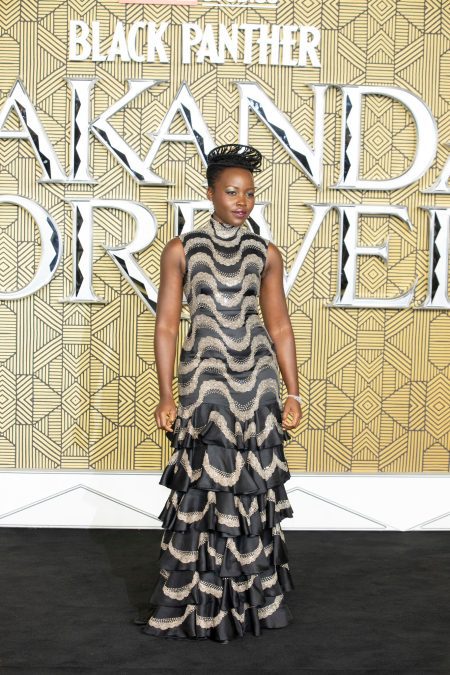
Her message was clear: silence serves no one.
Act now
In Kenya, we must heed this call. The healthcare system needs an overhaul to prioritise women’s reproductive health.
We need public awareness campaigns to destigmatise fibroids and educate women about symptoms, treatment options, and when to seek medical help. Community health workers must be trained to recognise fibroid symptoms and refer patients for care—especially in rural areas where doctors are scarce.
Cultural taboos must also be dismantled. In many Kenyan communities, discussing menstruation or reproductive health is still off-limits. Schools must introduce comprehensive reproductive health education, teaching girls that pain is not destiny. Religious and community leaders can play a role in normalising these conversations and encouraging women to seek help without shame.
Why do fibroids affect Black women more aggressively? What role do genetics, environment, stress, or diet play? These are questions Kenya’s medical community must prioritise through research and funding.
Lupita Nyong’o’s courage in sharing her story is a beacon of hope. “No more suffering in silence! We must reject the normalisation of female pain,” she said.
In Kenya, this rejection must begin now. Women are bleeding in silence, but their pain is not invisible.
It’s time to stop whispering about fibroids and start shouting for change—through policy, education, and bold advocacy. Every woman deserves to live free from the shadow of untreated fibroids.
Lupita has spoken. Now it’s our turn.