Why your skin may be acting differently during Kenya’s cold season
By Trizer Lijondo, September 10, 2026As Kenya experiences its colder months, the change in temperature can be felt beyond the sweaters and blankets, with some people also noticing changes in their skin.
Dryness, tightness, flaking, itchy patches and cracked lips can become more noticeable during colder weather. According to the American Academy of Dermatology (AAD), falling temperatures can mean less moisture in the air, making it harder for the skin to retain water.
Why cold weather affects the skin
The skin has a protective barrier that helps keep moisture in and protects it from external irritants. Cold, dry air can interfere with this barrier, causing the skin to lose moisture more quickly.
This can leave the face feeling unusually tight after washing, while areas such as the hands, lips, cheeks and around the nose may become particularly dry. For people already prone to conditions such as eczema or seborrhoeic dermatitis, colder and drier conditions may also aggravate symptoms.
The problem can also be made worse by a habit many people adopt during the cold season: taking long, hot showers. Although hot water may feel comforting when temperatures are low, it can strip the skin of natural oils and contribute to further dryness.
How to adjust your skincare routine
During the cold season, keeping the skin moisturised becomes particularly important. The AAD recommends applying moisturiser regularly, with creams and ointments generally being more effective than lighter lotions at helping dry skin retain moisture.
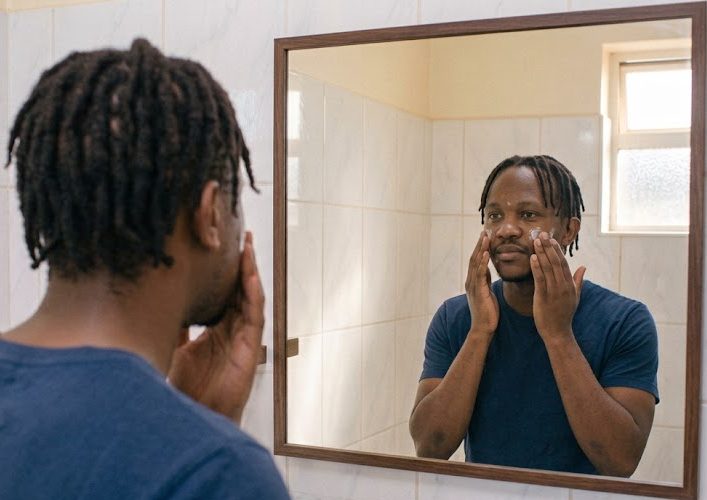
One simple adjustment is to use lukewarm water instead of very hot water when bathing or washing the face. Moisturiser can then be applied shortly afterwards to help retain moisture.
People with sensitive skin may also benefit from using gentle, fragrance-free products and avoiding harsh soaps or products that leave the skin feeling excessively tight.
Cold weather should also not be mistaken for a reason to abandon sunscreen. Sun protection remains part of skincare even when temperatures are lower, particularly because colder weather does not eliminate exposure to ultraviolet radiation.
For anyone experiencing persistent cracking, severe itching, painful irritation or a rash that does not improve with basic skincare changes, seeking advice from a qualified healthcare professional or dermatologist can help determine whether an underlying skin condition is involved.