Advertisement
Why Nairobi is freezing cold in the morning and evening
19th August, 2026 08:34 PM

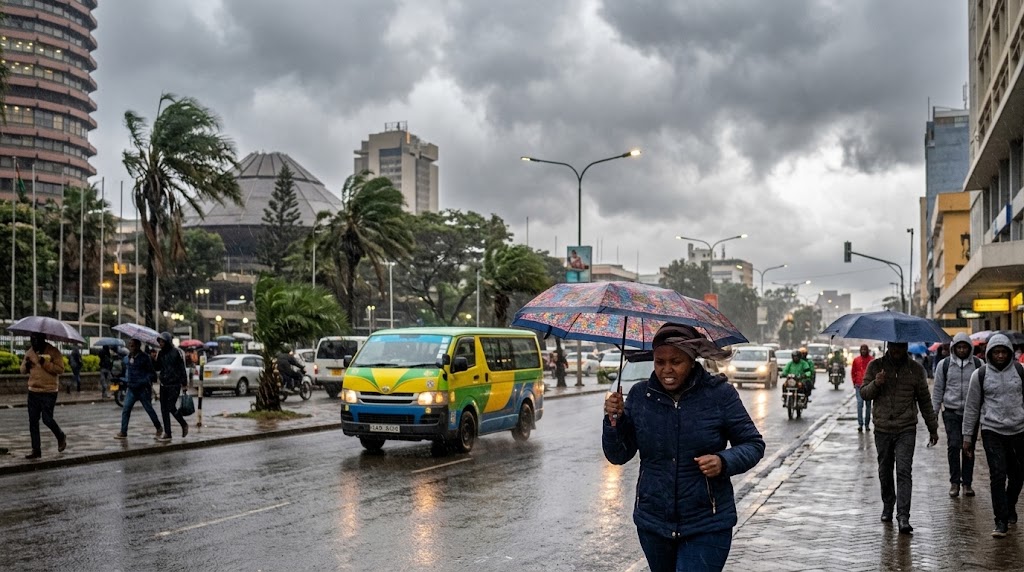
Nairobi residents have been waking up to chilly mornings and reaching for sweaters and jackets again in the evening as cold weather continues to grip parts of the city.
The biting temperatures have been particularly noticeable during the early morning hours and after sunset, with cloudy skies, cool winds and occasional drizzle making the cold feel even more intense.
But why does Nairobi feel especially cold in the morning and evening?
According to weather analyst Maithya wa Vilivū, the current chilly conditions are partly being influenced by increased cloud cover associated with a Madden-Julian Oscillation (MJO) wave over Equatorial Africa and the Indian Ocean.
The MJO is a weather pattern that moves eastwards through the tropics and can influence cloud formation, rainfall and winds. Its current influence has contributed to increased cloudiness over the highlands, including the Nairobi metropolitan area.
“Increased cloudiness due to the recent Madden-Julian Oscillation wave across Equatorial Africa and the Indian Ocean will reinforce chilly weather over the highlands east and west of the Rift, including the Nairobi Metro Area,” Vilivū explained.
The increased cloud cover is significant because it limits the amount of sunshine reaching the ground. With fewer hours of sunshine, the surface receives less solar heating, making it harder for temperatures to rise significantly during the day.

Causes of cold in Nairobi
The chilly conditions are, however, not being caused by one factor alone. They are being shaped by a combination of increased cloud cover, cool south-easterly winds, Nairobi’s high altitude and the seasonal characteristics of August.
The effect of these conditions can be felt particularly strongly in the morning and evening.
Why mornings feel particularly cold
Nairobi’s temperatures are typically lowest around dawn because the ground loses heat throughout the night.
After sunset, the Earth’s surface gradually releases the heat absorbed during the day. By the early morning hours, temperatures have therefore fallen significantly, particularly when daytime heating has been limited by cloud cover.
Cool winds can also make the air feel colder, adding to the discomfort experienced by residents heading out early for work, school or other activities.
Nairobi’s high elevation further contributes to its generally cooler climate. The city sits at about 1,800 metres above sea level, meaning it tends to experience lower temperatures than many areas at lower elevations.
The combination of overnight cooling, high altitude, cloud cover and cool winds explains why the cold can feel particularly intense just before and around sunrise.

Why the cold returns in the evening
The temperature begins to fall again as the sun sets.
After a day of limited sunshine, the atmosphere and ground may not have accumulated as much heat as they would under clearer skies. Once the sun goes down, temperatures can therefore drop quickly, making the evening noticeably colder.
Cool south-easterly winds are also contributing to the chilly conditions affecting Nairobi and other highland areas.
This explains why residents can experience relatively comfortable temperatures during the afternoon, only to reach for a jacket or sweater a few hours later.
Nairobi’s August weather
The Kenya Meteorological Department has also forecast intermittent cool and cloudy conditions across several parts of the country, including Nairobi, during August.
According to the department, the conditions are expected in parts of Embu, Kiambu, Kirinyaga, Laikipia, Meru, Murang’a, Nairobi, Nyandarua, Nyeri, Tharaka-Nithi, Nakuru, Machakos, Kajiado and Marsabit counties.
“Intermittent cool and cloudy conditions are expected in some parts of Embu, Kiambu, Kirinyaga, Laikipia, Meru, Murang’a, Nairobi, Nyandarua, Nyeri, Tharaka-Nithi, Nakuru, Machakos, Kajiado and Marsabit counties,” Kenya Met stated.
The forecast helps explain the familiar Nairobi weather pattern where mornings start cold, temperatures become more bearable during the day and the chill returns soon after sunset.
For Nairobi residents, the sweater may therefore need to remain within reach, particularly during the early morning commute and in the evening, as the city continues to experience the characteristic August chill.