Why most bhang smokers struggle to remove the smell from clothes
By David Nthua, May 3, 2026The strong smell linked to bhang, or cannabis, is not just a casual scent that fades easily.
Scientific research shows it is produced by a complex mixture of powerful chemical compounds that are designed by nature to spread quickly and persist.
This is why, even after washing or using perfume, the smell often remains on clothes.
What creates the smell
Scientists have established that cannabis releases a wide range of volatile organic compounds (VOCs), especially a group called terpenes.
These compounds are responsible for the plant’s distinct aroma.
A study published in Molecules notes that cannabis contains “over 100 distinct” terpene compounds that define its smell.
Another scientific analysis in PLOS One identified common odour compounds such as limonene, myrcene, pinene and caryophyllene, showing how multiple chemicals combine to produce the characteristic scent.
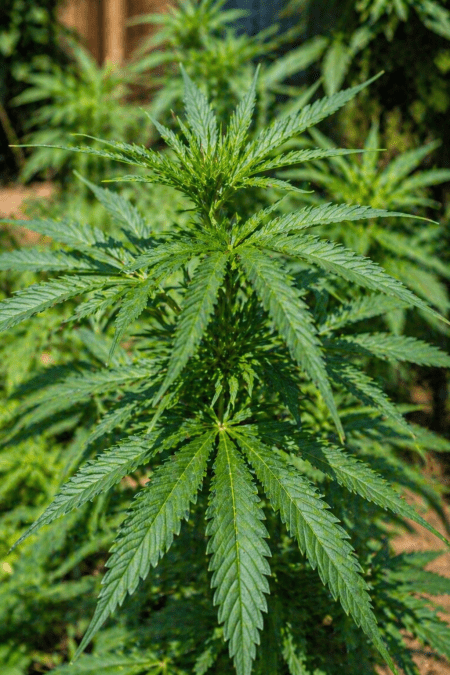
Put simply, the smell is not coming from one substance. It is a layered chemical profile, which makes it harder to neutralise.
The “skunk” effect explained
More recent global research has gone further and identified an even stronger group of chemicals behind the smell.
Scientists discovered volatile sulfur compounds (VSCs), which are extremely potent even in tiny amounts.
According to research published in ACS Omega, these compounds are “responsible for the characteristic ‘skunk-like’ aroma of cannabis.”
One compound in particular, 3-methyl-2-butene-1-thiol, has been identified as a primary driver of the smell.
These sulfur-based compounds are chemically similar to those found in skunk spray, which explains why the odour is sharp, penetrating and difficult to ignore.
Another report highlighted that these sulfur compounds can overpower other scents even at very low concentrations, meaning a small exposure can leave a strong trace.
Why does the smell stick to clothes?
The persistence of the smell is not only about the chemicals themselves, but also how they behave physically. Cannabis releases these compounds through sticky resin produced in the plant’s trichomes.
A study in Plant Physiology explains that this resin is rich in cannabinoids and aromatic compounds.
When bhang is smoked, this resin breaks down into microscopic particles carried in smoke.
These particles:
- Attach easily to fabric
- Penetrate deep into fibres
- Carry strong odour compounds with them
Clothing materials such as cotton and polyester are porous, meaning they trap these particles rather than letting them escape.
Once embedded, the smell is no longer just on the surface; it becomes part of the fabric structure.
Why does perfume not remove it?
Perfume works by adding new fragrance molecules into the air. It does not chemically destroy or remove the existing compounds.
Because cannabis odour is made up of strong terpenes and sulfur compounds, simply layering perfume on top often results in a mixed smell rather than a clean one.

The original molecules remain active and continue to evaporate over time.
Why does the smell last longer than expected?
Research also shows that cannabis produces over 200 secondary metabolites, many of which contribute to its scent profile.
This chemical complexity means:
- The smell is multi-layered
- Different compounds evaporate at different speeds
- Some remain trapped in fabrics longer than others
As a result, even when one part of the smell fades, others continue to linger, making the odour seem persistent.
The scientific reality
The difficulty in removing bhang smell from clothes is not about poor cleaning or weak perfume. It is rooted in chemistry and material science.
The plant produces a powerful combination of terpenes and sulfur compounds, many of which are highly volatile yet strongly adhesive.
When these compounds bind to fabric through smoke particles and resin, they become difficult to remove completely.
As scientists have shown, the smell is not just sitting on clothes; it is chemically and physically embedded within them, which is why it often lingers long after exposure.