Advertisement
Why everyone is suddenly obsessed with ‘functional’ drinks, and which actually work
07th May, 2026 10:28 AM

Walk into any supermarket, café, or wellness shop right now and you will notice something interesting on the shelves.
Alongside the usual sodas and juices, there are cans promising to calm your nerves, coffees blended with mushrooms, waters laced with collagen, and sparkling drinks carrying a billion live bacteria.
These are functional beverages, and the category is growing fast. But before you swap your morning tea for a lion’s mane latte, it helps to know what the science actually says.
The pitch is simple: these drinks do something beyond quenching your thirst.
Brands market them as tools for focus, gut health, immunity, stress relief, glowing skin, and sustained energy, all in a convenient bottle or sachet. Consumer demand is real.
The global mushroom drinks market alone was valued at $4 billion in 2024 and is projected to nearly double by 2034. But popularity and proof are two different things.
What is actually in your cup
Functional beverages generally fall into a few broad families.
Adaptogen drinks and mushroom coffees blend plant compounds, such as ashwagandha, reishi, or lion’s mane, into coffee or tea bases. Adaptogens are herbs and fungi traditionally used to help the body handle stress.
Probiotic sodas and kombuchas are fermented drinks that deliver live bacteria to your gut.
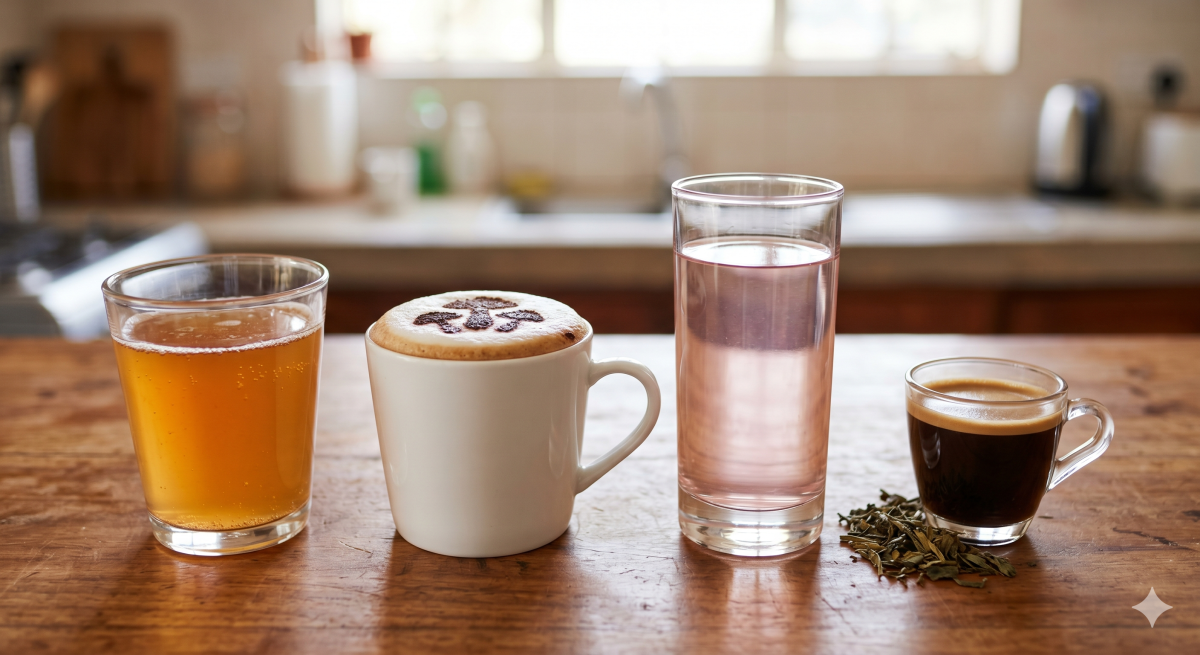
Collagen waters dissolve hydrolysed protein into a plain drink, banking on the idea that oral collagen can reach and replenish your skin.
And nootropic or focus drinks often combine caffeine with amino acids like L-theanine to take the edge off the usual jittery spike.
Not all of them deserve the same level of scepticism. Quality, dosage, and formulation vary enormously across brands.
A can labelled “probiotic” may contain bacteria that die long before they reach your gut, while a well-formulated kombucha works quite differently.
What the evidence says
Start with probiotics, arguably the most studied category.
A 2024 review published in the Journal of Clinical Medicine found that probiotics represent “a valuable clinical tool supporting gastrointestinal health, immune system function, and metabolic balance.”
The key qualifier, though, is strain specificity. Different bacteria do different things, and many products on the market do not disclose which strains they use or in what concentrations.
Kombucha, when traditionally brewed, has a reasonable evidence base. Many probiotic sodas, less so.
Mushroom-based drinks sit on firmer ground than they did a decade ago.
A 2025 review in Frontiers in Cellular and Infection Microbiology examined medicinal mushrooms across functional foods and beverages, noting that their bioactive compounds have “demonstrated their nutritional and medicinal value” through scientific research and clinical trials, particularly lion’s mane for cognitive support and reishi for immune function.
That said, most studies use concentrated extracts at dosages that are often higher than what a ready-to-drink product contains.
Collagen water is the weakest of the bunch for now. Oral collagen does get broken down in the gut before it can be directed to your skin, and the evidence for meaningful cosmetic benefit from drinkable collagen remains limited.
Adaptogen lattes land somewhere in the middle. Ashwagandha, for instance, has credible research behind it for stress reduction, but the amounts used in trials are typically much higher than what you find in a flavoured beverage.
The bottom line
Functional beverages are not a scam, but they are also not a shortcut.
The honest answer is that probiotic drinks and mushroom-based coffees have the most robust backing, provided you are looking at well-formulated, transparent products.
Collagen water and generic “focus” drinks are largely style over substance at this stage. If a drink does not tell you exactly what is in it and at what dose, that tells you something.
If anything, a quality cup of tea, a bowl of yoghurt, or a varied whole-food diet will do more for your gut and your skin than anything in a sleek aluminium can. But if mushroom coffee gets you through your morning with less anxiety and more focus, there is also enough science there to say you are not being foolish. Just read the label.