Back to school: 9 NTSA safety red flag parents should never ignore when it comes to learner transport
By Valerian Khakayi, August 19, 2026As schools prepare to reopen for the third term after the August holidays, parents are once again making arrangements for their children’s daily journeys to and from school.
For families relying on school transport, public service vehicles or other forms of learner transport, safety should be one of the key considerations before children return to class.
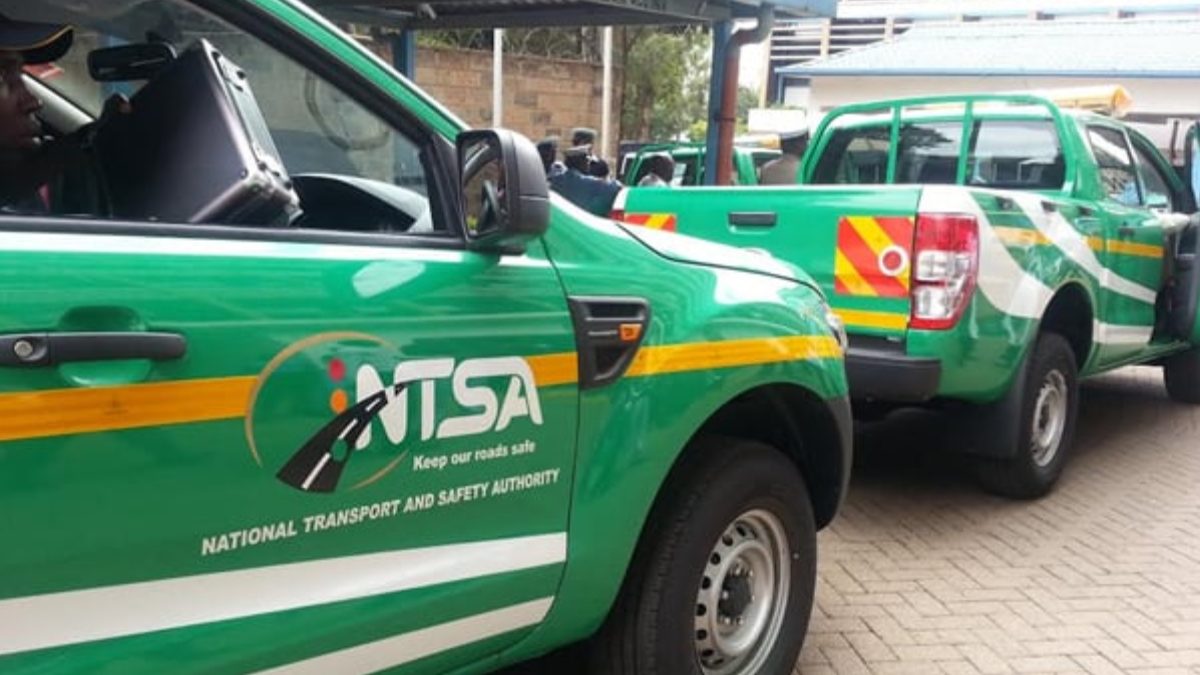
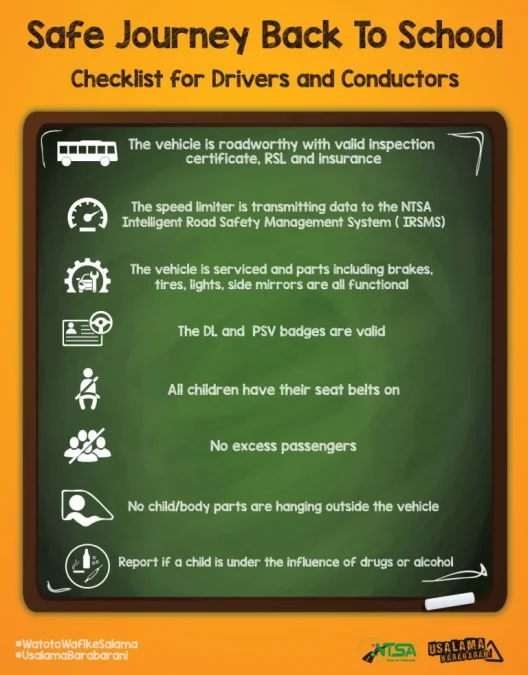
The National Transport and Safety Authority (NTSA) has issued a nine-point safety checklist for drivers and conductors transporting school-going children, highlighting areas parents should pay attention to when assessing their children’s transport arrangements.
Here are nine safety red flags parents should never ignore.
- A vehicle without valid inspection
Parents should establish whether the vehicle transporting their children is roadworthy and has a valid inspection certificate.
NTSA has also reminded operators to have a valid Road Service Licence (RSL) and insurance cover before transporting learners.
- A faulty speed limiter
A functional speed limiter is another important safety requirement.
According to NTSA, operators should ensure the speed limiter is working and transmitting data to the authority’s Intelligent Road Safety Management System (IRSMS). A vehicle whose speed-monitoring system is not functioning should therefore raise concern.
- Poorly maintained vehicles
Parents should not overlook the general condition of a vehicle.
NTSA has advised operators to ensure vehicles are properly serviced before journeys begin. This means a vehicle that appears poorly maintained or has obvious mechanical problems should be treated as a warning sign.
- Faulty brakes, tyres, lights or mirrors
Critical components such as brakes, tyres, lights and side mirrors should be in good working condition.
Parents can also raise concerns with school administrators or transport providers if they notice obvious defects that could compromise a child’s safety.
- Driver or conductor with invalid documents
The person entrusted with transporting children should have valid documentation.
NTSA requires drivers and conductors to have valid driving licences and PSV badges. Parents can ask schools or transport providers to confirm that the relevant requirements have been met.
- Children travelling without seat belts
A seat belt should not be treated as optional simply because the journey is short.
NTSA requires all children to wear their seat belts throughout the journey. Parents can make this part of their routine when checking the transport arrangements for their children.
- Overcrowding
A vehicle carrying more children than its approved capacity is another major red flag.
NTSA has warned operators against carrying excess passengers, meaning children should not be squeezed into vehicles simply to accommodate additional learners.
- Children putting their heads or arms outside
Parents should also remind children never to put their heads, arms or other body parts outside a moving vehicle.
NTSA has specifically included this behaviour in its safety requirements for learner transport.
Concerns about a child’s condition
Drivers and conductors have also been directed to report cases where a child is suspected to be under the influence of drugs or alcohol.
While this may not be a routine concern for most parents, NTSA says operators have a responsibility to report such cases rather than ignore them.
What parents can do
Beyond checking the vehicle itself, parents can speak to school administrators about how learners are transported, who drives them and what safety measures are in place.
They can also encourage children to remain seated, wear their seat belts throughout the journey and avoid behaviour that could put them at risk.
NTSA’s latest advisory comes as schools prepare for increased movement of learners on Kenyan roads when the third term begins. The authority said its checklist is aimed at ensuring school transport vehicles are roadworthy and compliant with safety requirements.
For parents, the message is simple: learner transport should not only be convenient. It should also give them confidence that their children can travel to and from school safely.