How your car’s Automatic Emergency Braking system works to prevent highway crashes
By Dan Kauna, September 5, 2026Rear-end collisions remain among the most common traffic accidents on Kenyan highways, where sudden stops by public transport or heavy lorries leave little room for driver error.
Fortunately, modern vehicles and even second-hand imports arriving at the port of Mombasa increasingly come fitted with Automatic Emergency Braking (AEB).
This safety feature monitors the road, calculates distance, and applies stopping force automatically when a driver fails to react in time.
Sensors monitor the road ahead
The technology relies on hardware mounted behind the front grille or high on the windscreen near the rear-view mirror. Most systems use a combination of optical cameras, radar sensors, or lidar lasers.
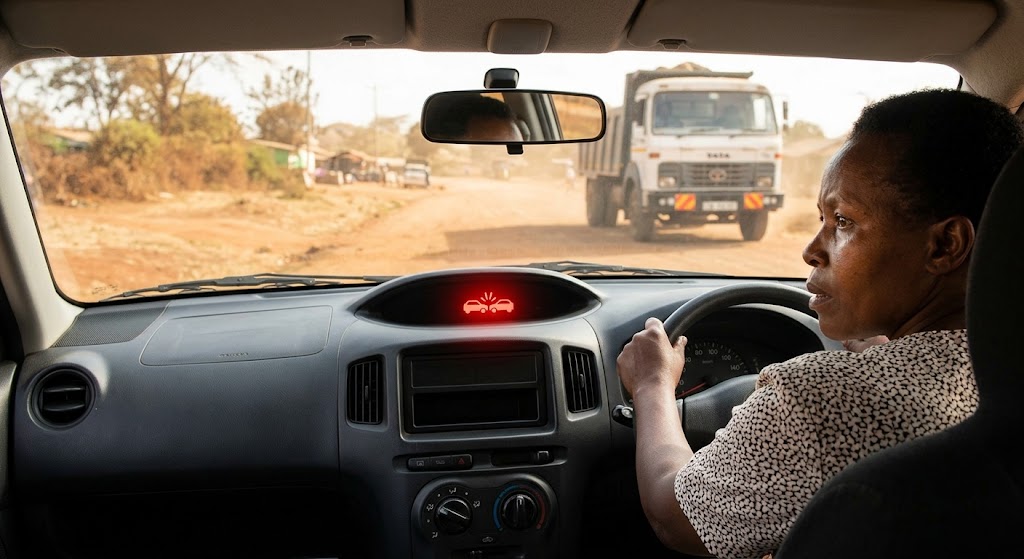
Cameras recognise shapes like vehicles, pedestrians, and cyclists. Radar emits radio waves to measure the precise speed and distance of objects ahead, working reliably even during heavy rain or dusty road conditions.
Software calculates the time to collision
As the vehicle moves, onboard computers continuously process speed and distance data. The software calculates time-to-collision, determining how many seconds remain before an impact occurs at the current speed.
If a vehicle ahead slows down unexpectedly, the system alerts the driver through dashboard lights and audible warning chimes.
It also pre-charges the hydraulic brake lines so full stopping power is available the instant the pedal is pressed.
Brakes engage automatically to prevent impact
If the driver ignores or misses the warnings, the system steps in. AEB applies maximum braking force autonomously to slow down or completely stop the vehicle before impact.
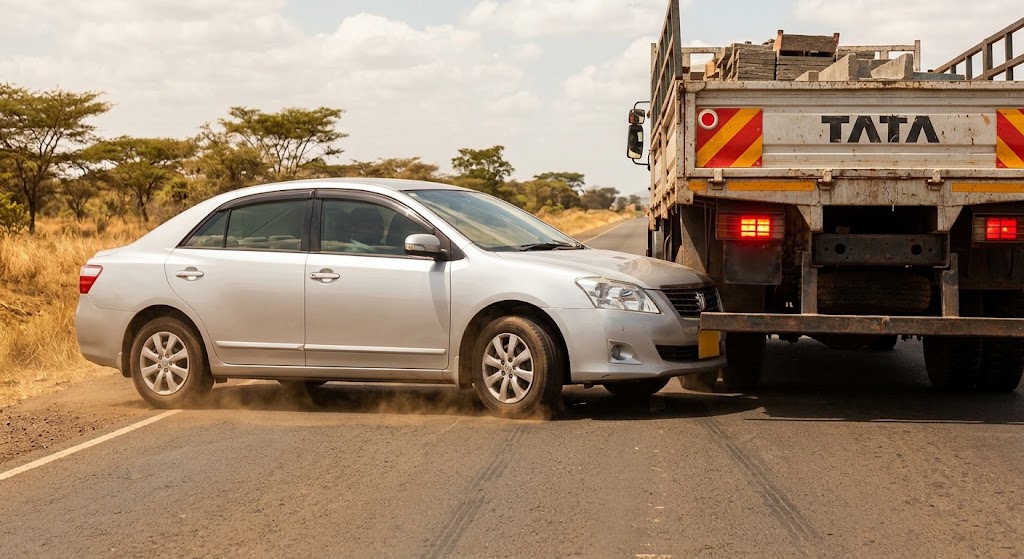
A peer-reviewed study published in Frontiers in Future Transportation noted that “low-speed AEB systems are on average estimated to decrease real-world rear-end crashes with injuries by 45%.”
While AEB saves lives and prevents vehicle damage that can easily cost upwards of Ksh150,000 in repairs, manufacturers emphasise that it is an assistant rather than an autopilot.
Keeping windscreens clean and front sensors free of mud ensures the system functions reliably during daily commutes.