No casket, compartmented grave: Inside Islamic burial practices witnessed at Suluhu husband’s burial
By Trizer Lijondo, September 8, 2026The burial of Hafidh Ameir Hassan, husband of Tanzanian President Samia Suluhu Hassan, has drawn attention to Islamic burial traditions, particularly the simplicity of the grave and the absence of a conventional casket.
Hafidh was laid to rest in Kizimkazi, Zanzibar, on Monday, September 7, hours after his death was announced.
His burial followed Islamic practices that emphasise simplicity, dignity and equality in death.
For many watching the burial, the structure of the grave and the manner in which the body was laid to rest raised questions about what happens during a traditional Muslim burial.
Why Muslims are traditionally buried without caskets
In traditional Islamic burial, the deceased is generally not placed in an elaborate coffin. Instead, the body is washed, prepared and wrapped in a simple shroud known as kafan before being taken to the grave.
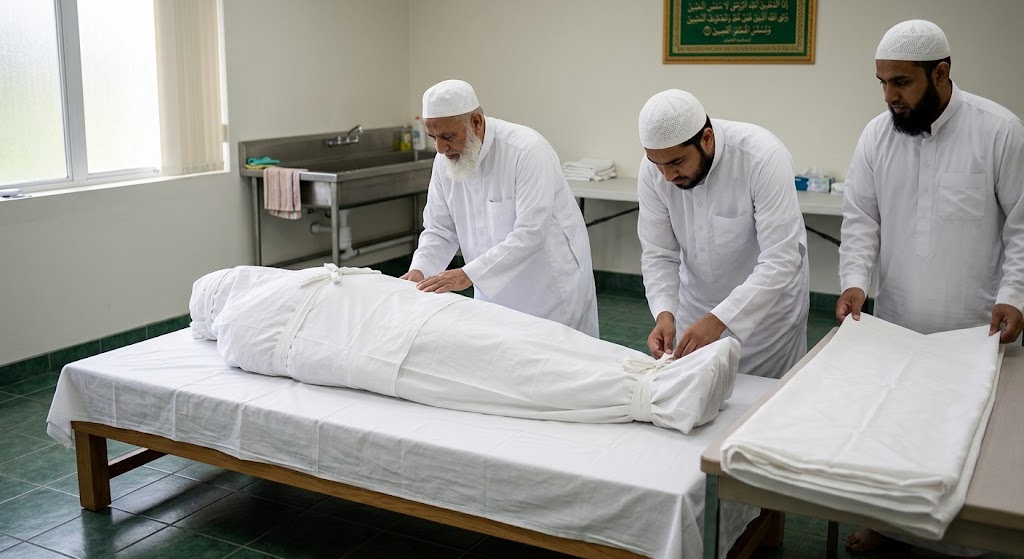
The preparation begins with ghusl, the ritual washing of the deceased. The body is then wrapped in plain cloth before the funeral prayer, known as Salat al-Janazah, is performed.
The simplicity of the shroud reflects the Islamic emphasis on equality in death. Regardless of a person’s wealth, occupation or social standing, Muslims traditionally return to the earth in a simple manner.
However, the use of coffins can vary depending on local customs, laws and circumstances, meaning their absence is not an absolute requirement in every Muslim burial.
The compartment inside the grave
Another feature associated with traditional Islamic burials is the structure created inside the grave.
Islamic jurisprudence recognises two main methods, known as lahd and shaqq. In a lahd, a side niche is dug into the wall at the bottom of the grave, usually on the side facing the Qiblah.
The body is placed inside the niche, which is then covered with bricks, stones or other material before the main grave is filled with soil.
A shaqq involves creating a narrower trench within the main grave where the body is placed and covered before the remaining space is filled.
The method used can depend on the condition of the ground and local burial customs.
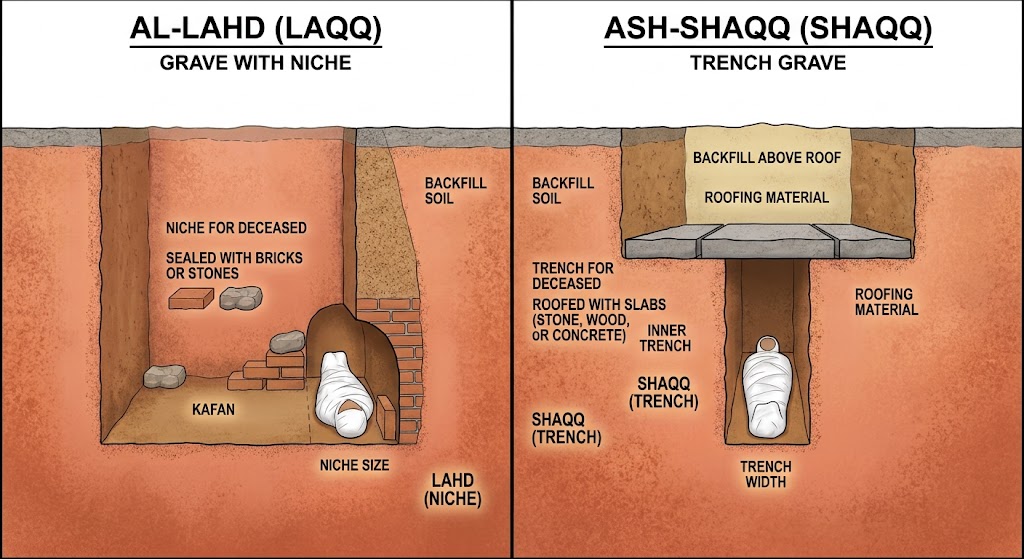
The deceased is traditionally placed on the right side facing the Qiblah, the direction of the Kaaba in Mecca.
Islam also encourages burial without unnecessary delay. Burial is regarded as fard kifayah, a communal obligation requiring the Muslim community to ensure the deceased is properly buried.
The modest grave and communal participation in the burial reflect the broader Islamic emphasis on humility, dignity and equality after death.