Myths about people who play pool table game
By David Nthua, March 30, 2026The pool table game is popular in many towns and neighbourhoods, often seen as a social and competitive activity.
Despite its widespread presence, several misconceptions surround people who play pool.
These myths can shape unfair opinions and overlook the reality of the game and its players.
This article explains common myths about pool players in a balanced and factual way.
Why these myths exist
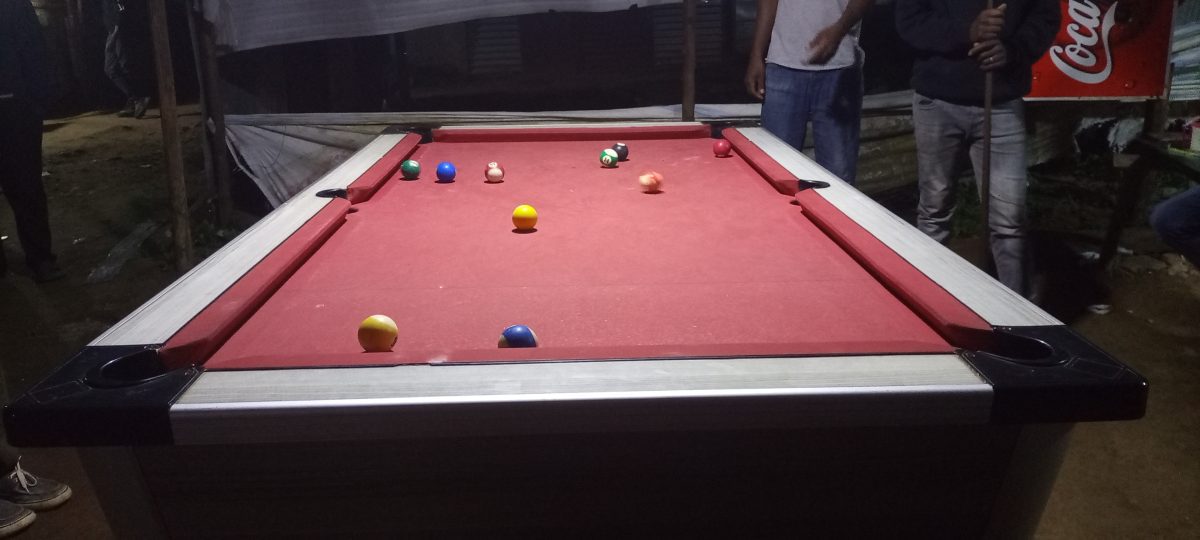
Pool tables are often located in public spaces such as social centres, entertainment spots, and roadside setups.
Because of this visibility, assumptions are easily formed based on the environment rather than actual behaviour.
However, the presence of a pool table does not define the character, lifestyle, or intentions of those who play.
Pool playing is linked to drug peddling
One of the most common myths is that pool table areas are associated with drug activities.
It is true that in some areas, authorities such as police or local administrators may monitor busy social spots, including pool tables.
This is usually due to crowd presence rather than the game itself.
However, linking pool playing directly to drug peddling is not accurate.
If that were the case, other public gathering places such as transport stages, football grounds, or entertainment venues would also be broadly labelled the same.
In reality, a pool is simply a recreational activity.
The behaviour of individuals should not be generalised based on the location of the game.
Pool players are broke or idle
Another widespread belief is that people who play pool are unemployed or struggling financially.
This assumption overlooks the diversity of players. The pool attracts individuals from different backgrounds, including students, workers, entrepreneurs, and professionals.
In fact, pool has grown into a competitive sport globally. Skilled players participate in tournaments, earn prize money, and build careers through the game.
Some have achieved financial stability, sponsorships, and recognition.
Playing pool does not indicate financial status. It is a skill-based activity that can be both recreational and professional.
Pool playing affects relationships and commitment
There is also a belief that people who frequently play pool are less committed to relationships or family life.
This assumption is not supported by evidence. Like any other leisure activity, the pool becomes a concern only when it interferes with responsibilities.
The same applies to activities such as watching sports, socialising, or gaming.
Responsible individuals balance recreation with personal and family commitments.
Playing pool does not automatically affect one’s ability to maintain healthy relationships.
Pool is not a serious or skilled activity
Some people view pool as a casual pastime without real skill or value.
In reality, pool requires concentration, strategy, coordination, and practice. Players must understand angles, force control, and positioning to succeed.
At competitive levels, the game demands high levels of precision and mental focus.
This makes pool comparable to other recognised sports that require both physical and cognitive skills.
Pool spaces encourage negative behaviour
Because pool tables are often placed in open or social environments, they are sometimes associated with negative behaviour.
However, the environment does not define the activity itself.
Many pool spaces are organised, respectful, and focused on friendly competition.
Like any public activity, the experience depends on how individuals behave, not the game being played.
Myths about people who play the pool table game are often based on assumptions rather than facts.
Pool is a legitimate recreational and competitive activity enjoyed by people from different backgrounds.
Separating perception from reality helps create a fair understanding of the game and its players.
When viewed objectively, pool stands as a skill-based activity that promotes social interaction, strategy, and discipline.