What happens to a KRA PIN after death? Taxman releases new guidelines
By Katemarthason Okudo, July 14, 2026When a loved one passes away, families often find themselves dealing with more than grief. They may also need to settle legal, financial and tax matters, some of which are unfamiliar.
To help make this process clearer, the Kenya Revenue Authority (KRA) has released new guidelines explaining what happens to a taxpayer’s Personal Identification Number (PIN) after death and how estates should continue meeting tax obligations where necessary.
The notice, published by the tax authority on Tuesday, July 14, 2026, outlines the steps for deregistering the PIN of a deceased person and registering a new PIN for the deceased person’s estate where applicable.
Why a deceased person’s PIN is deregistered
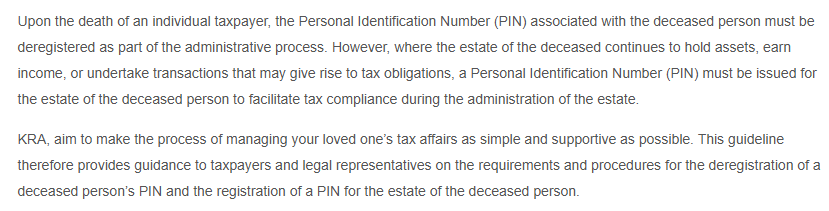
According to KRA, once an individual taxpayer dies, the PIN linked to that person must be deregistered. This is done to update the authority’s tax records and reflect the individual’s change in legal status.
The authority says maintaining accurate records helps ensure that any tax obligations connected to the deceased or their estate are handled in accordance with Kenyan law.
However, deregistering a person’s PIN does not always mark the end of tax responsibilities.
When an estate needs its own PIN
KRA explains that if the deceased person’s estate continues to own assets, earn income or carry out transactions that attract tax obligations, the estate must be issued with its own Personal Identification Number.
This separate PIN allows the estate to continue complying with tax requirements while administrators complete the process of distributing assets or finalising legal matters.
The authority notes that this ensures tax compliance continues even after the death of the taxpayer, particularly where property, investments, rental income or other taxable activities remain under the estate.
Who can start the process?
The guidelines state that only individuals with legal authority to act on behalf of the deceased person’s estate can initiate the deregistration of the PIN.
These include:
1.A legal representative managing the deceased’s affairs.
2. An executor named in a valid will.
3. A court-appointed administrator of the estate.
4. A family member managing the deceased person’s affairs, provided they can demonstrate legal authority to do so.
Anyone making the request must provide evidence that they are authorised to act on behalf of the estate.

Purpose of the new guidelines
The authority says the new guidance is intended to make the management of a loved one’s tax affairs as simple and supportive as possible during a difficult period.
The guidelines provide clarity on two key processes: deregistering the deceased person’s PIN and registering a new PIN for the estate where tax obligations continue to exist.
They are also meant to help legal representatives, executors, administrators and eligible family members understand the requirements and procedures involved, reducing confusion and supporting compliance with tax laws.
For families, understanding these requirements can help avoid delays when managing an estate and ensure any outstanding tax obligations are handled correctly. Where an estate continues generating income or holding taxable assets, obtaining an estate PIN becomes an important step in completing the administration process.
KRA encourages eligible representatives to follow the outlined procedures so that tax records remain accurate and the affairs of deceased taxpayers are managed in accordance with the law.