Foreigners in Kenya: How new rules affect jobs, businesses, and family income
By Katemarthason Okudo, September 8, 2026Kenya’s new crackdown on foreign nationals running small businesses is already changing the way some people earn a living, with the effects likely to be felt by both foreign families and Kenyan traders.
The government began enforcing the directive on Monday, September 7, after President William Ruto ordered foreign nationals operating small-scale businesses to close their businesses if they did not have the required work permits.
The move has particularly affected people working in informal trade, including hawking and running small retail shops.
The government says the intention is to protect opportunities for Kenyan traders while ensuring that foreigners comply with immigration and work regulations.
Jobs and businesses under pressure
For years, Kenya has attracted people from across East Africa and beyond who have come to work, trade and build businesses.
Some foreign nationals have worked as hawkers selling clothes, shoes, food and household items, while others have operated small shops and participated in informal retail.
Others have worked in restaurants, salons, construction and other service businesses, although the current directive is specifically focused on small-scale trading and the enforcement of work-permit requirements.
The government has clarified that visa-free entry into Kenya does not automatically give a foreign national the right to work, trade or operate a business.
Foreigners engaging in employment or business are still expected to meet the relevant immigration and work-permit requirements.

This means the financial impact will differ from one person to another.
A foreigner who is legally employed or operating a compliant business is in a different position from someone conducting trade without the required documentation.
Family income could take a hit
For families depending on small businesses, losing a trading opportunity can quickly become a household financial problem.
Daily earnings from a small shop or hawking business may be used to pay rent, buy food, pay school fees and send money to relatives back home.
The uncertainty was visible on Monday when hundreds of Burundians gathered at their embassy in Nairobi seeking travel documents and assistance, with some preparing to return home.
The government has since announced a temporary registration window for undocumented East African nationals to allow them to regularise their status.
For a trader who has invested savings in stock, leaving Kenya can also mean abandoning customers, business relationships and money tied up in goods.
What does it mean for Kenyan businesses?
The new rules could create opportunities for Kenyan traders.
If foreign nationals leave businesses such as small retail shops and hawking, Kenyan entrepreneurs may gain access to customers, trading spaces and markets that were previously occupied by foreign operators.
This could be particularly important for young people and small traders who have struggled to find affordable opportunities in crowded informal markets. However, there could also be unintended effects.
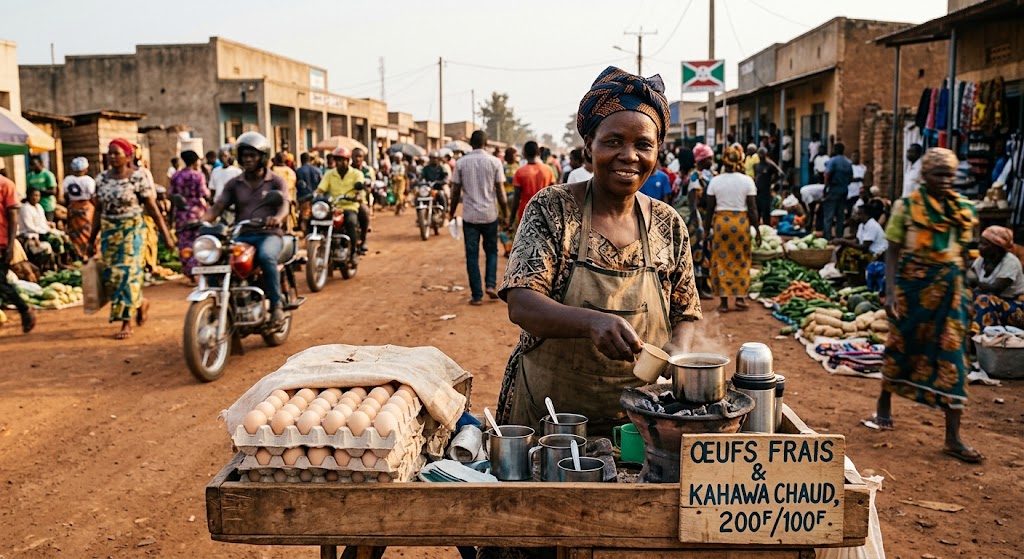
Foreign-owned small businesses employ people, buy goods from suppliers and contribute to the movement of money within local economies. If businesses close suddenly, suppliers, landlords, transporters and other workers who depended on those businesses could also lose income.
There is therefore a difference between protecting Kenyan traders and removing economic activity altogether.
Xenophobia fears enter the debate
The crackdown has also raised concerns about xenophobia.
Hundreds of Burundians seeking help at their embassy in Nairobi, together with reports of anxiety among foreign traders, have brought renewed attention to how foreigners are treated in Kenya. Former IEBC commissioner Roselyn Akombe has warned against political statements that could fuel hostility towards Burundians and Rwandans.
The government, however, has sought to draw a line between enforcing immigration laws and discriminating against people because of their nationality.
Officials have warned against harassment and said the registration process is intended to help undocumented East Africans regularise their status rather than simply force them out of the country.
The money question
For Kenya, the challenge will be finding a balance between protecting local businesses and maintaining an economy in which legitimate foreign workers, investors and entrepreneurs can operate within the law. For Kenyan traders, the new rules could open doors that were previously difficult to access.
For foreign families, however, the changes could mean losing businesses, finding new jobs or, in some cases, returning home.