Why combat sports are men’s ultimate mental health weapon
By Dan Kauna, June 5, 2026June is Men’s Mental Health Month, and if there is one conversation that never quite gets far enough, it is about the ways men struggle to ask for help. Talking circles and journalling are valuable, but for a lot of men, they feel foreign.
Walking into a gym, wrapping your hands, and learning to throw a punch? That lands differently.
Combat sports (boxing, wrestling, judo, Muay Thai, Brazilian jiu-jitsu) have been a fixture of Kenyan gym culture for years.
What is becoming clearer now is just how much psychological work they are quietly doing.
The science behind the sweat
The research is catching up with what coaches and fighters have known for a long time.
A 2025 paper published in Frontiers in Psychology found that “empirical evidence suggesting an association between participation and enhanced self-regulation and self-efficacy and reduction in anxiety and depressive symptomatology” is now well-established across multiple studies in the field.
For men who carry stress, suppressed anger, or a low-grade sense of helplessness without naming any of it, combat sports training offers a structured, physical channel for all of it. You are not asked to talk about your feelings.
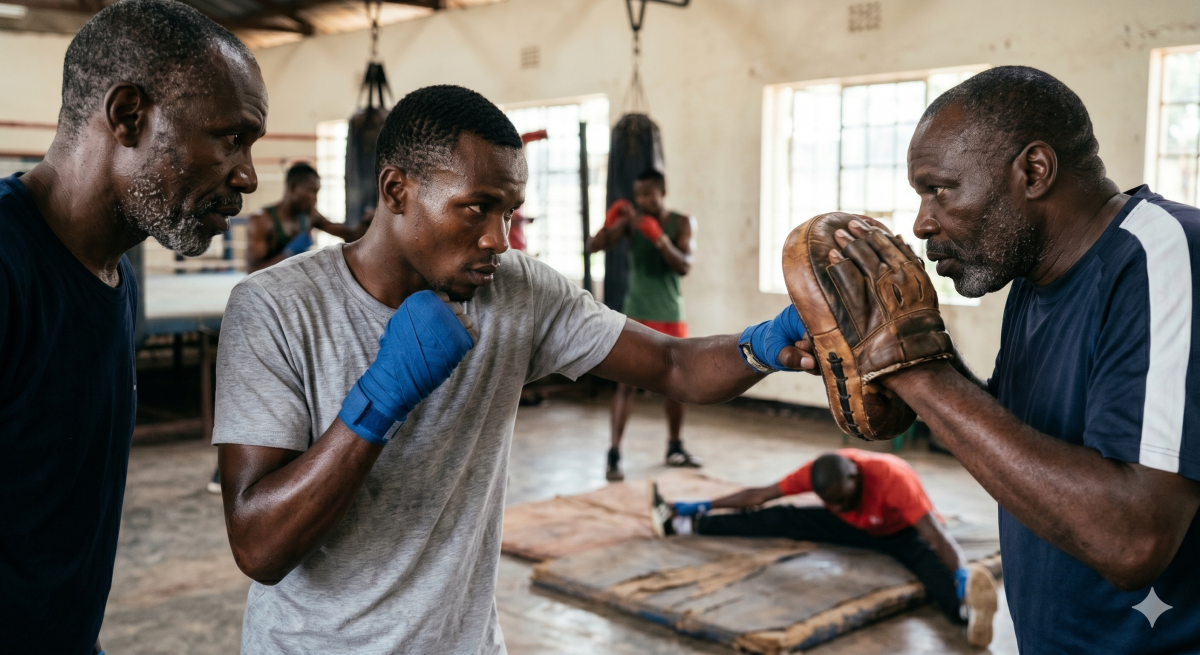
You are asked to show up, move, and improve – and the emotional benefits follow almost as a side effect.
A separate review, also published in 2025, makes the case further: Sustained training in combat sports fosters self-control, and that self-control is “essential to the psychological benefits of martial arts.”
The discipline required to learn technique, absorb criticism from a coach, and keep showing up when it is hard, all of it builds an internal architecture that holds up under real life pressure.
Brotherhood, mastery and the reason men stay
Beyond the neurochemical benefits of intense exercise, combat sports offer something rarer: a place where men are actively accountable to each other.
The gym creates bonds that form quickly and run deep. Sparring partners know when you are off. Coaches notice when something is wrong. There is a culture of earned respect that makes men want to return.
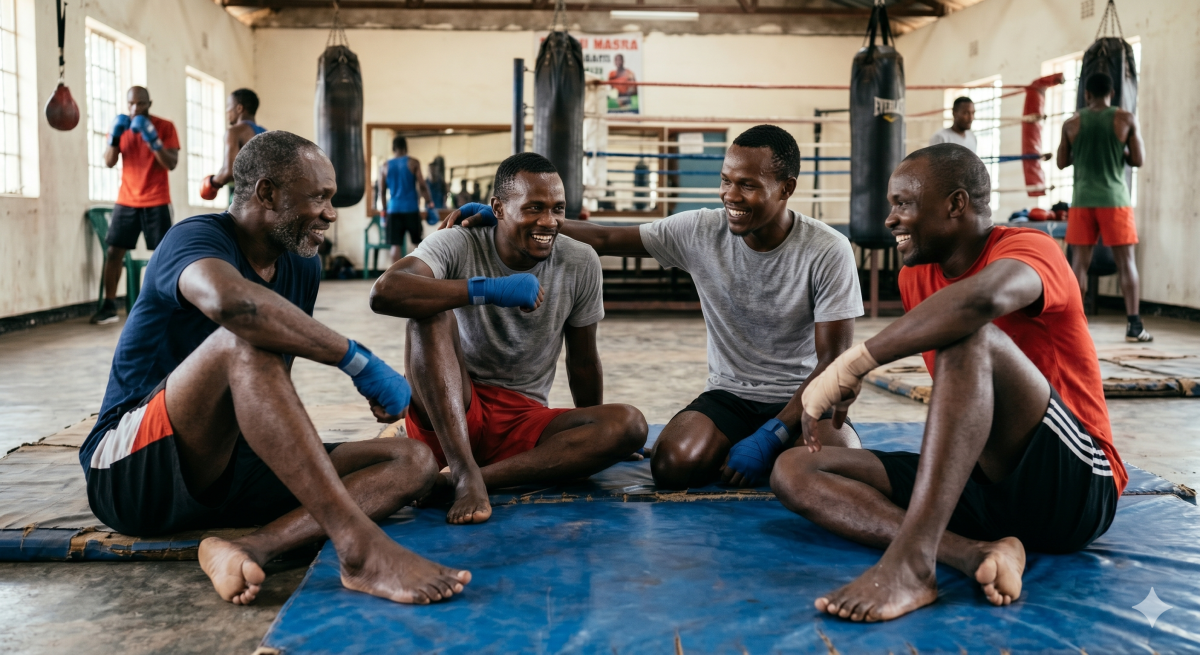
This matters because social isolation is one of the biggest predictors of poor mental health in adult men. The gym solves for it without making it a subject of conversation. You build community by doing something together, not by discussing your loneliness.
There is also the power of physical mastery. Learning to move well, to absorb and return force, to handle fear under pressure. These are experiences that translate directly into how a man carries himself off the mat. Confidence built in controlled adversity tends to be real.
Combat sports will not replace professional mental health support for everyone, and anyone navigating serious mental health challenges should speak to a qualified professional. But for the many men looking for an entry point that does not feel like an entry point, the gym is waiting.