School fires: TIFA survey reveals simple hacks on how to address the crisis
By Katemarthason Okudo, September 9, 2026School fires have become a concern for many families, especially those with children in boarding schools. Beyond the damage caused by the fires, such incidents can leave learners, parents and teachers dealing with fear, loss and uncertainty.
A new survey by TIFA Research, released on Wednesday, September 9, 2026, now offers insight into what Kenyans think could help address the problem. The findings show that many people are looking beyond punishment and calling for better communication, support and safer school environments.
Talk to students before problems grow
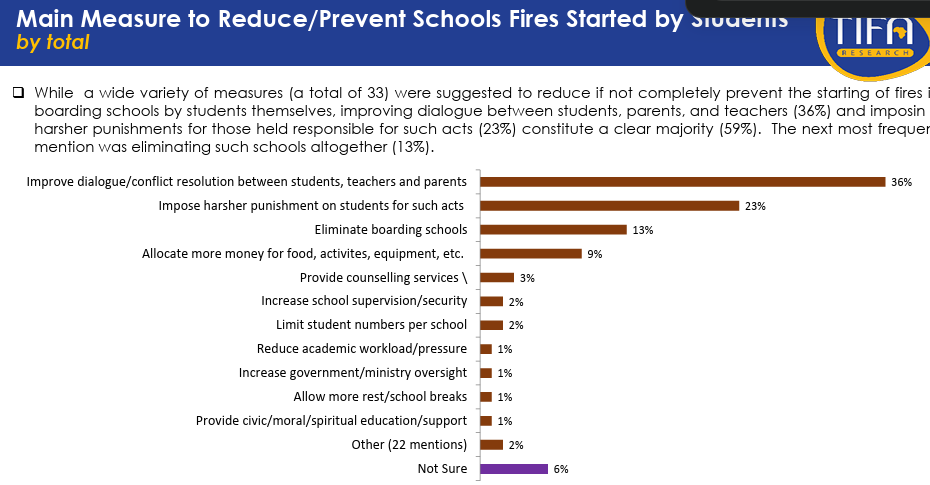
According to TIFA Research, 36 per cent of respondents said schools should improve dialogue and conflict resolution between students, teachers and parents. For families, this means creating an environment where a learner can speak about a problem without feeling ignored or afraid of being punished immediately.
Regular conversations between teachers and students, closer communication with parents, and proper ways of handling complaints could help schools identify problems early.
This is particularly important in boarding schools, where learners spend long periods away from their families.
A recent review of school fires in Kenya also linked some incidents to student grievances, pressure, poor welfare and weak channels through which learners can raise concerns. It recommended stronger grievance systems, psychosocial support and better preparedness alongside physical safety measures.
Punishment still matters
While communication was the most popular suggestion, 23 per cent of Kenyans surveyed said harsher punishment should be imposed on students responsible for starting fires.
The view reflects the need for accountability when a learner deliberately puts other students’ lives at risk.
However, dealing with school fires may require a balance between discipline and understanding what is happening among learners.
In June 2026, the Ministry of Education announced measures that included stronger guidance and counselling, improved grievance-handling systems and safety assessments in schools following a wave of unrest.
Should boarding schools be changed?
Another 13 per cent of respondents suggested eliminating boarding schools.
The idea has also featured in discussions about how to prevent future incidents, although removing boarding facilities would be a major change for families who depend on them, particularly those living far from secondary schools.
Instead of immediately removing boarding facilities, the debate also raises questions about whether existing schools can be made safer and more comfortable for learners.
This includes ensuring that dormitories are not overcrowded, emergency exits are accessible, fire equipment works and students know what to do when there is an emergency.

Give learners more support
The TIFA findings also show that some Kenyans believe the school environment itself needs attention. Nine per cent suggested allocating more money for food, activities and equipment, while three per cent called for counselling services.
Another two per cent supported increased supervision and security, while a further two per cent suggested reducing the number of students in individual schools.
Other suggestions included reducing academic pressure, allowing more rest and school breaks, increasing government oversight and providing civic, moral or spiritual support.
These may appear like small percentages individually, but together they show that Kenyans have different views on what could make schools safer.
Safety should continue beyond the classroom
Preventing school fires is also about what happens when an emergency occurs. Many schools were not adequately prepared to handle fires, including gaps in safety preparedness, training, and implementation of safety measures.
For learners, this means knowing where emergency exits are, participating in fire drills and understanding how to respond when an alarm is raised. For schools, it means regularly checking firefighting equipment, electrical systems, dormitories and evacuation routes.
The TIFA findings ultimately suggest that addressing school fires will require more than one solution. Better communication, responsible discipline, counselling, adequate resources and proper safety measures can all play a role in creating an environment where learners feel heard and protected.